Weddington Primary School
Year 6
Welcome to Year 6
Homework: We would like the children to focus on securing their times tables knowledge, which they can apply to the four calculation methods.
Spellings: These will be set online from the Friday before they are introduced. They will be introduced on a Monday and the children’s spelling test will be on Friday. Please encourage your children to use Spelling Shed to practise.
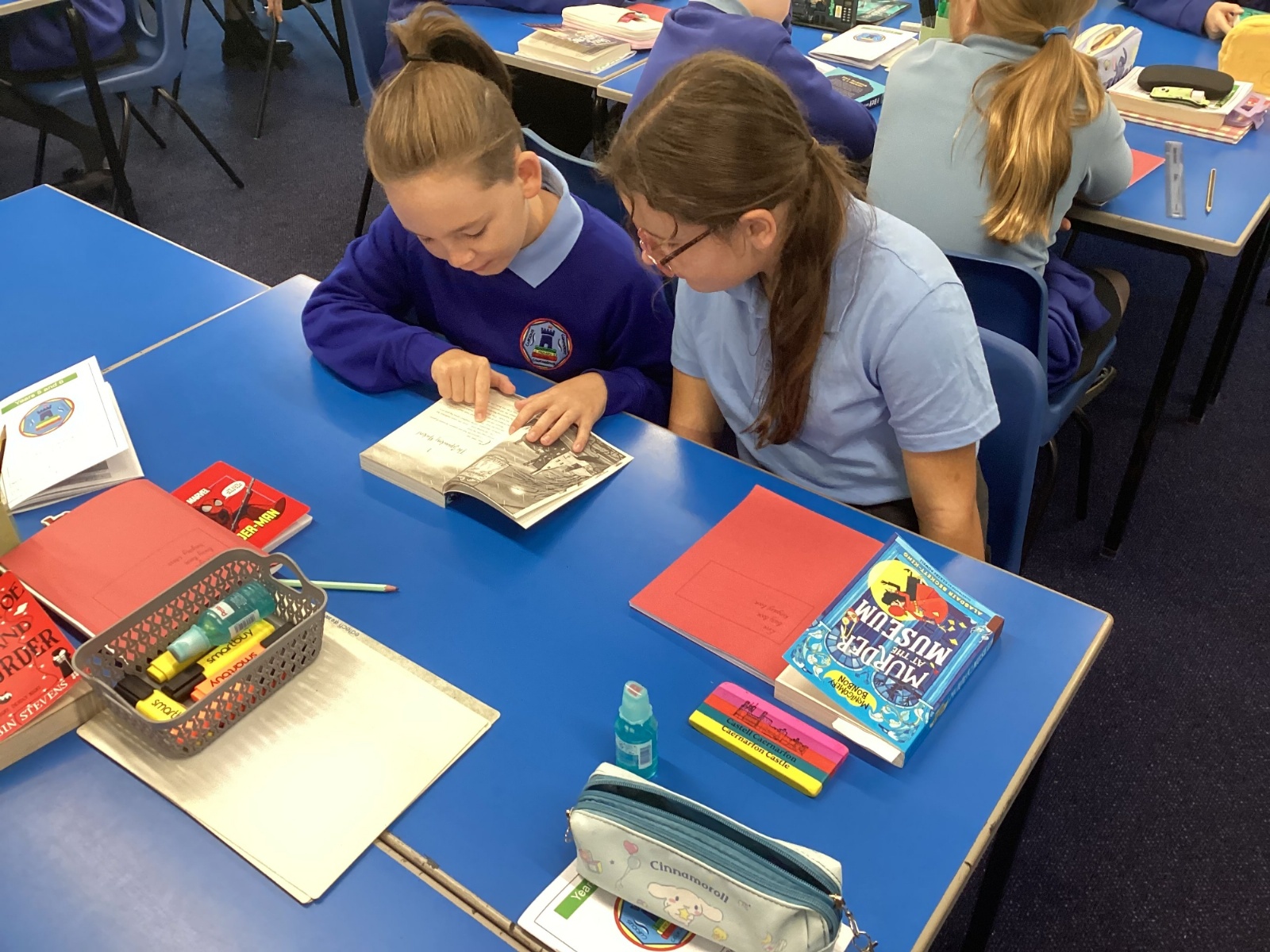
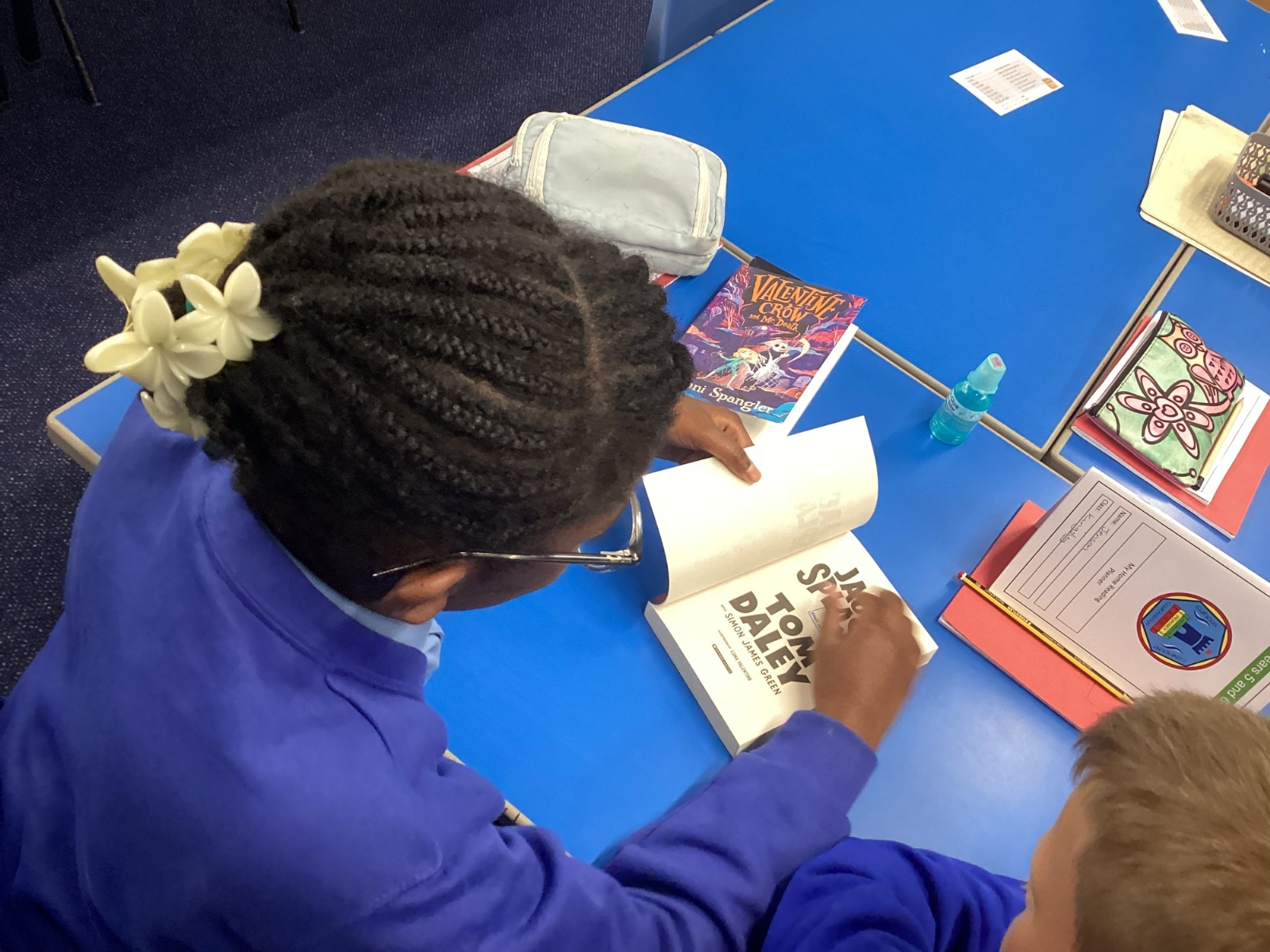
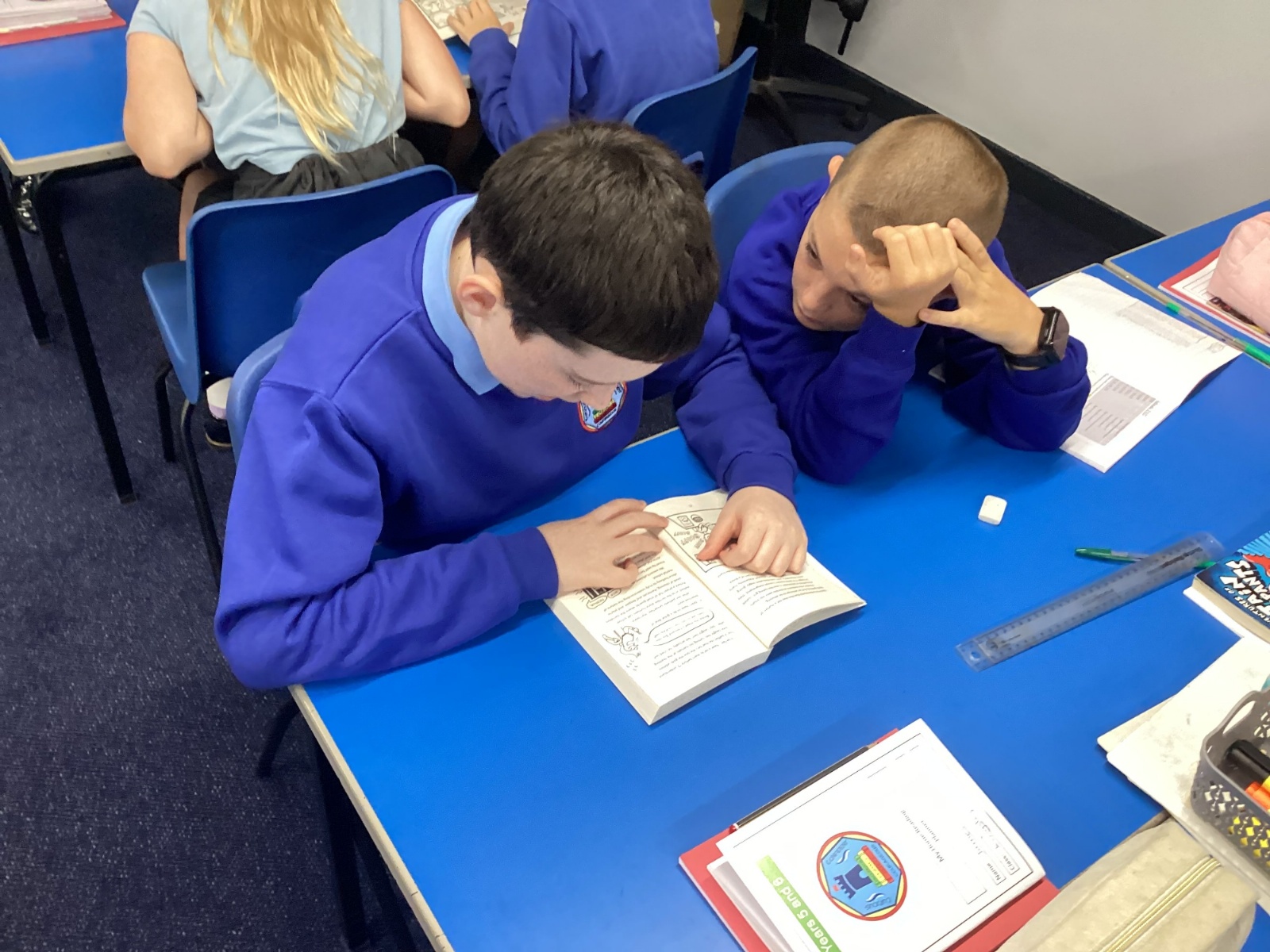
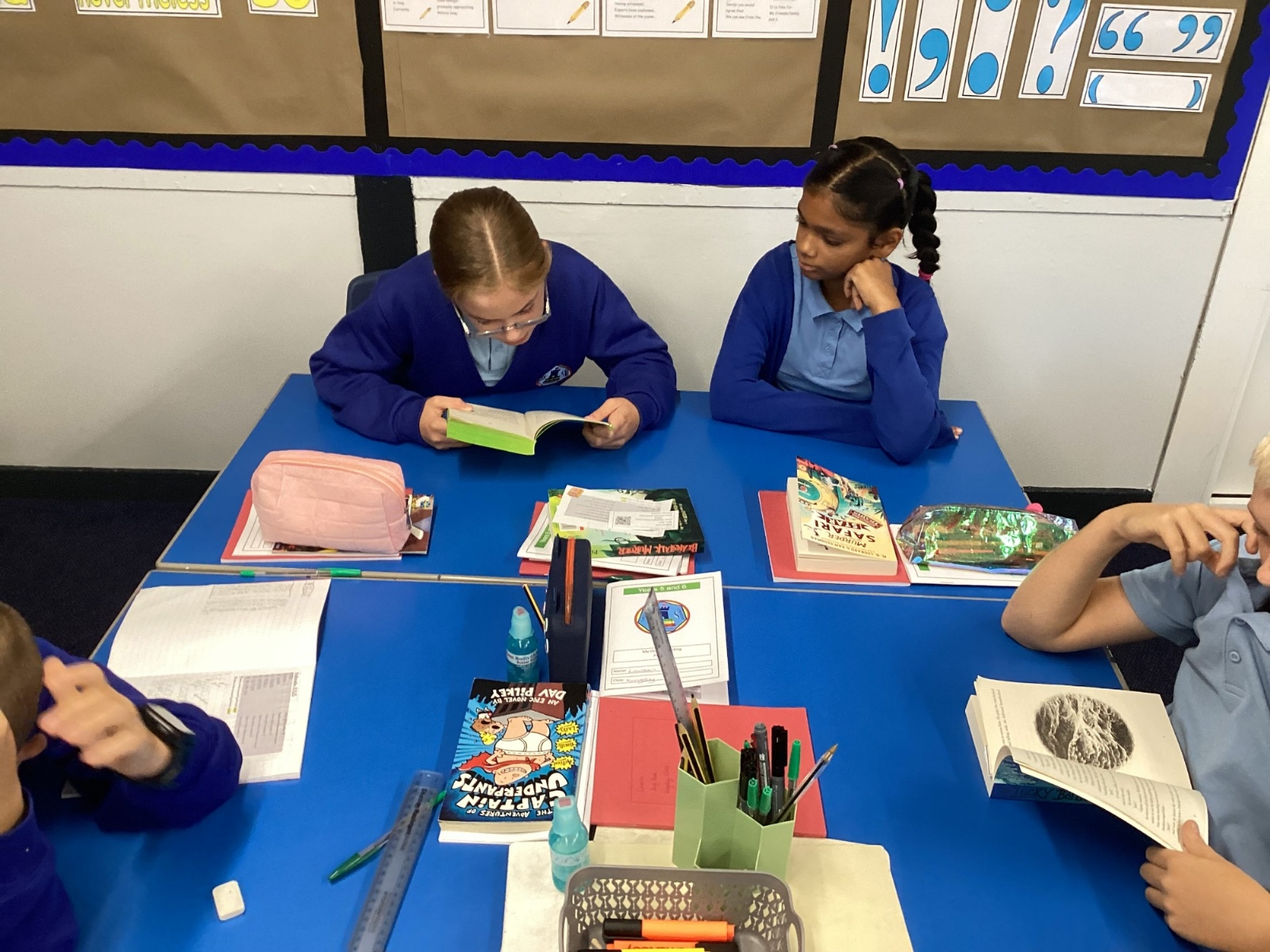
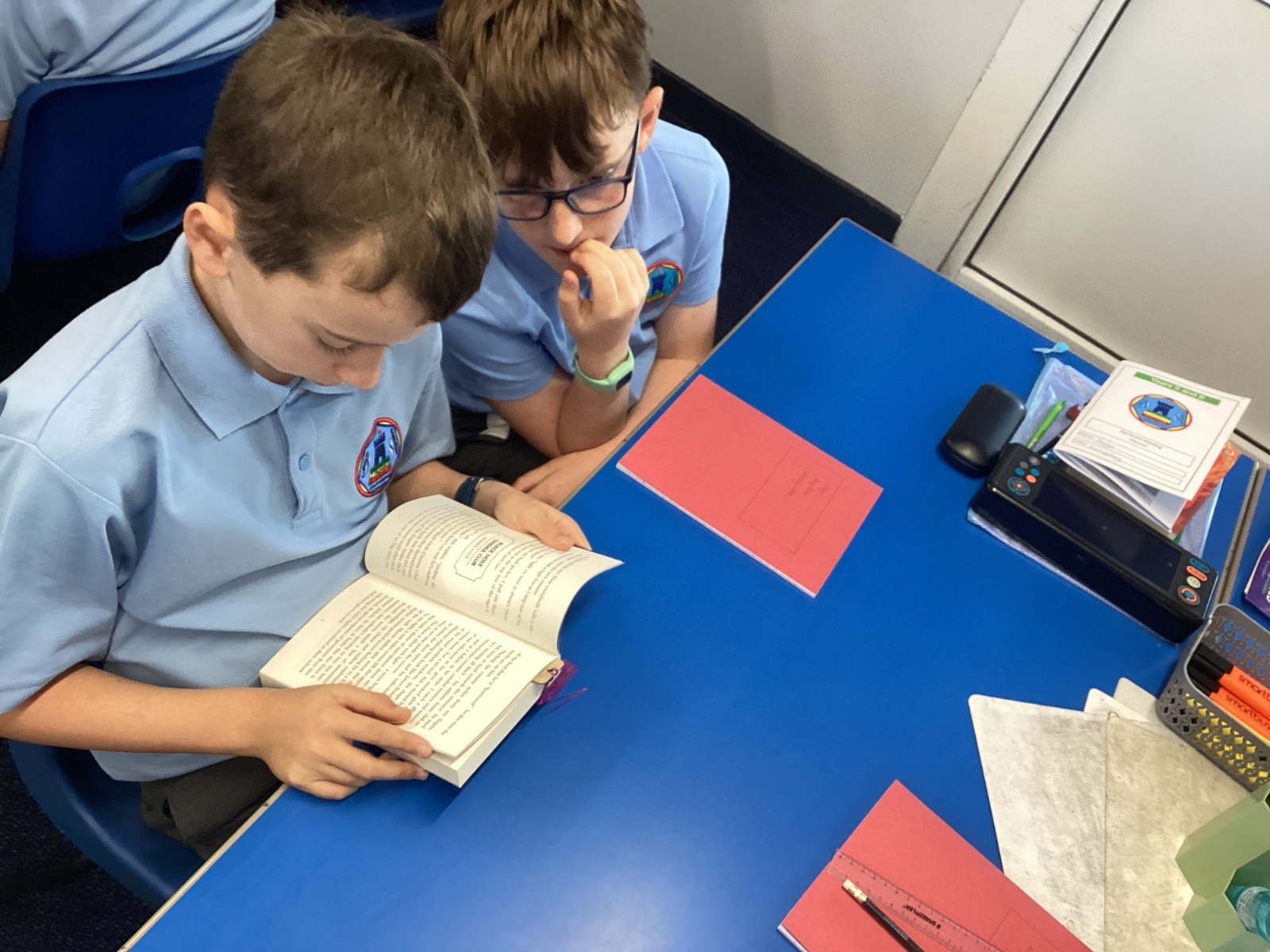
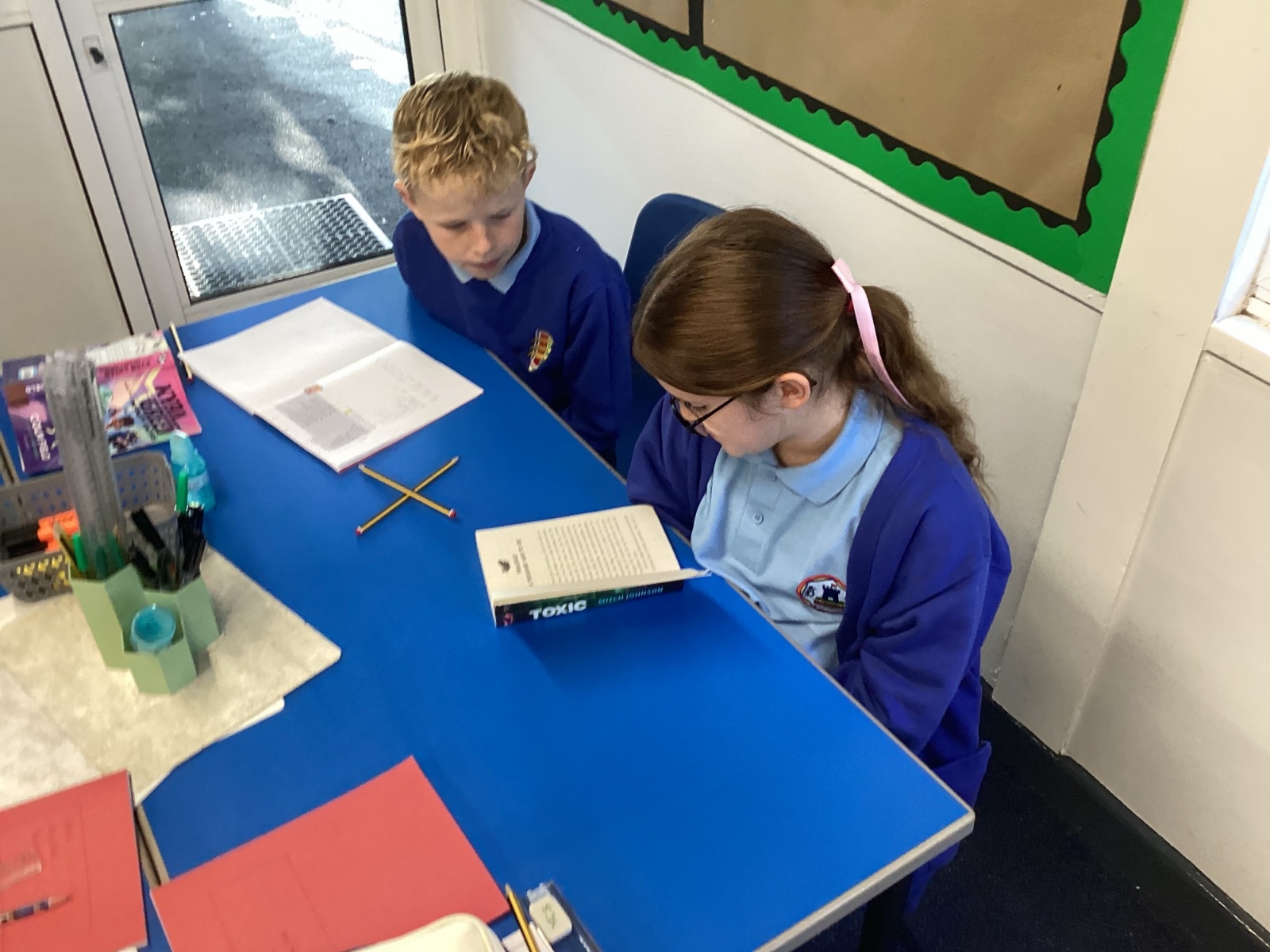
Home Reading Planners will be collected in on a Friday. The expectation for Year 6 is that children read 5 times per week, for 5-10 minutes, and that parents/carers sign the entry.
PE: Children to come to school in their P.E kits on their designated days. Wednesday will be outdoor PE and Thursday will be indoor PE. Please ensure that your child comes appropriately dressed following school PE dress code.'
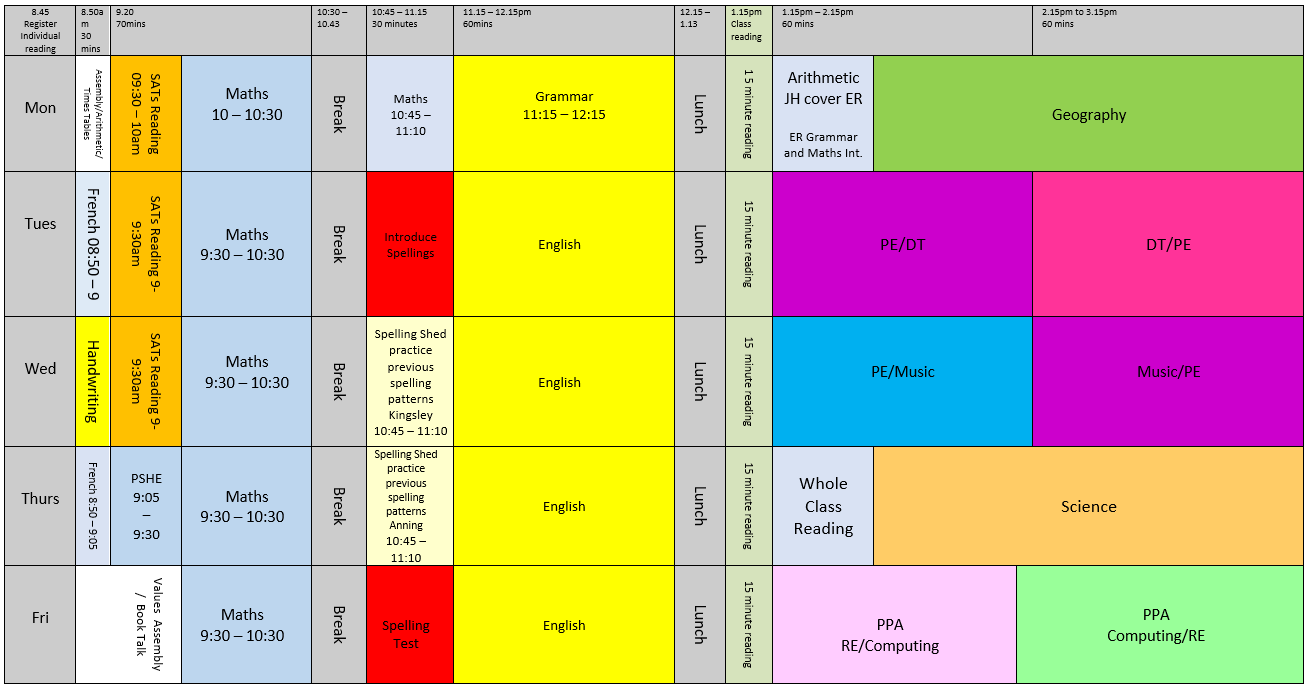
Timetable
What We're Learning
Details of the Year 6 learning journey can be found here:
Year 6 - What we're learning
Please note, this page will be updated termly, so please keep checking back.
Summer Term
Summer
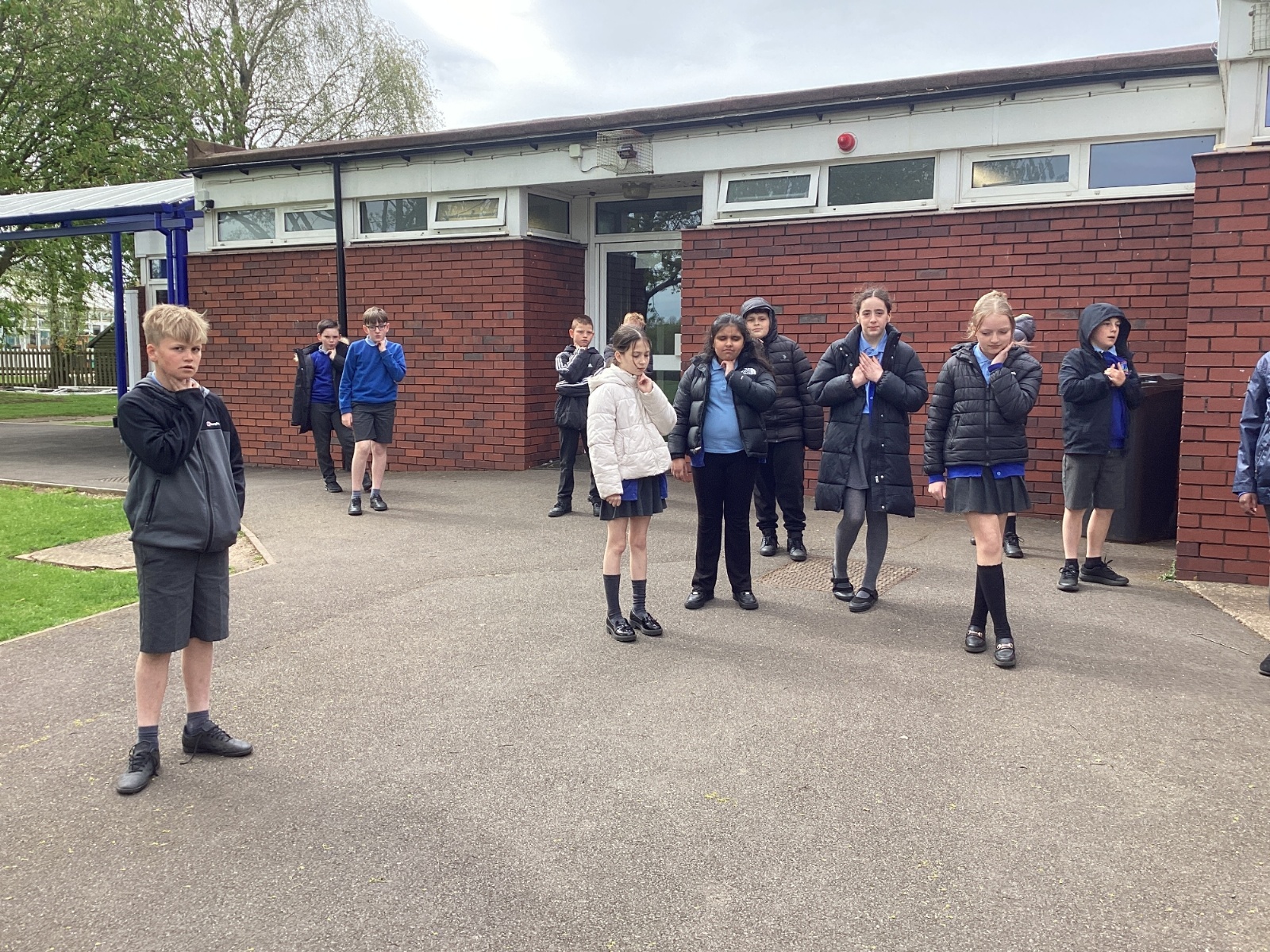
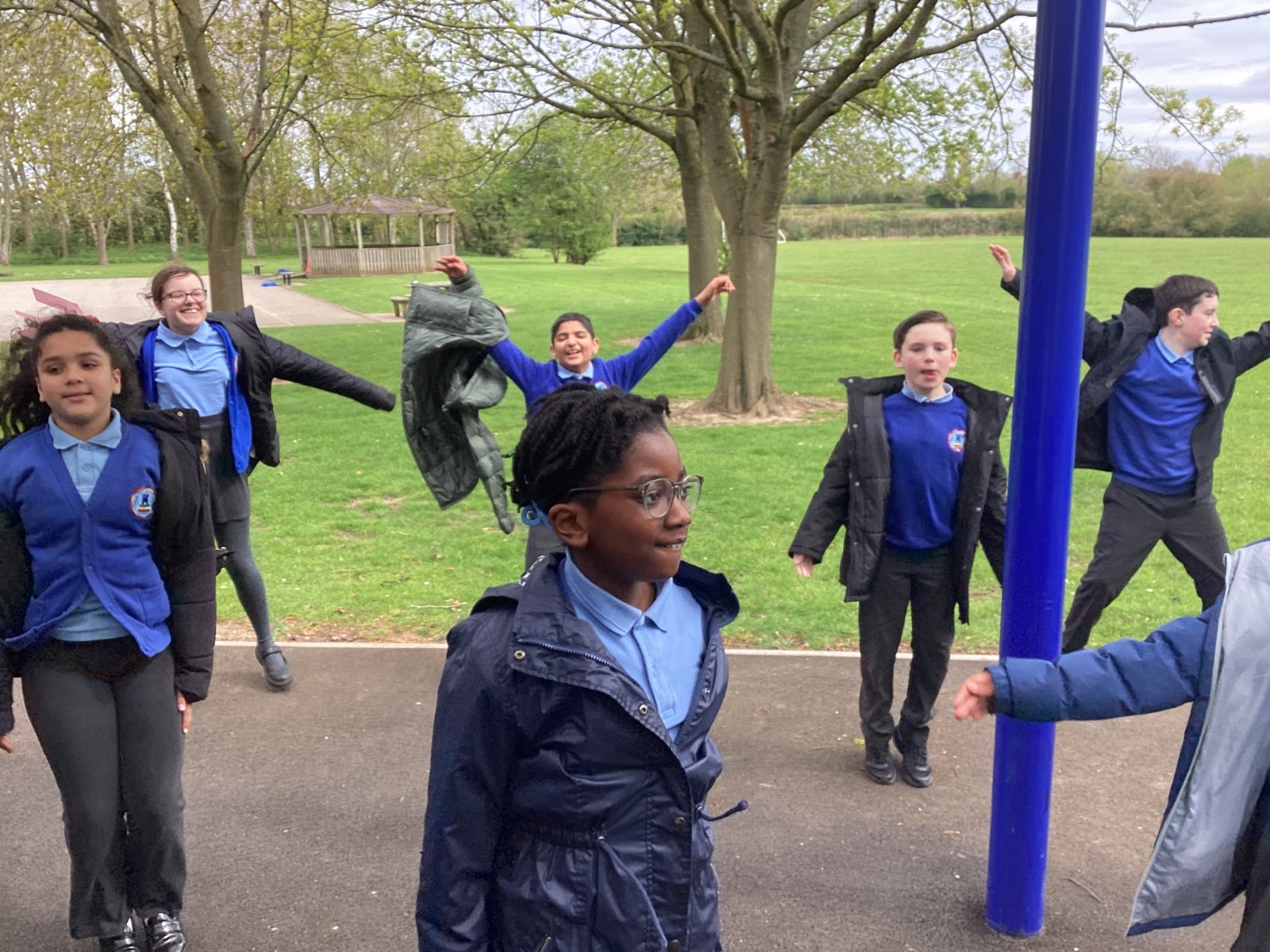
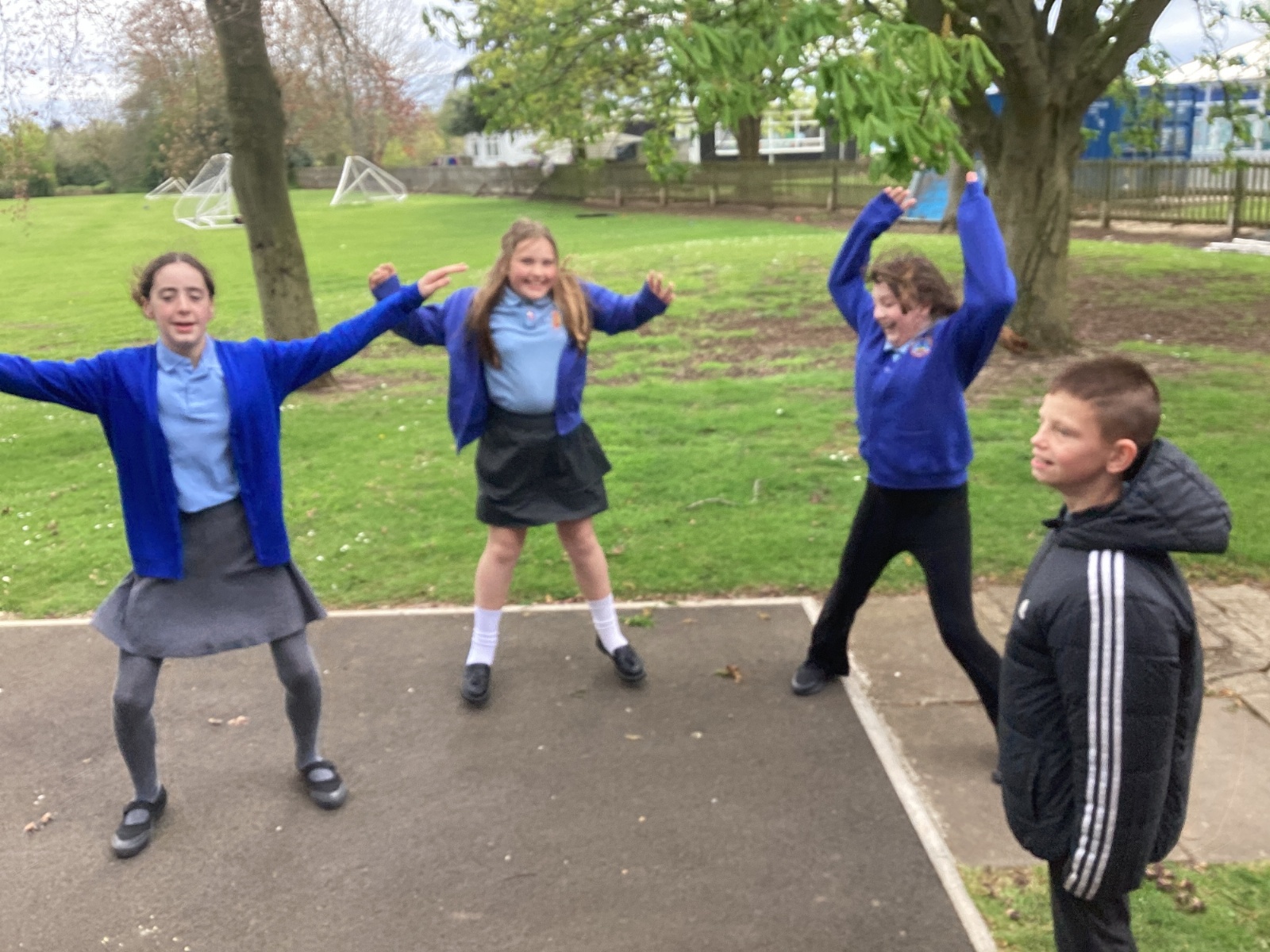
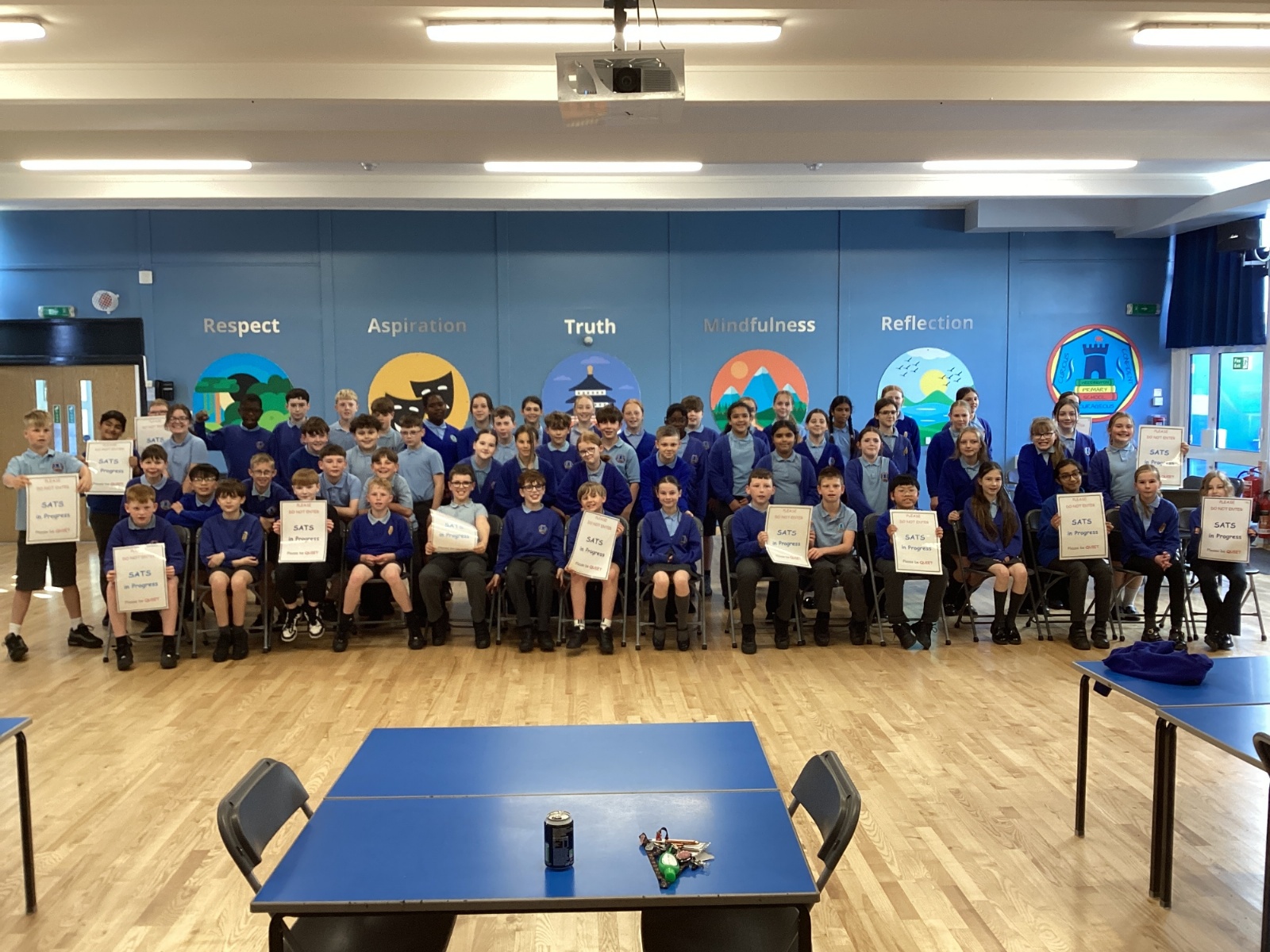
.jpeg)
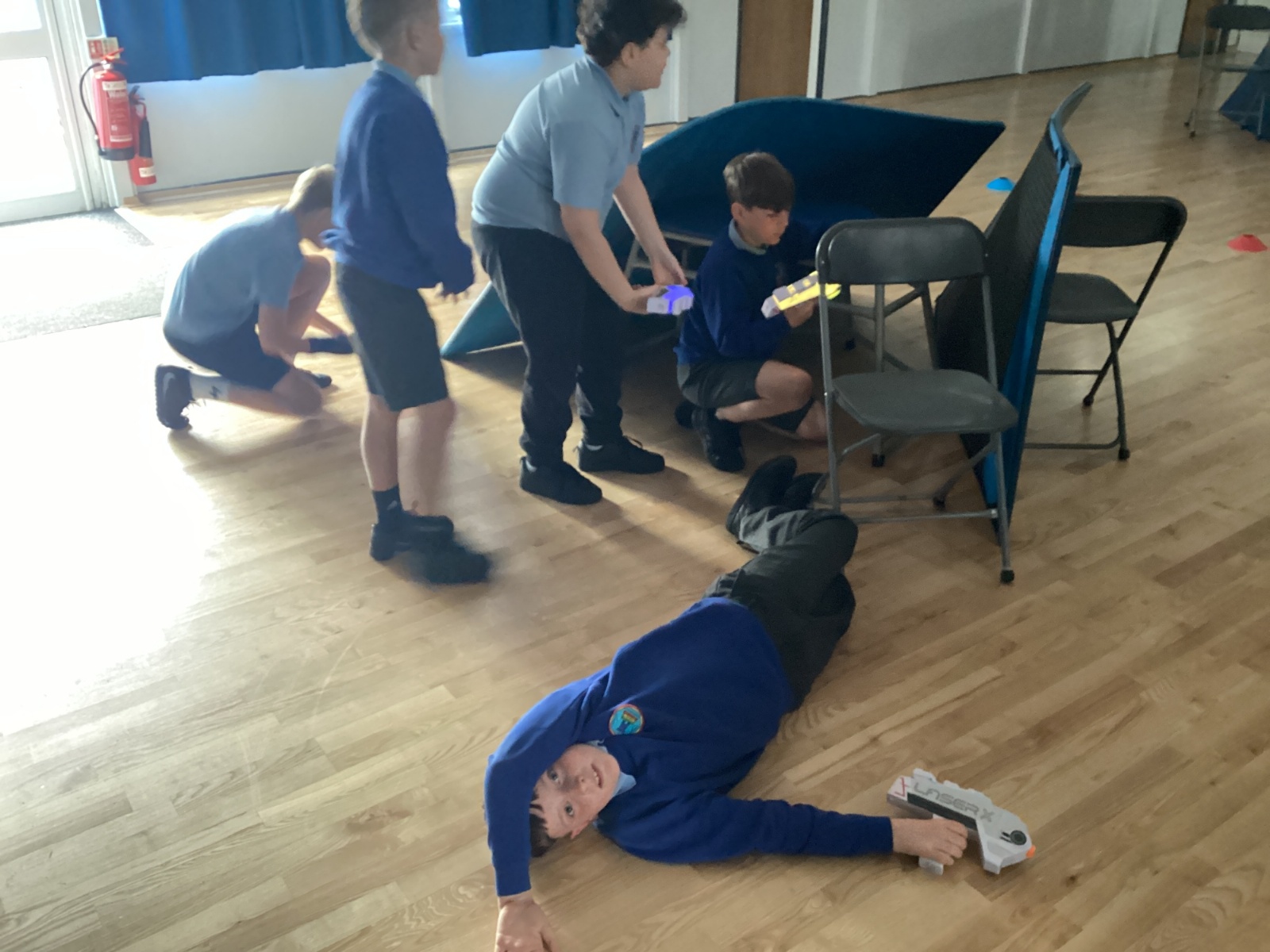
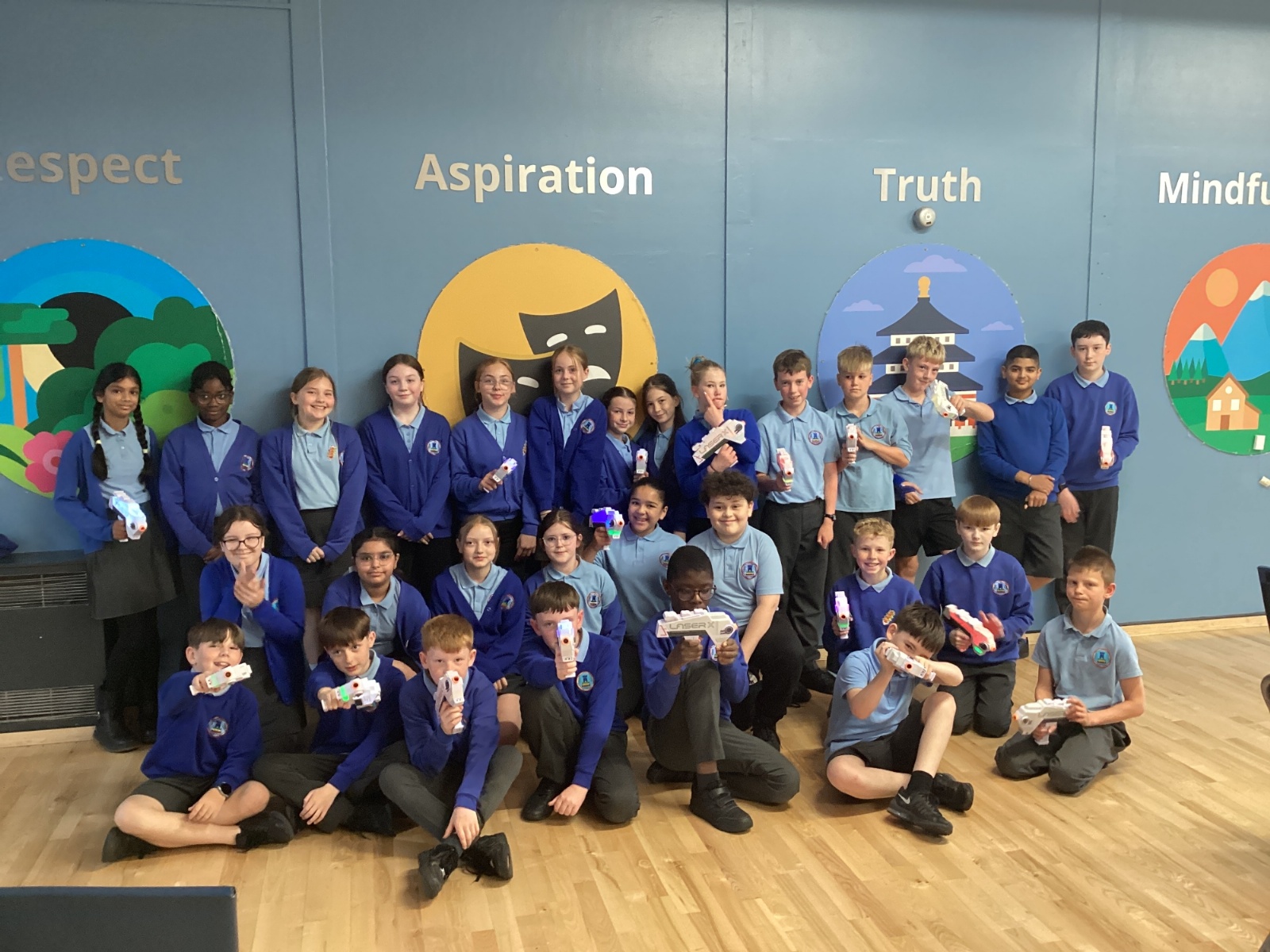
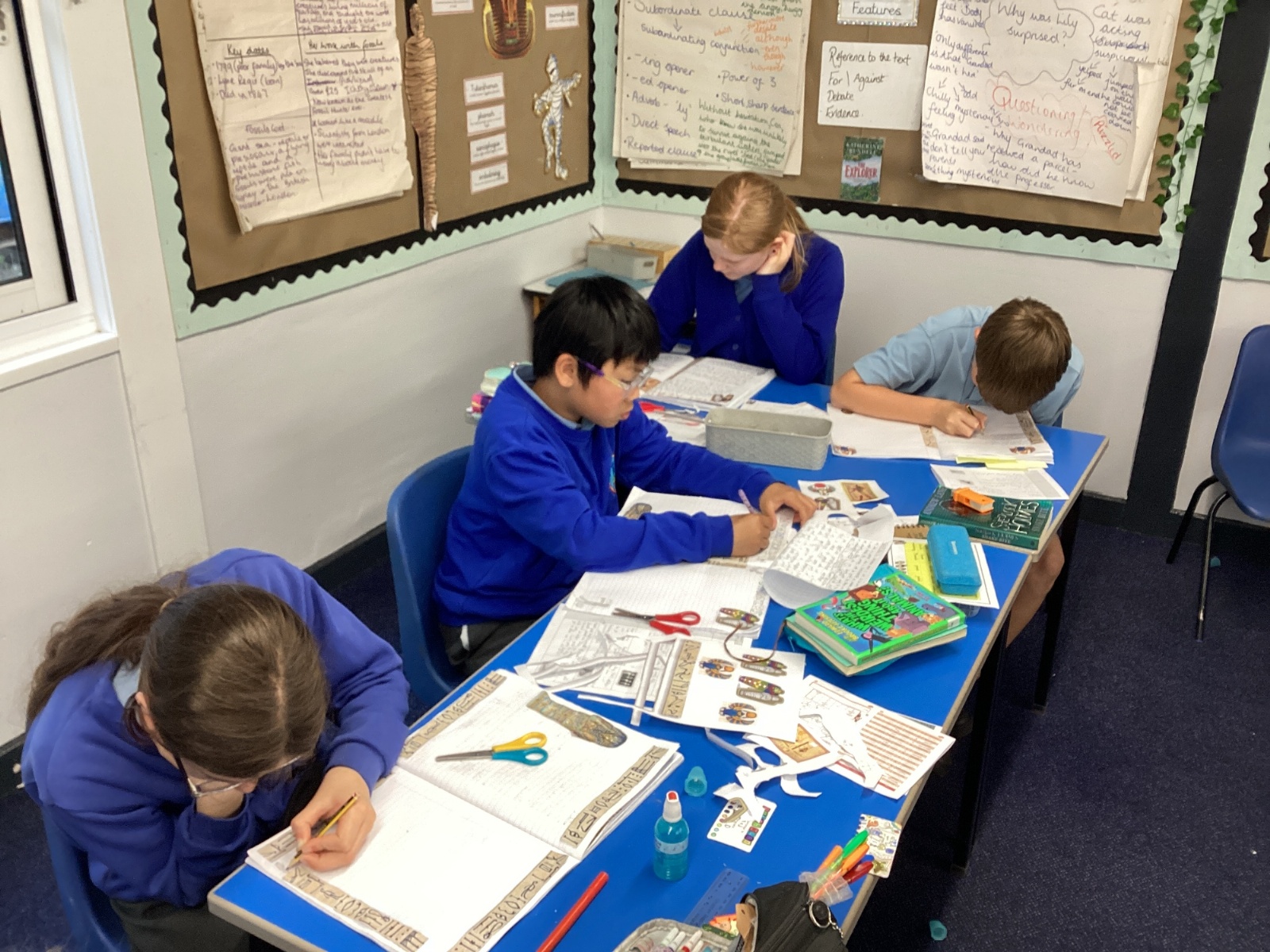
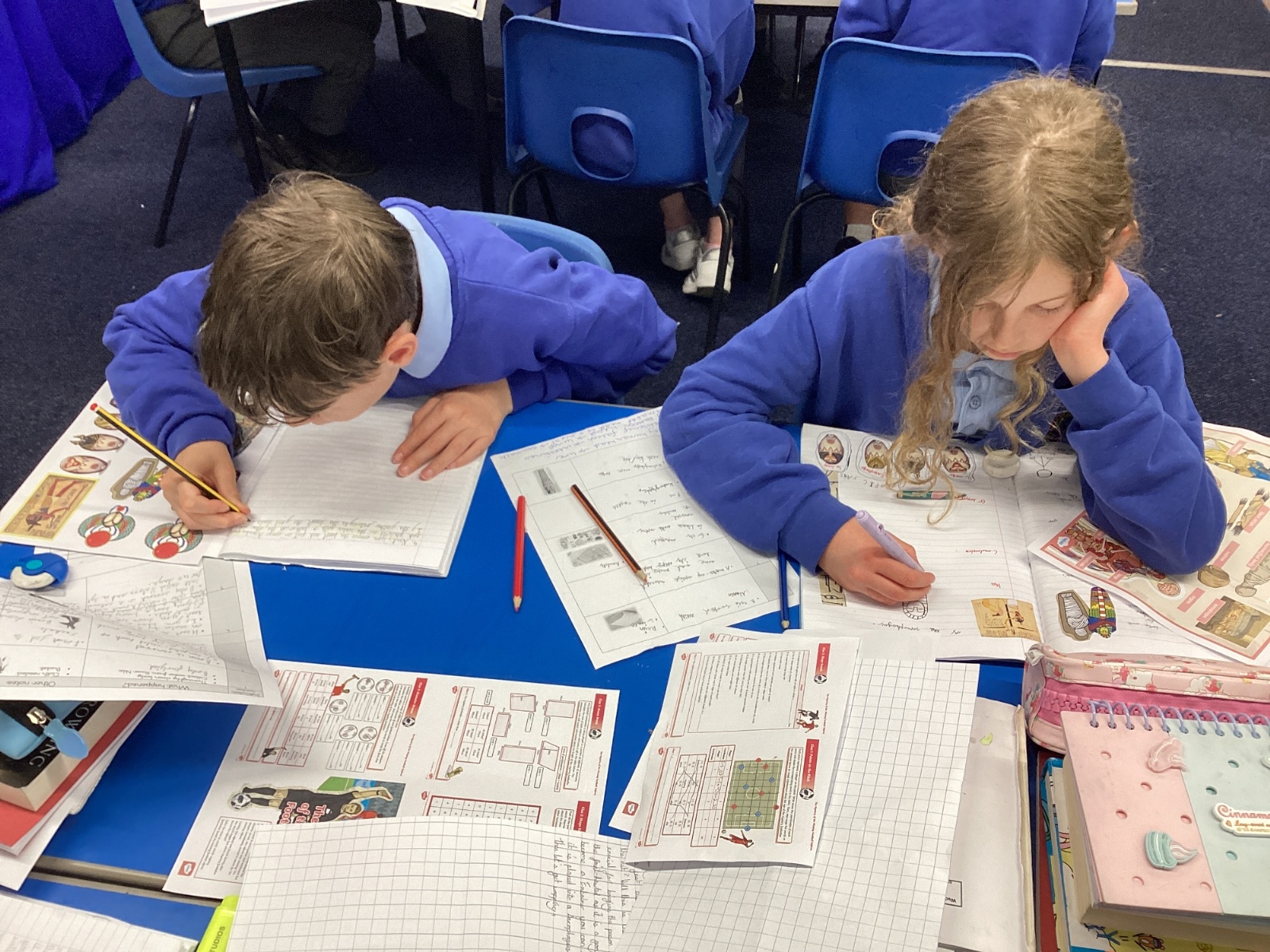
Spring Term
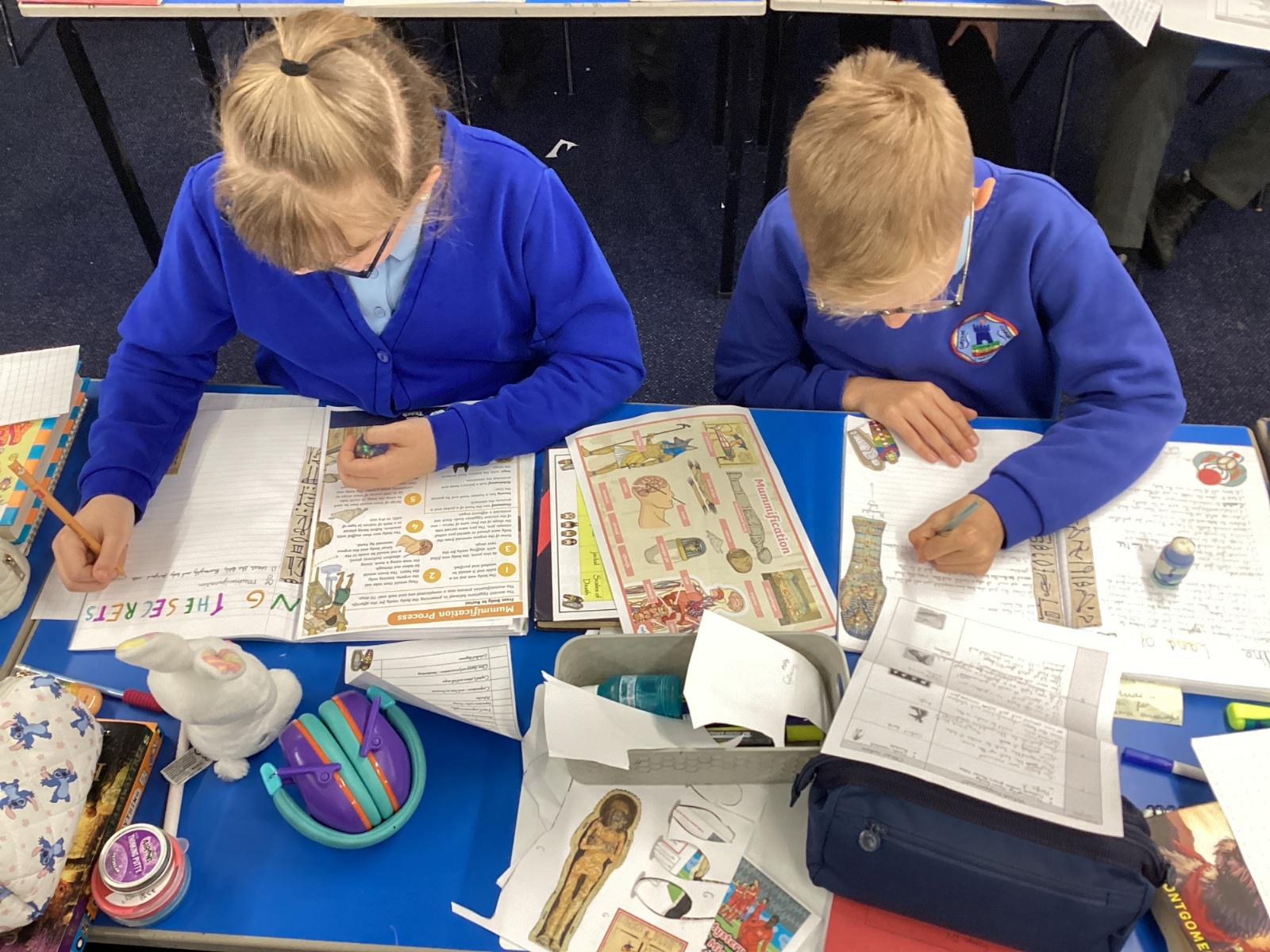
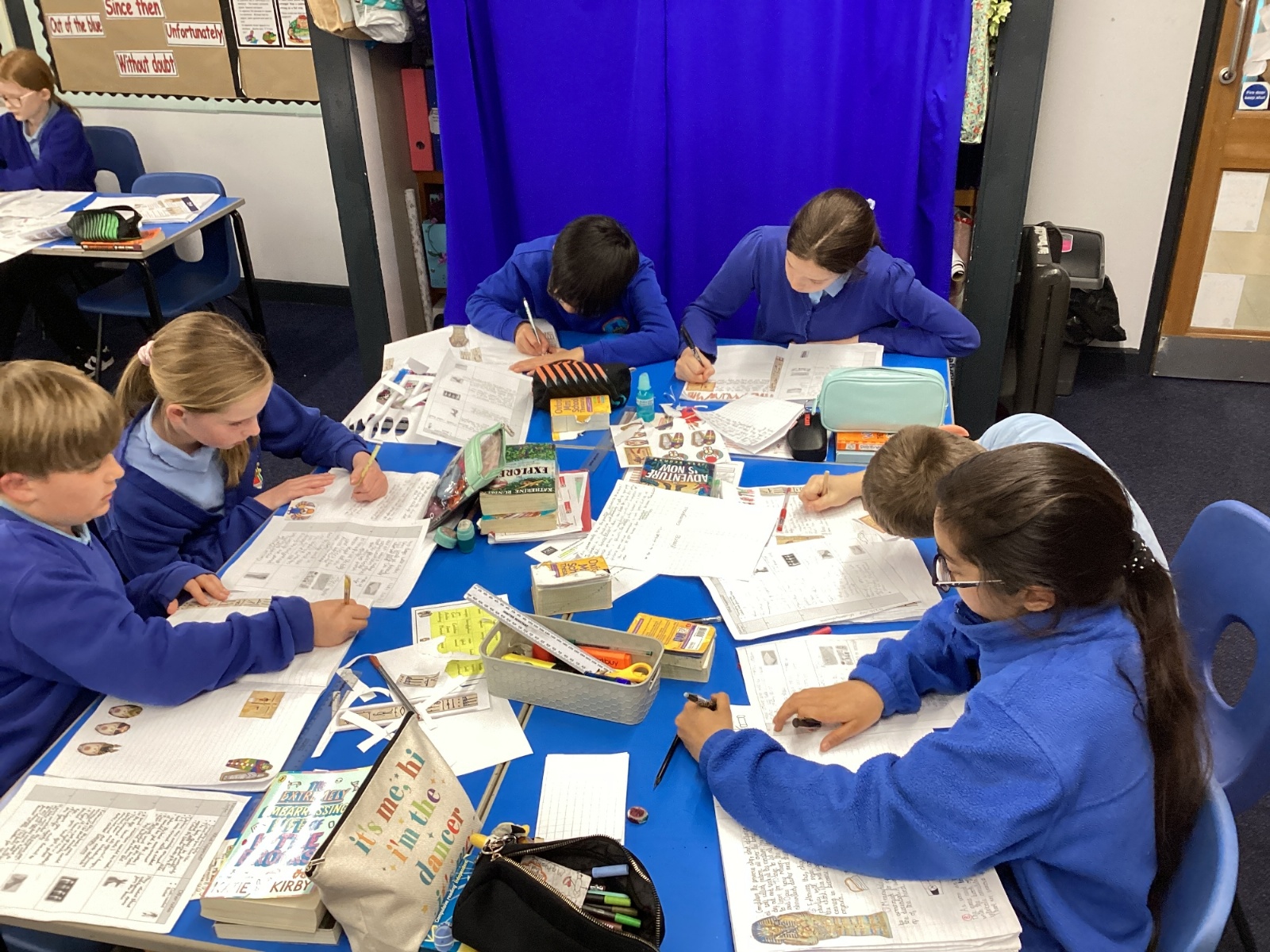
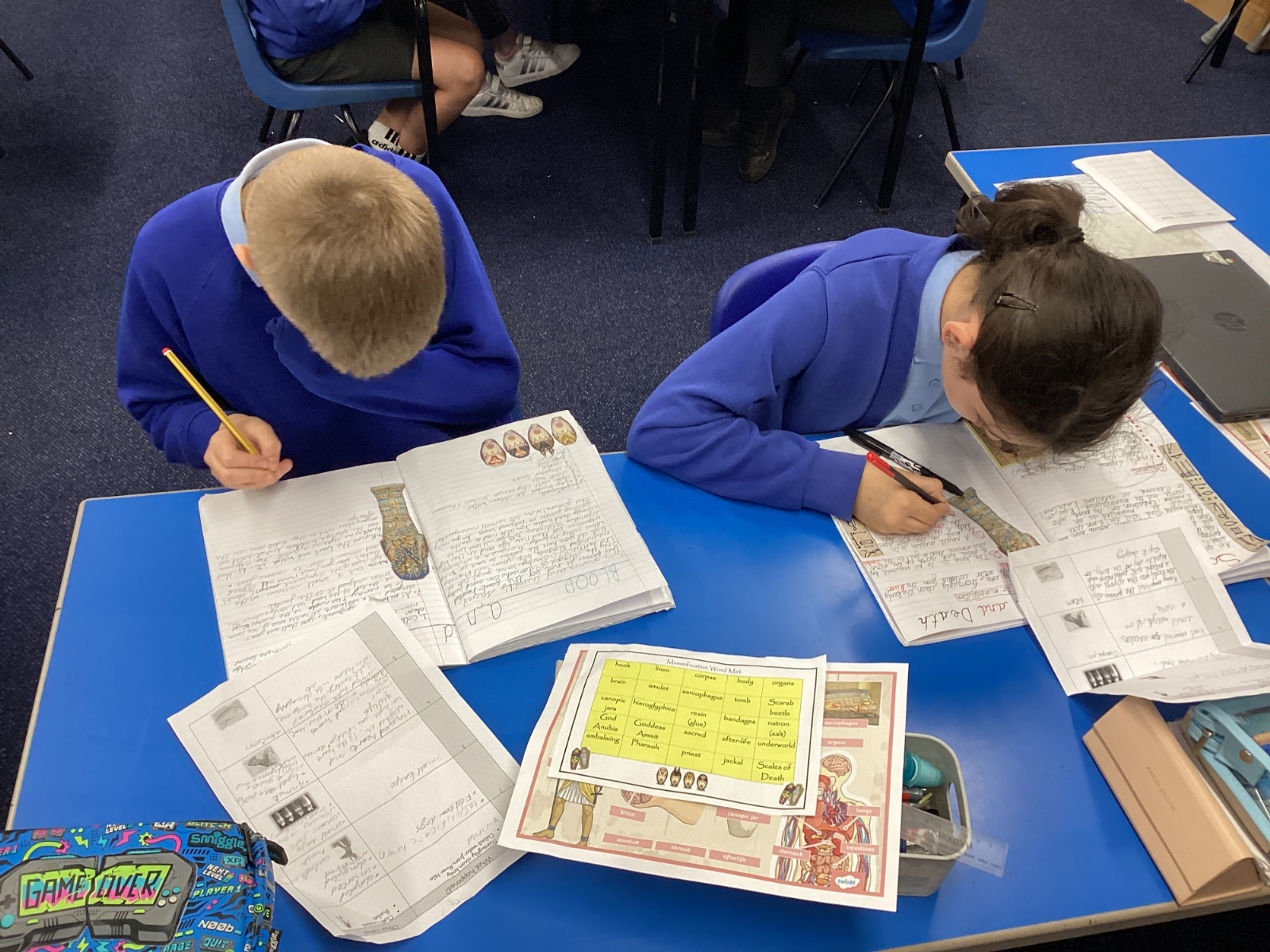
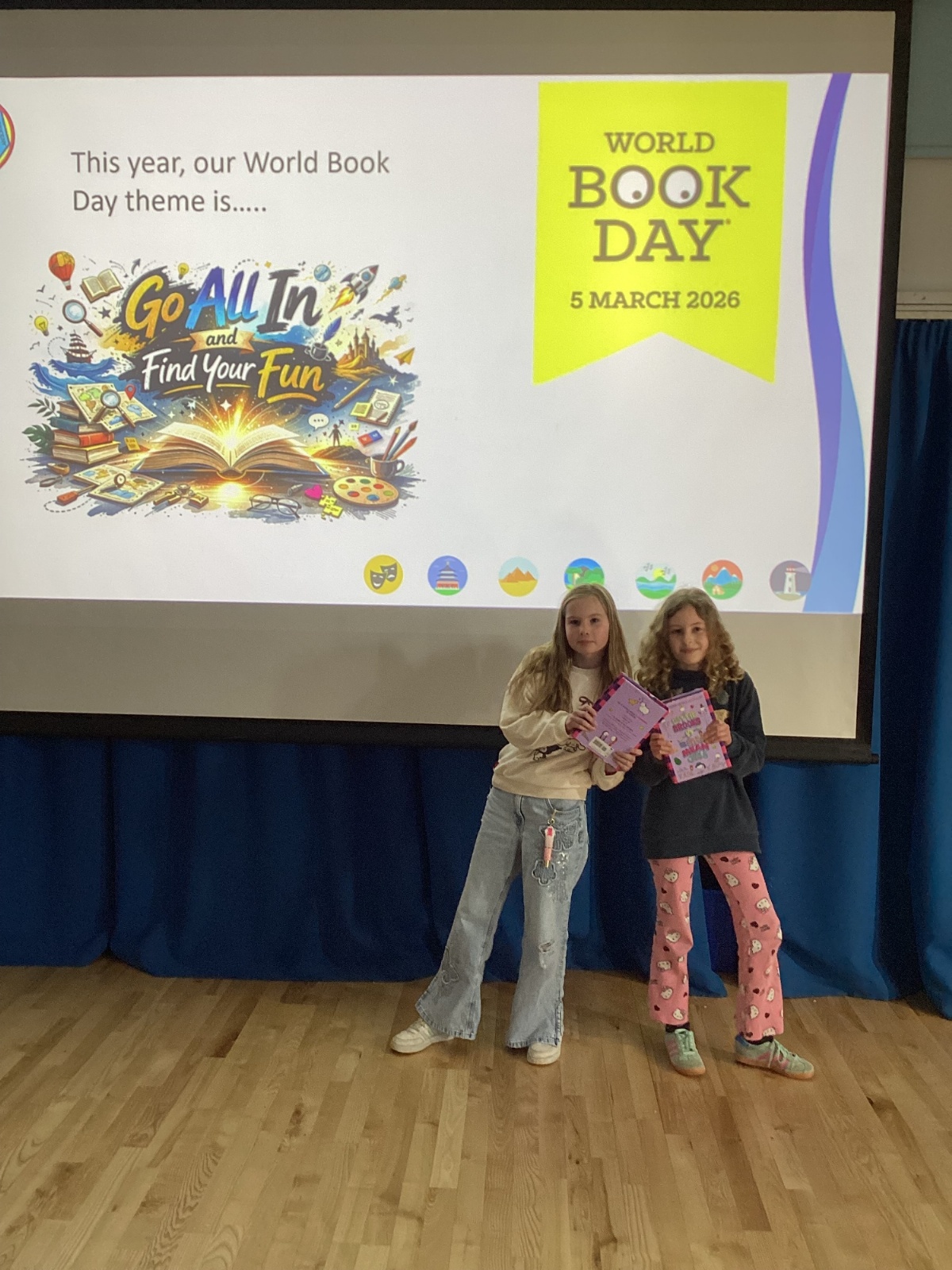
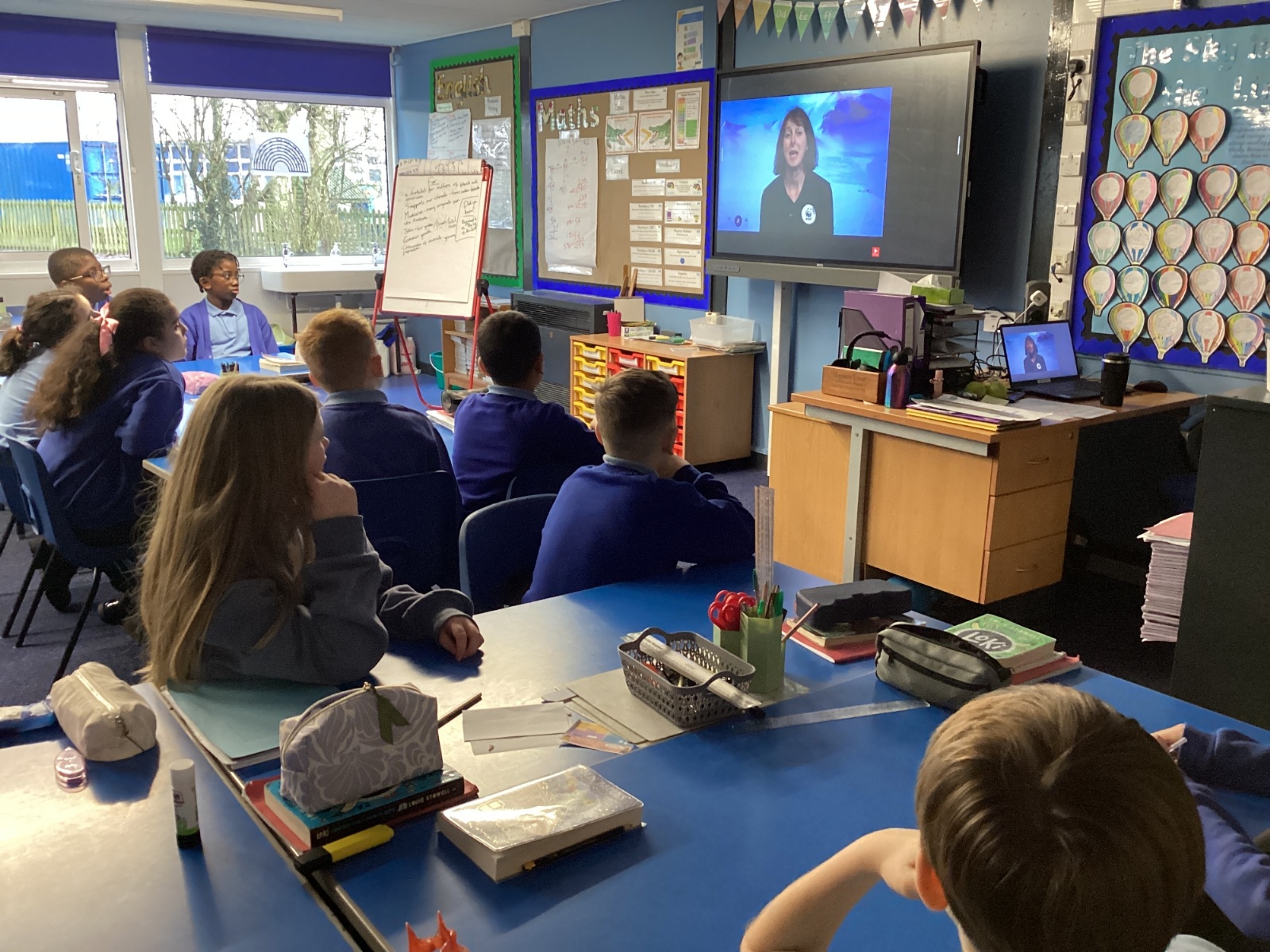
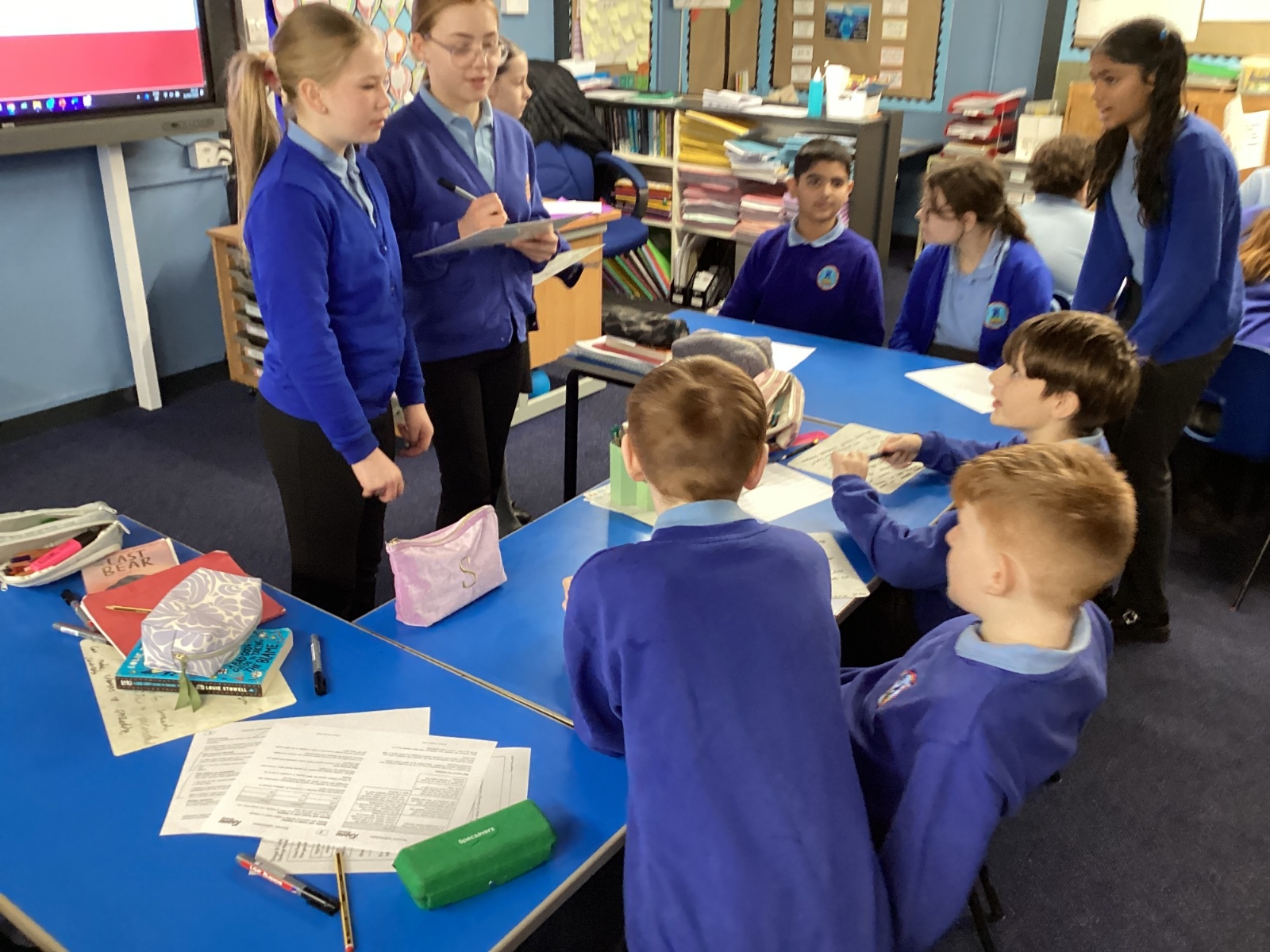
Our topics for the Spring Term are: ‘Walk Like An Egyptian’ and ‘Extreme Weather’. During the first half term, the children will learn all about life in Ancient Egypt, focusing on mummification, who Howard Carter was and what his discoveries were, as well as learning about life during the time. During the second half term, the children will learn all about volcanoes, tectonic plates, and how weather has caused changes to the UK’s features, such as coastlines and rivers.
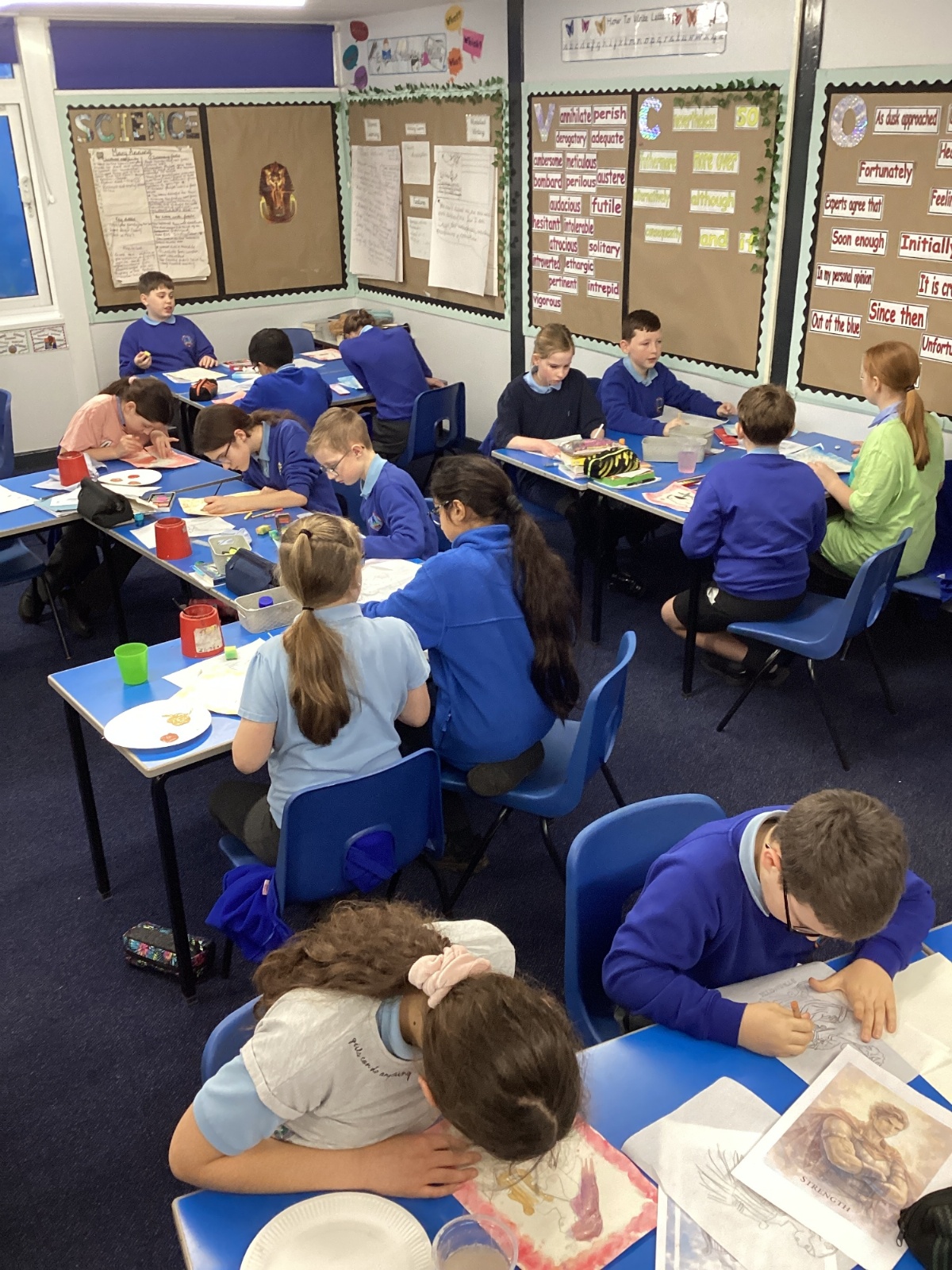
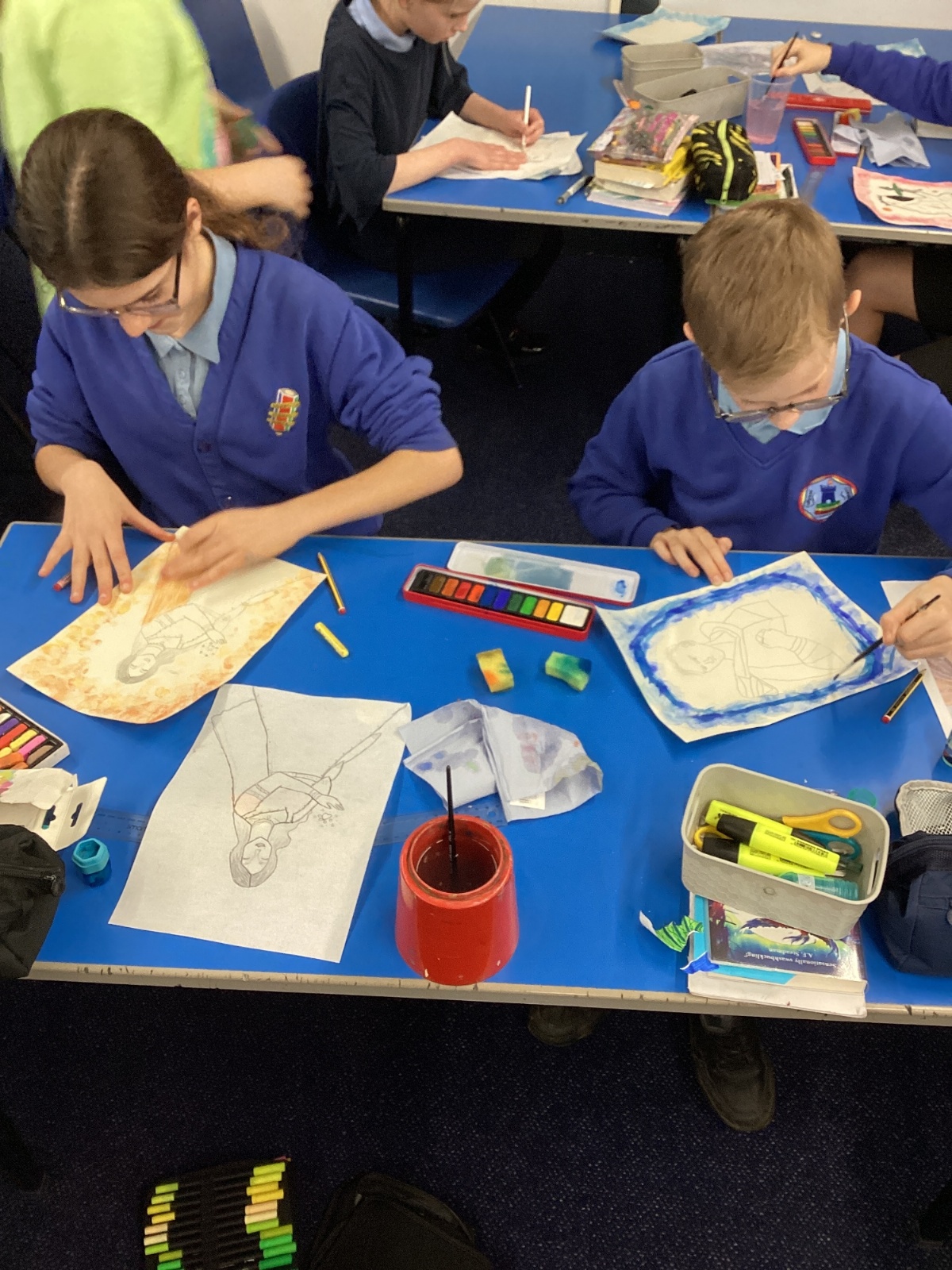
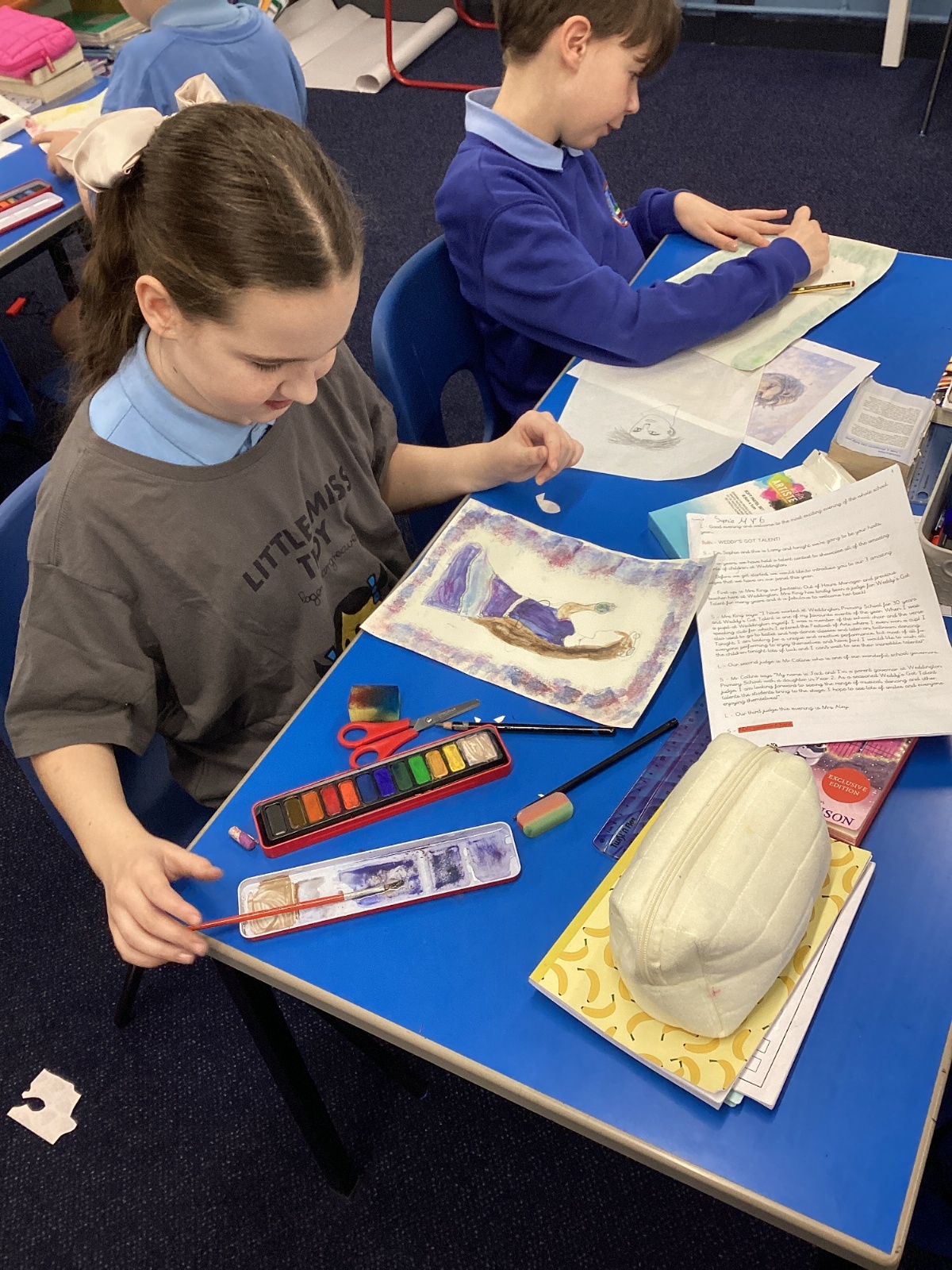
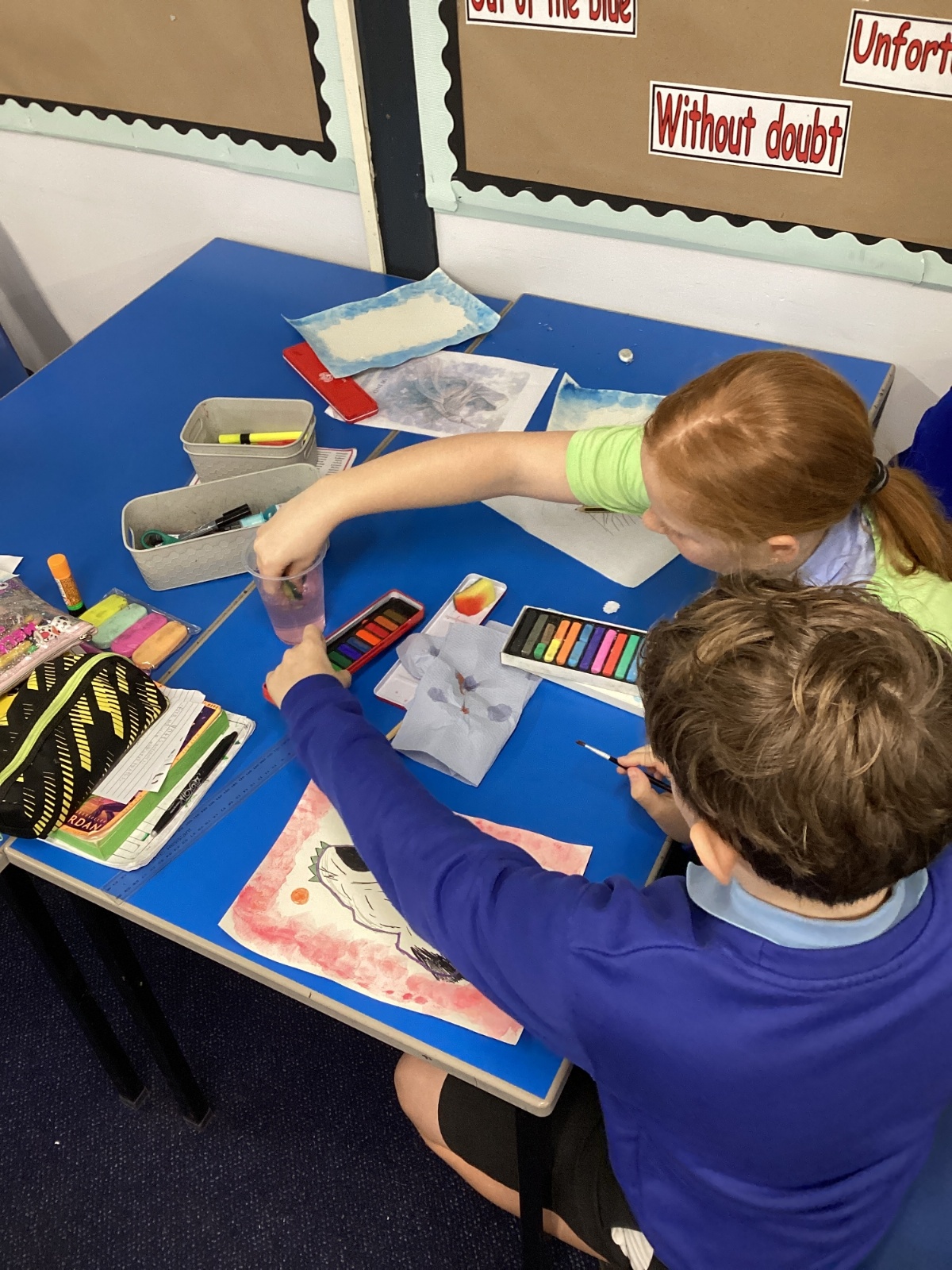
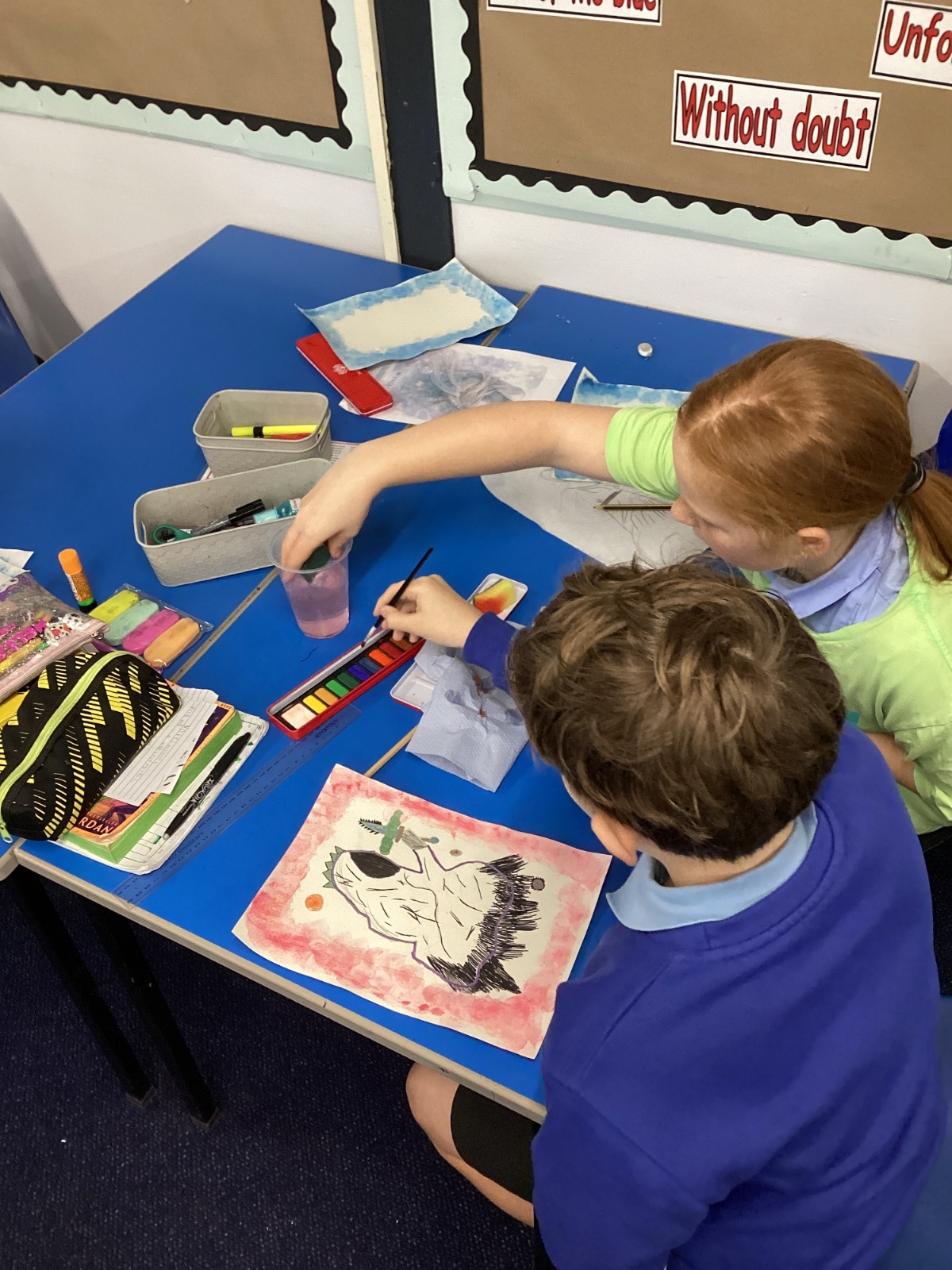
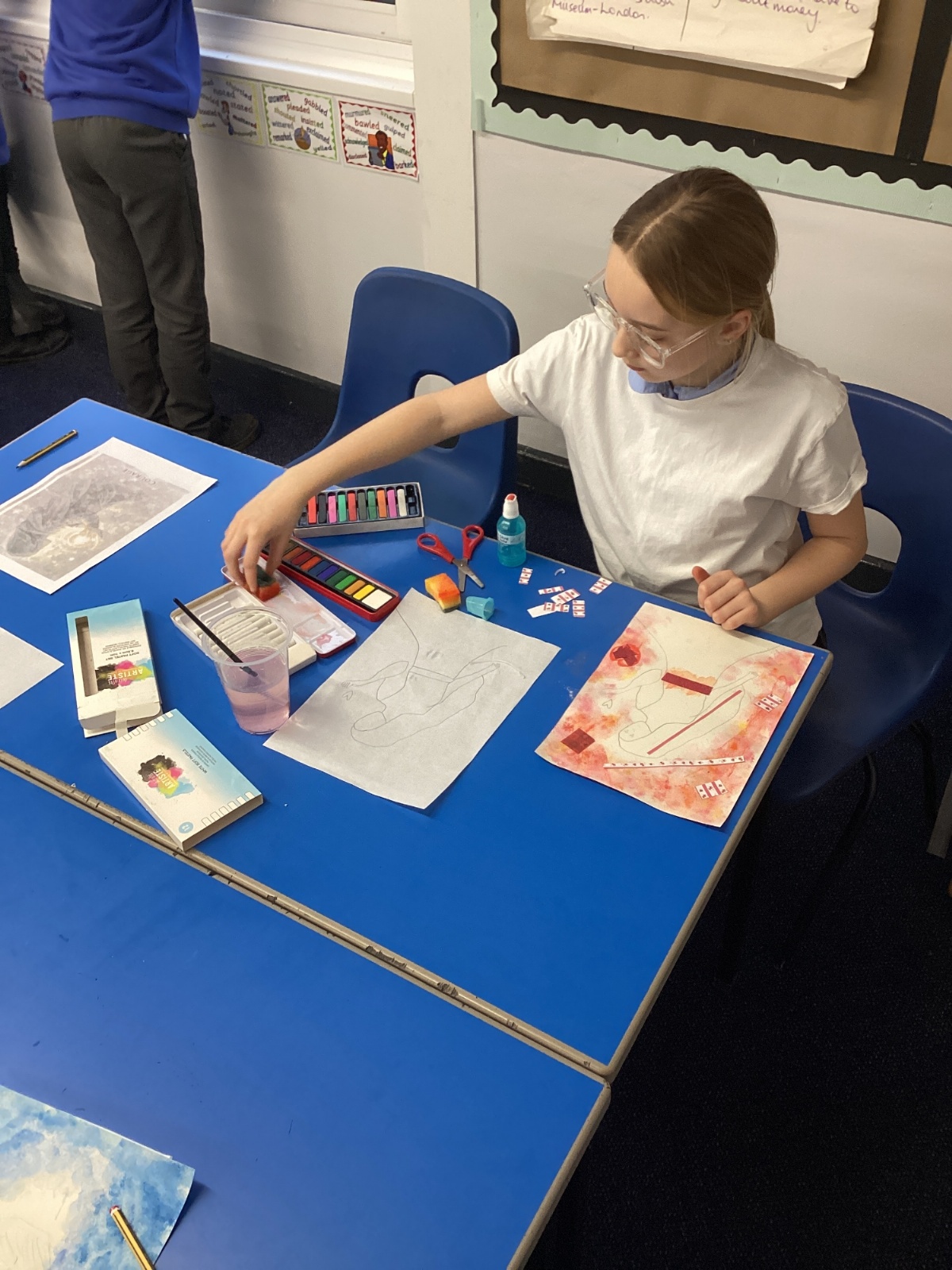
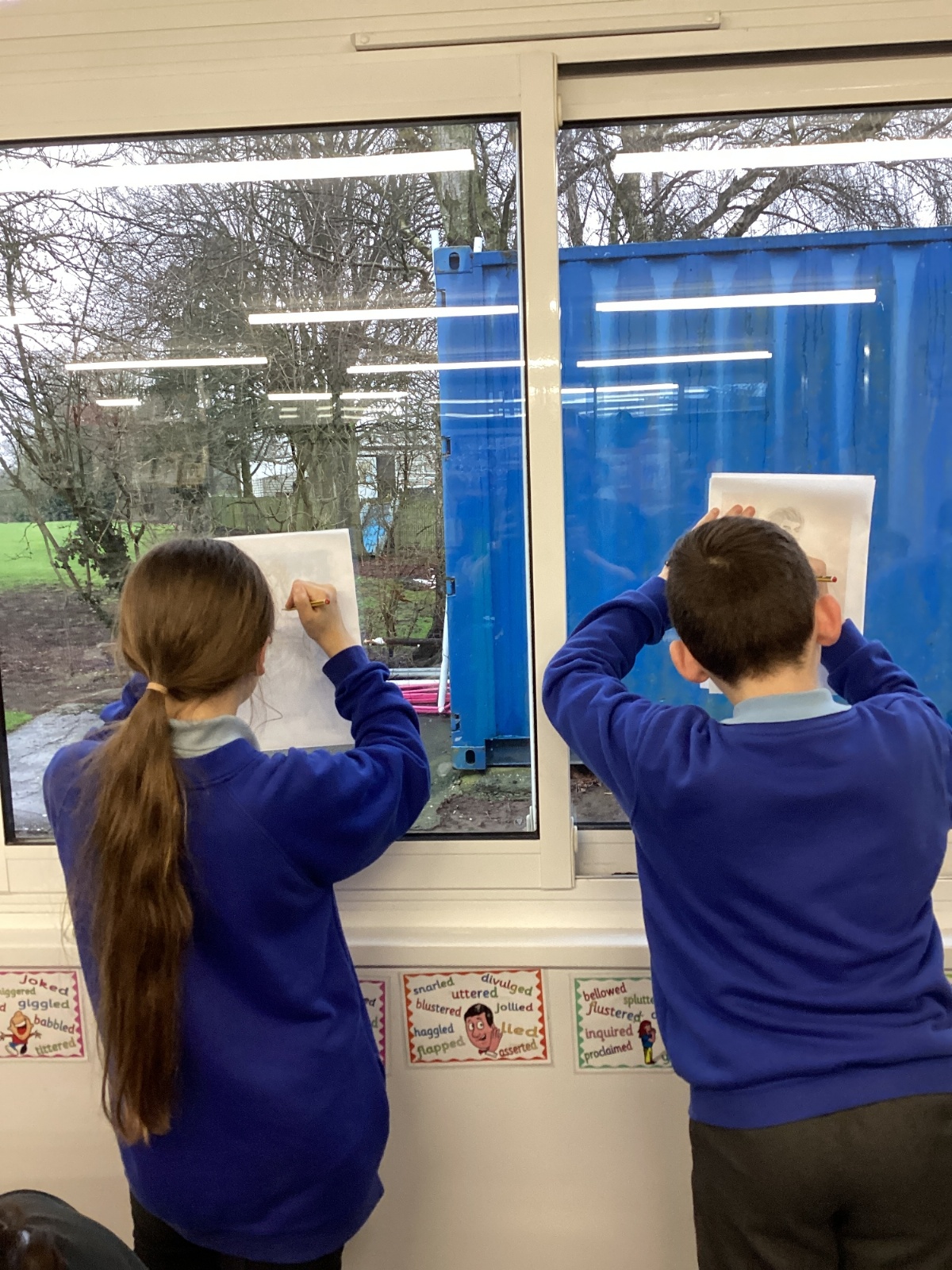
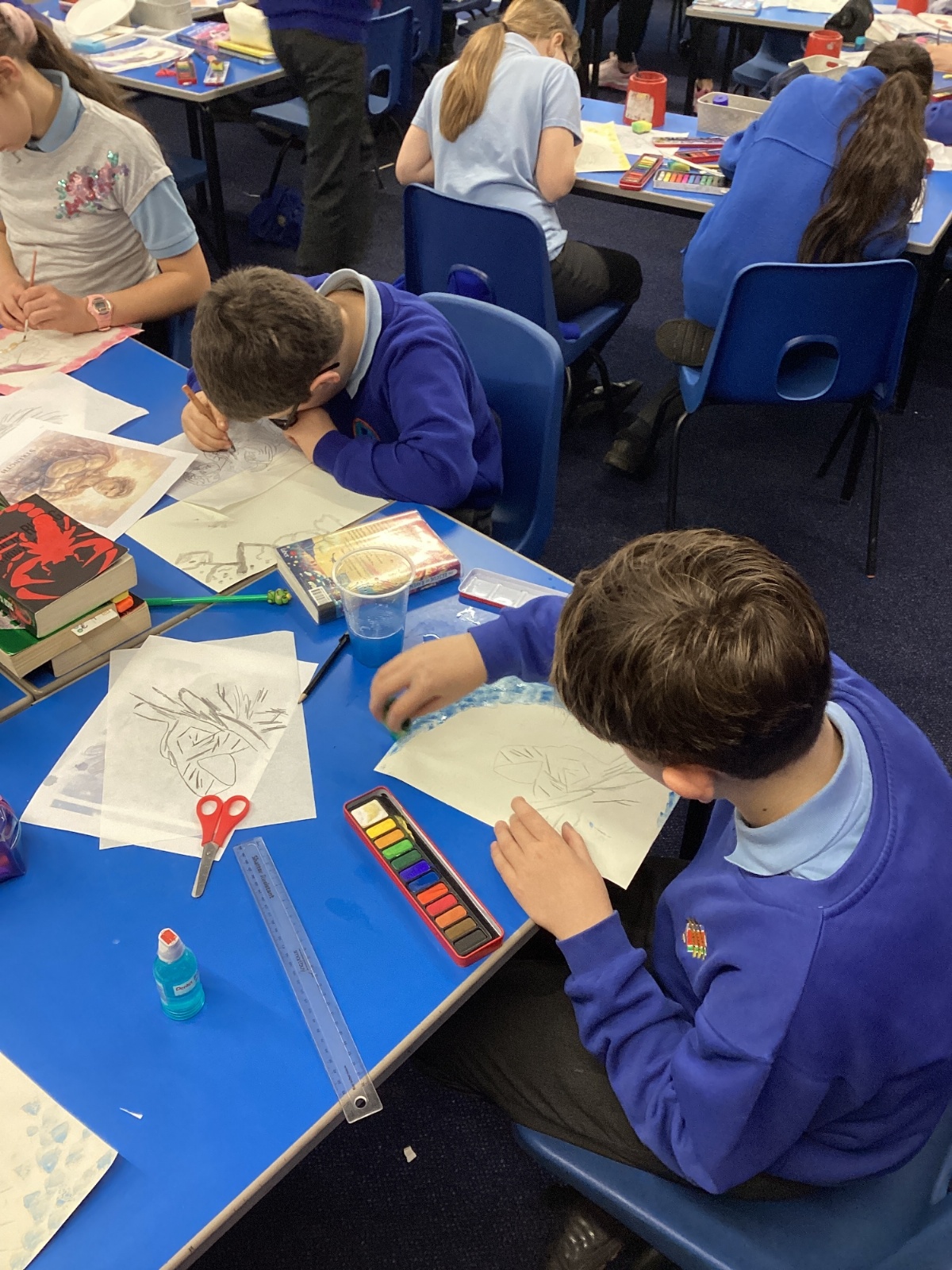
In Art, the children will design and make a clay tile, developing their skills in shaping, carving, painting and decorating clay, while exploring patterns and shapes. Please ensure the children have an art shirt in school on Fridays.
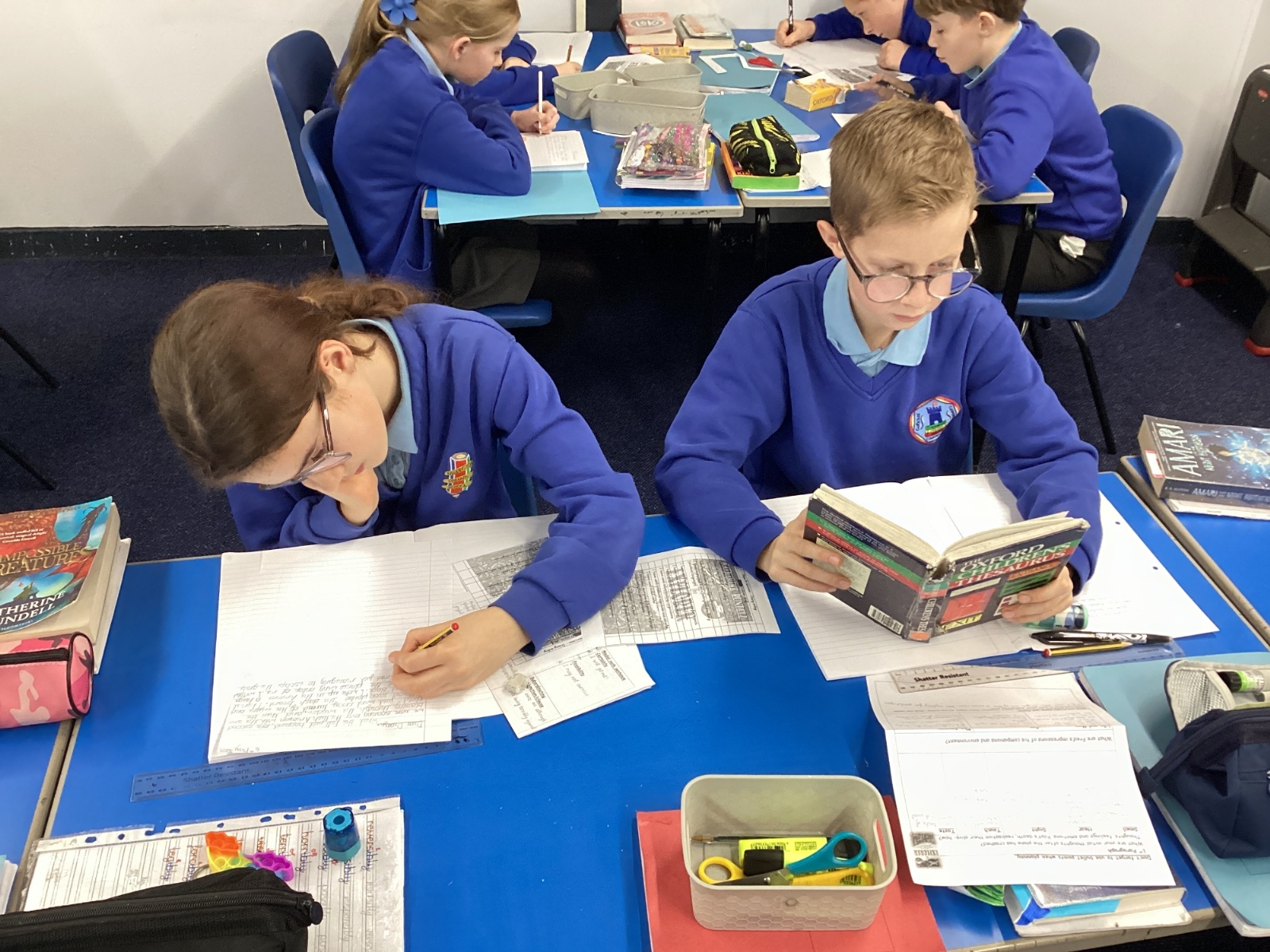
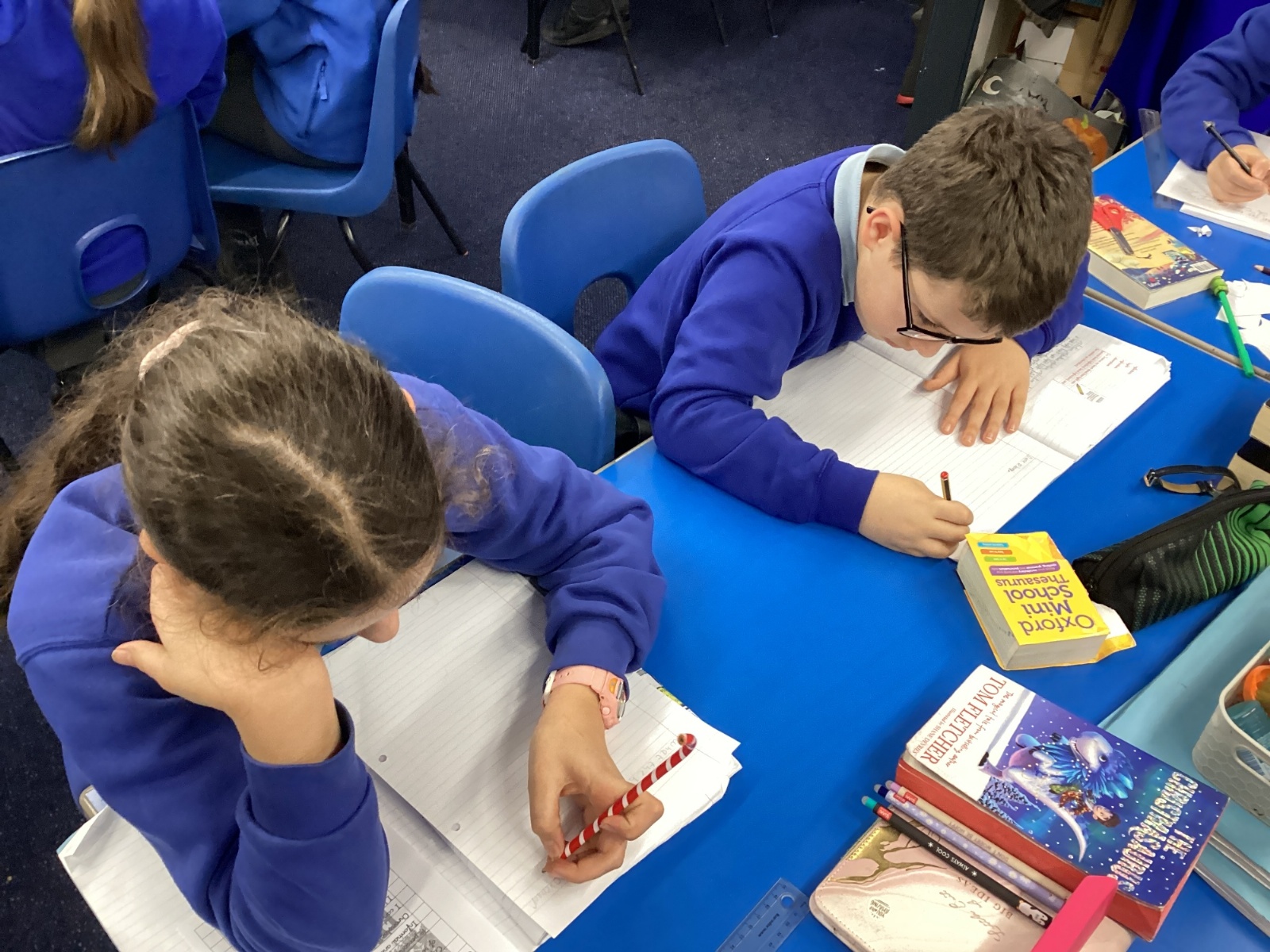
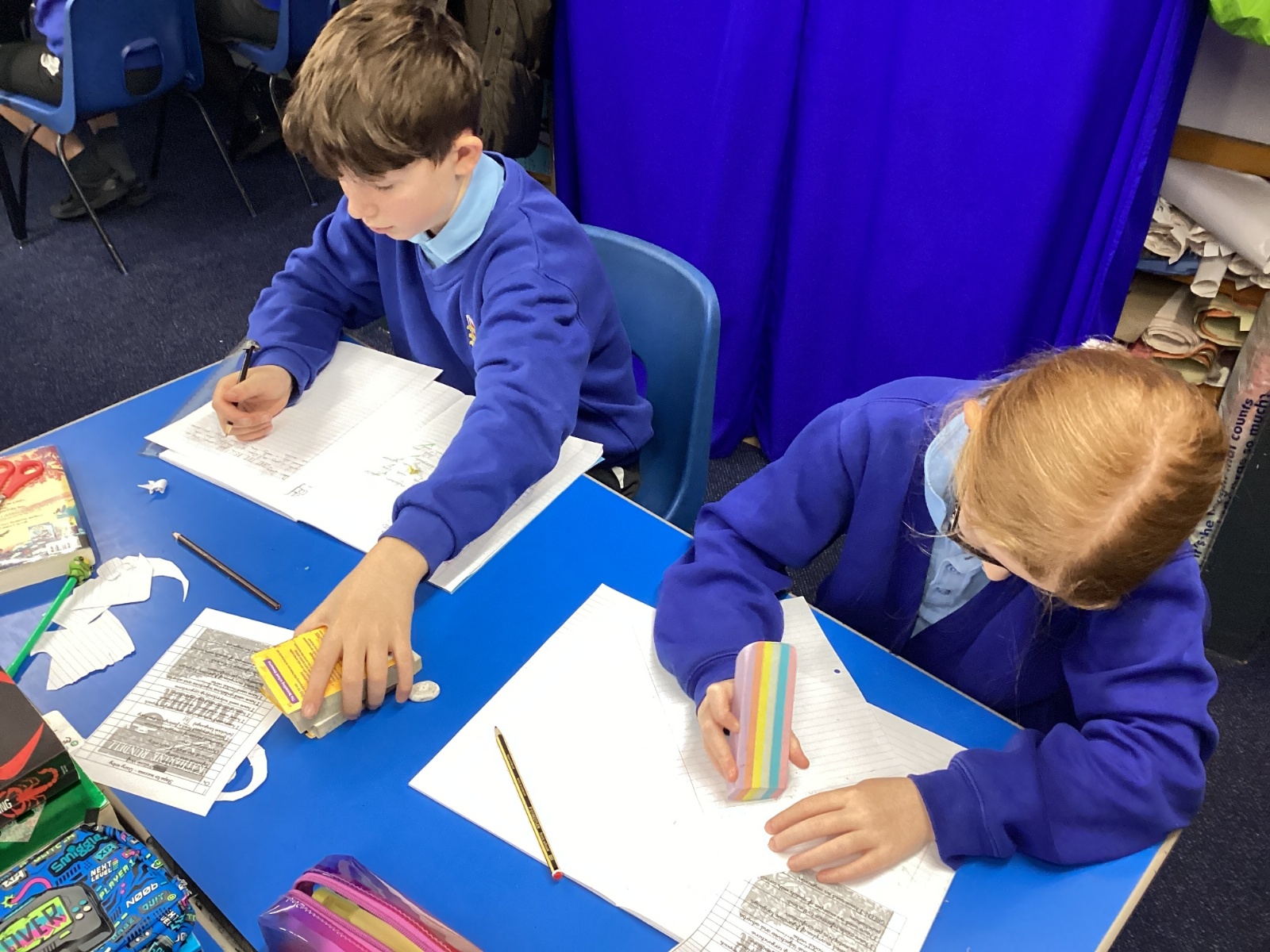
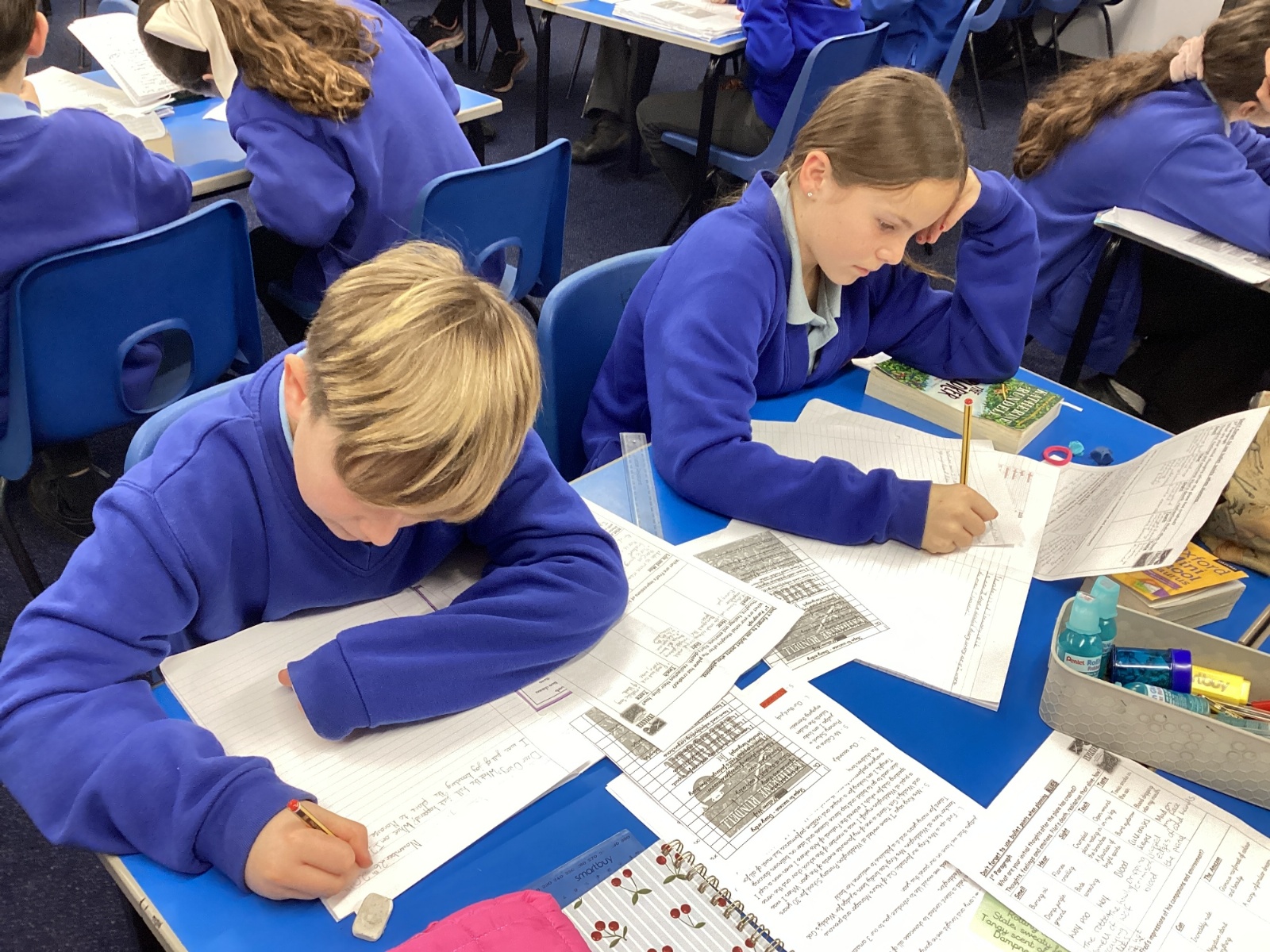
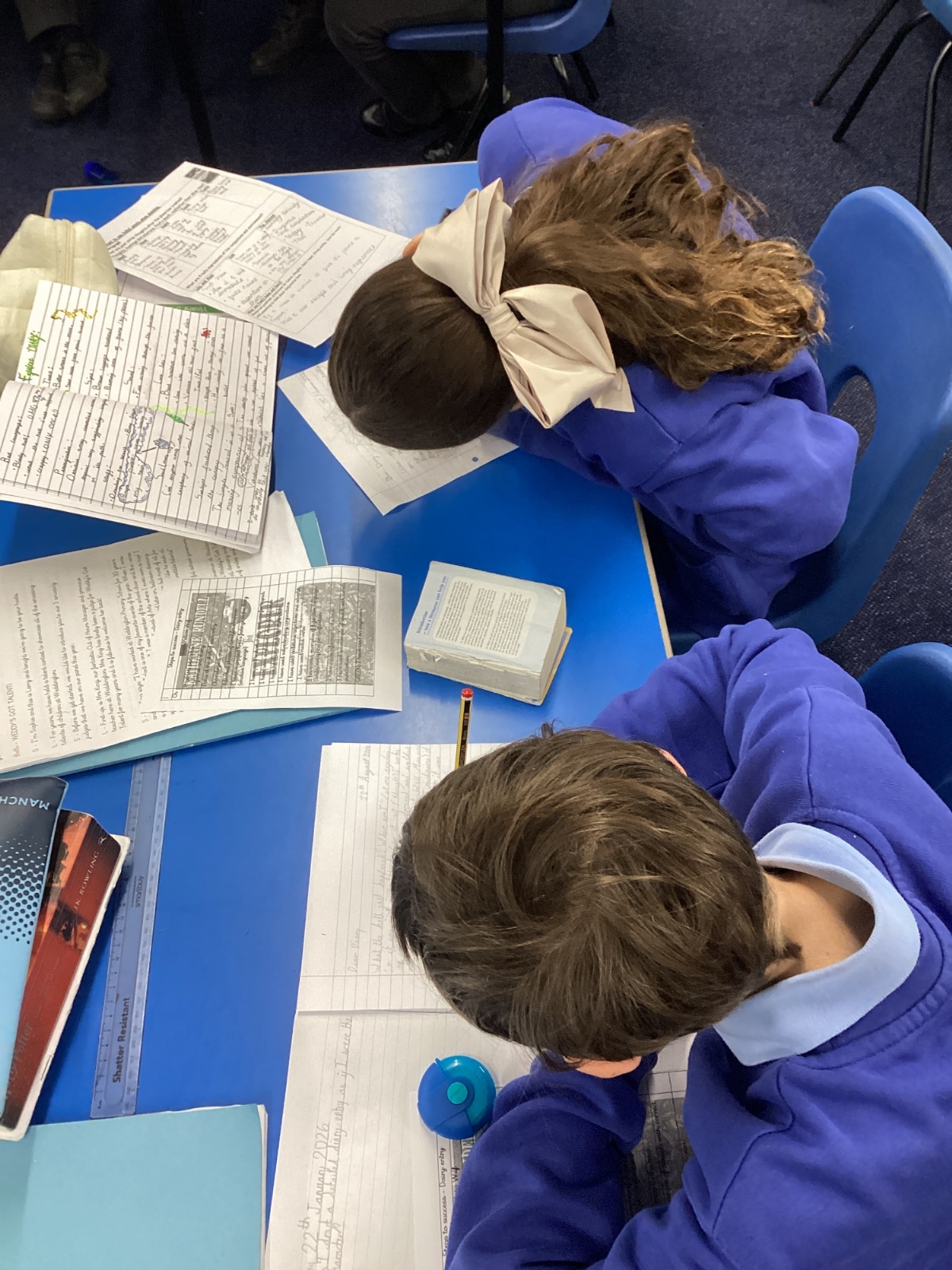
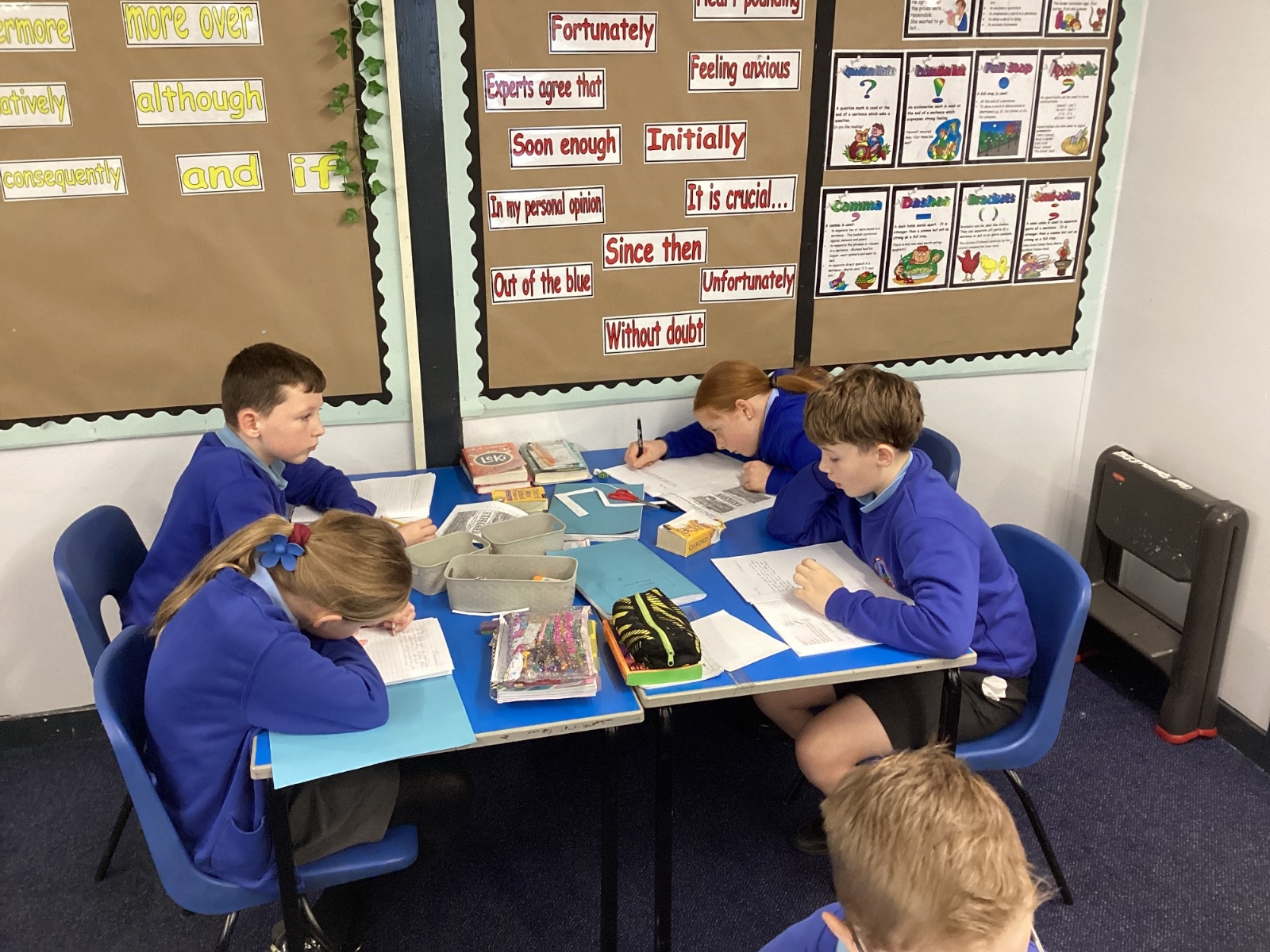
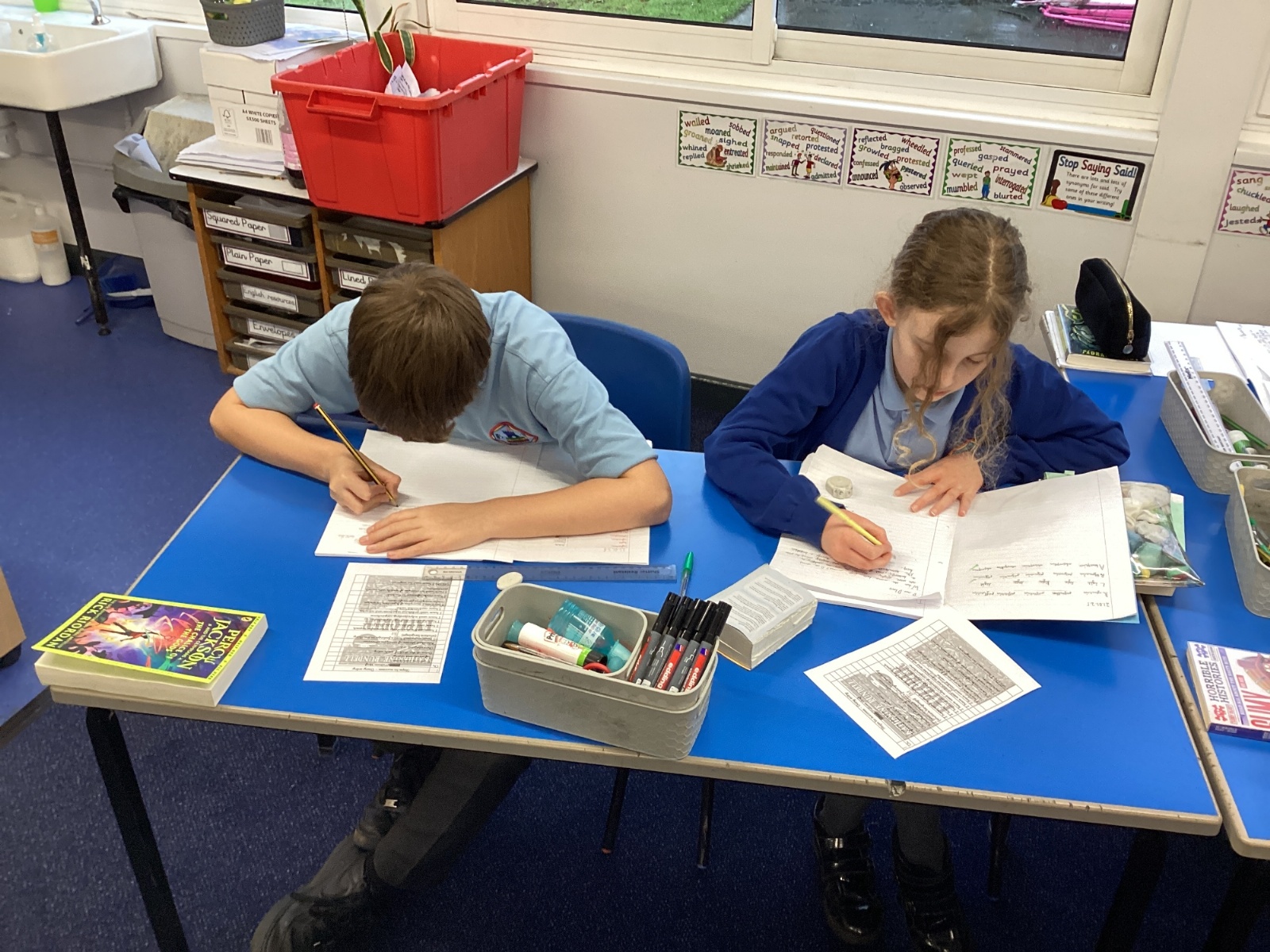
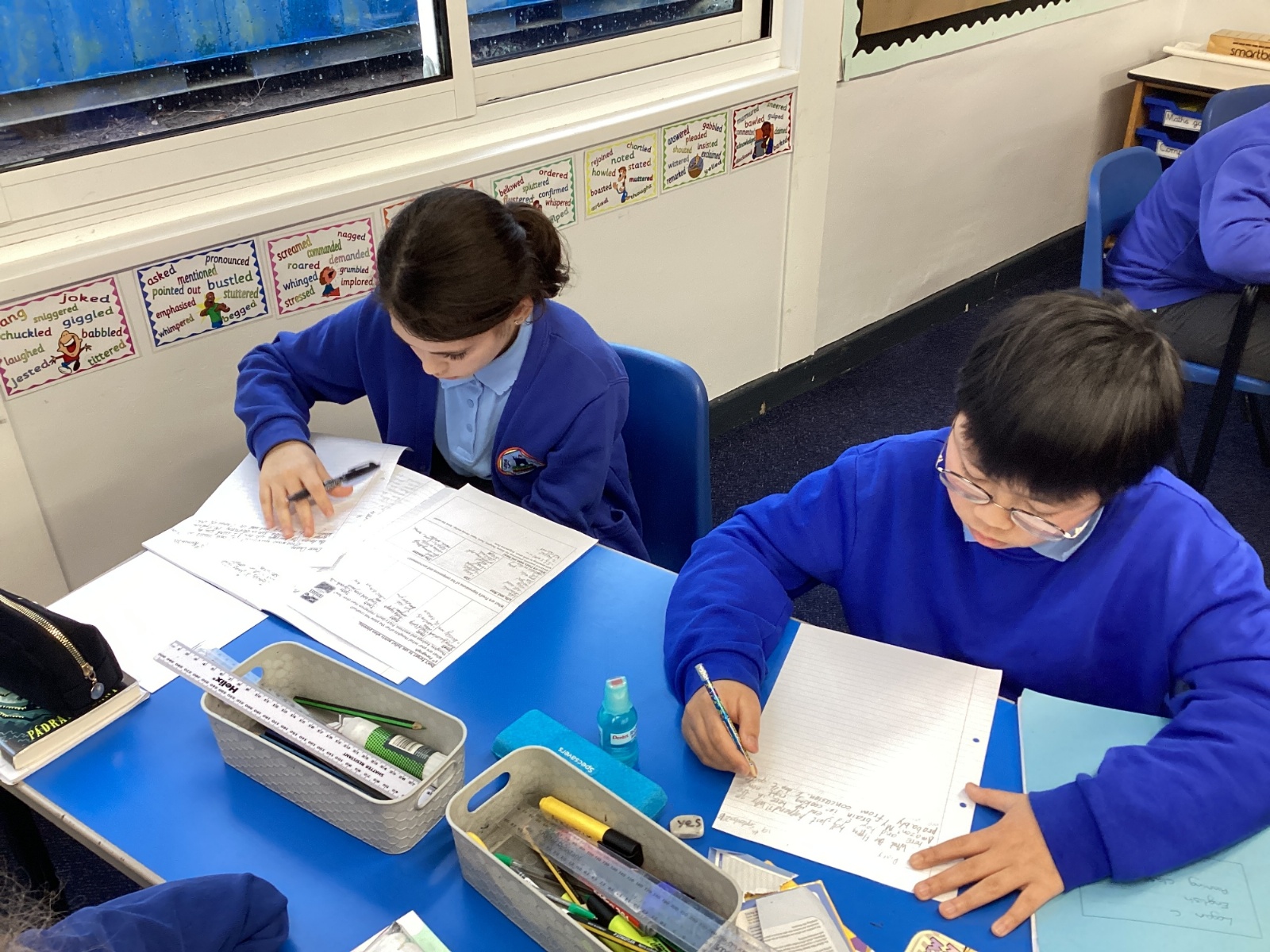
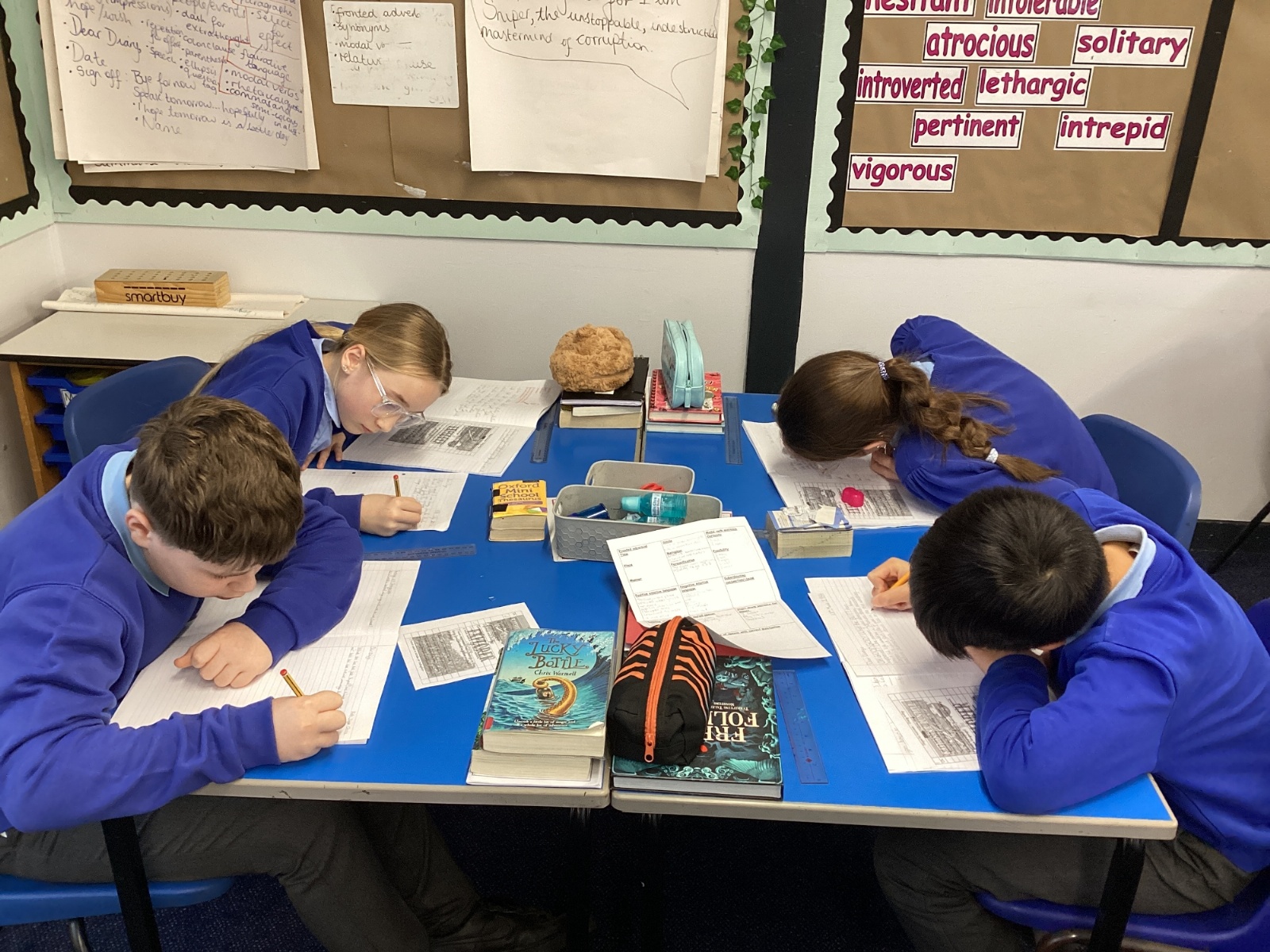
Throughout English, the children will continue to embed a range of grammar skills in their extended writing. They will plan, draft, edit, and publish a range of genres, including an instruction text, story ending, a magazine article, character description, formal letter, and an extended story.
In Maths, the children will continue to develop their knowledge and understanding of key concepts linking to angles, ratio, algebra, position and direction, perimeter, area, and volume, as well as learning about BIDMAS. In these lessons, children will also develop their fluency skills, practising arithmetic-style questions and applying this knowledge to reasoning-style problems.
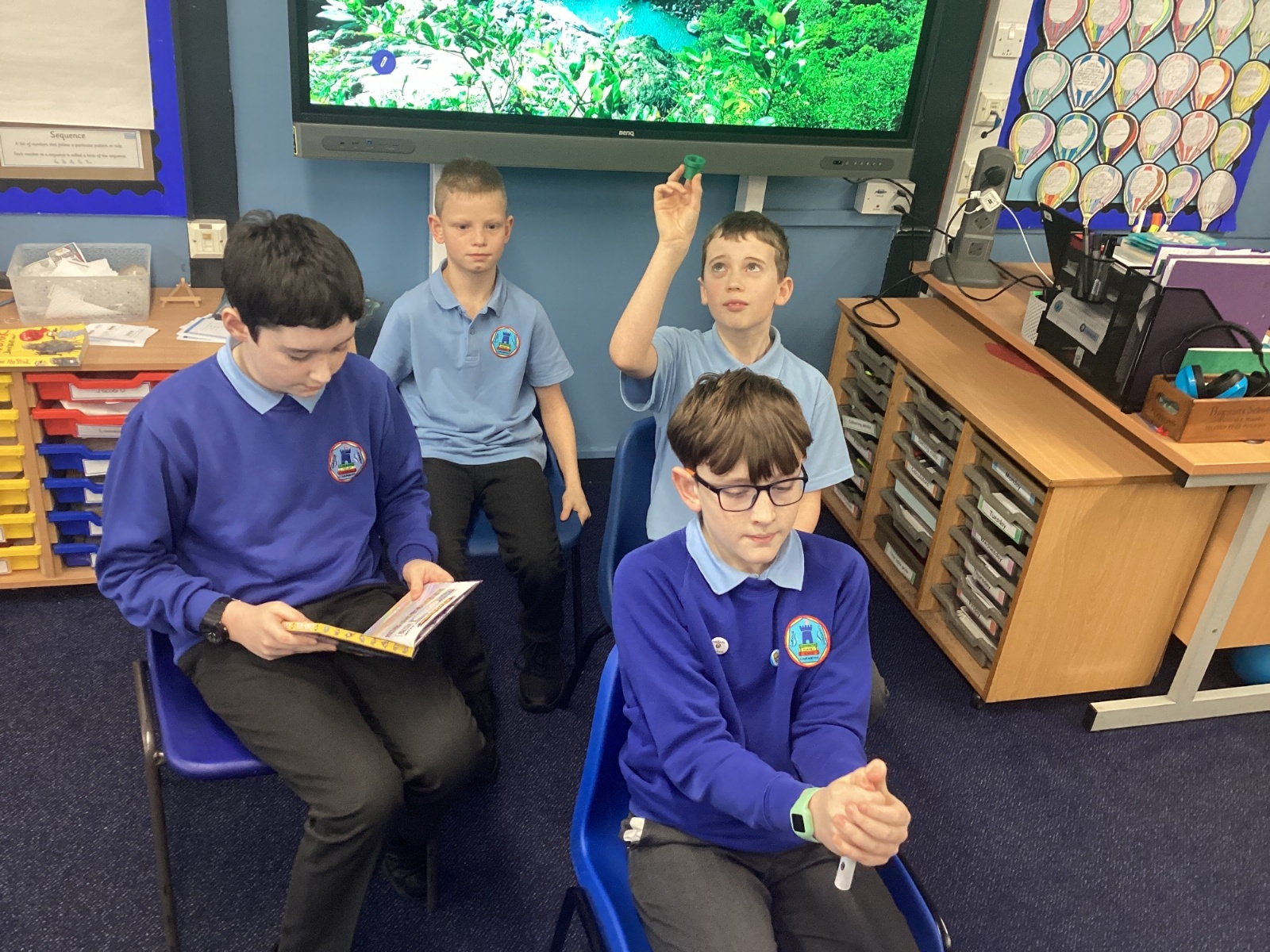
Science focuses on the study of ‘Light’ and ‘Animals including Humans’, with a specific focus on the heart, blood vessels, and blood.
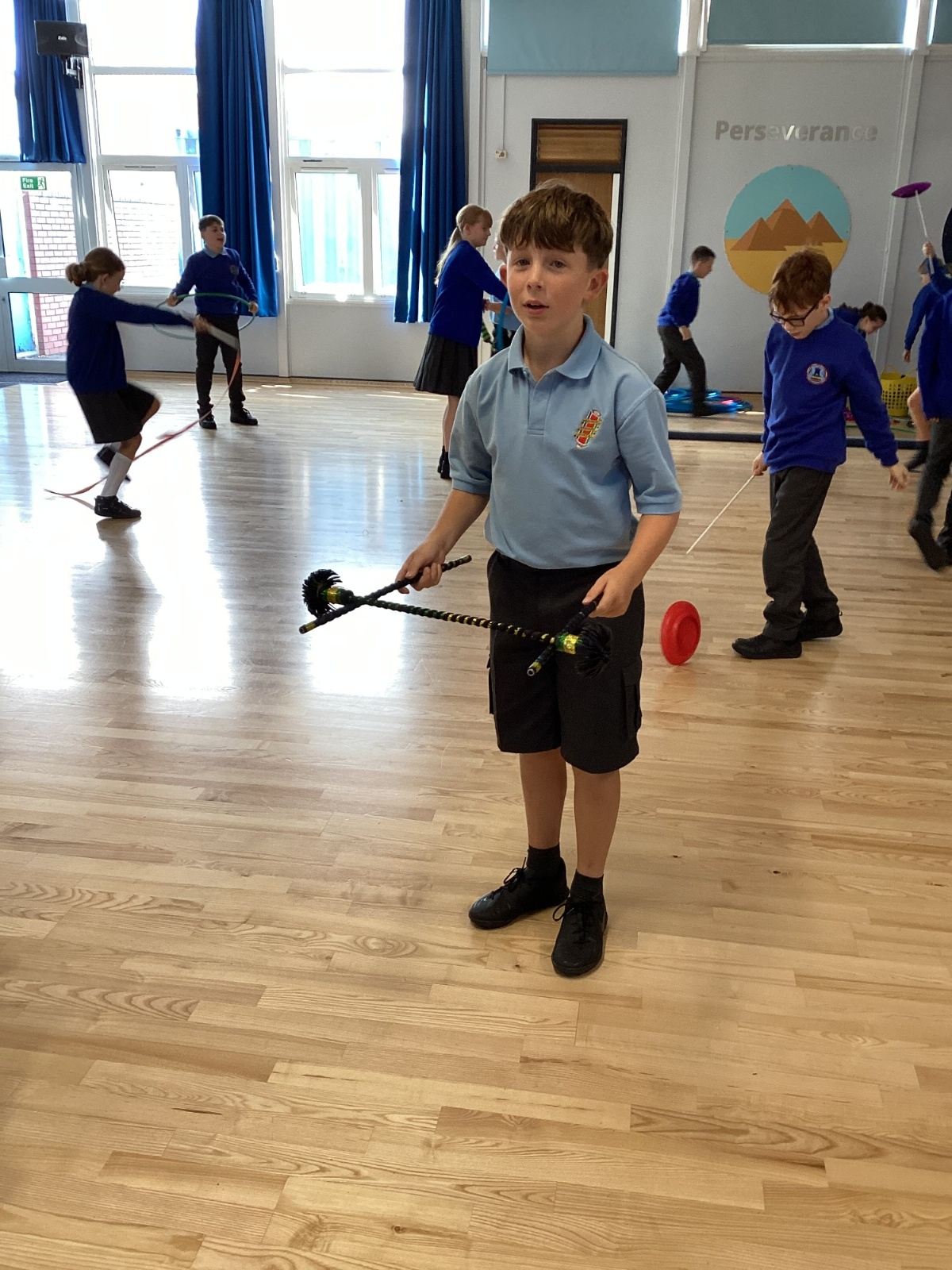
In PE, children will develop badminton, tennis, gymnastics, and Danish longball, taking part in a range of competitive games. Our outdoor PE day is Friday during this term, and Monday for indoor PE. Please see the uniform policy to ensure your child has appropriate clothing and footwear for PE.
In DT, children will focus on developing their construction skills by designing an interactive book for younger children, combining creativity, problem-solving, and practical building techniques.
In PSHE, during Spring 2, as part of our statutory Personal, Social, Health and Economic (PSHE) education and Relationships and Sex Education (RSE), the school takes part annually in the compulsory Taking Care Project, a Warwickshire-supported Protective Behaviours programme.
Throughout all subjects and lessons, we provide opportunities for Year 6 to be curious, confident, and courageous on their journey to becoming ‘Weddy Graduates.’
During this term, we will continue to focus on learning test skills and techniques in preparation for the children’s upcoming SATs in May. Talking to the children about SATs helps them to understand that this is normal classroom practice. After February half term, our afterschool revision sessions will begin. During this term, we will also be holding a parent/carer information evening about SATs.
Spring
Autumn Term
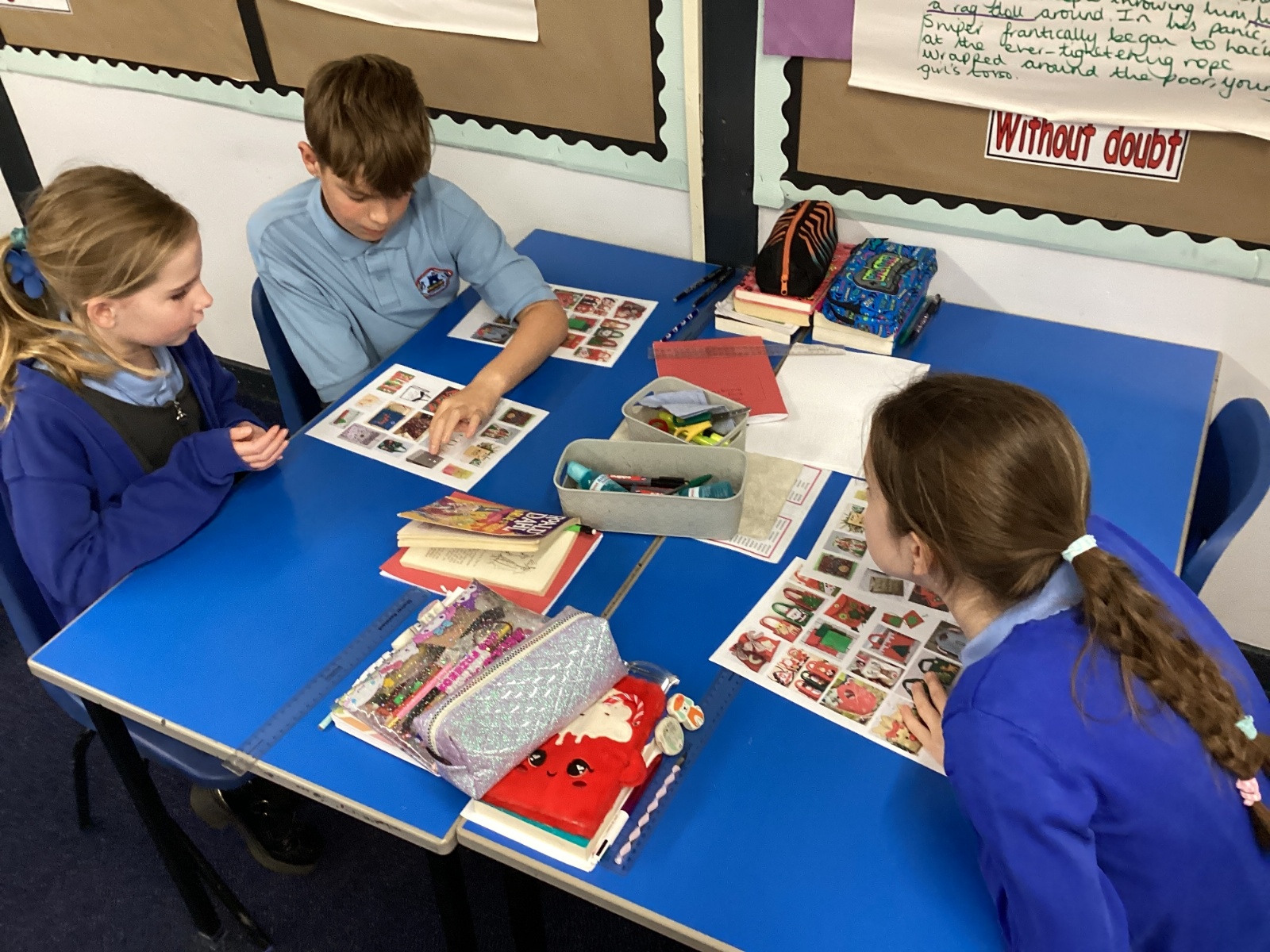
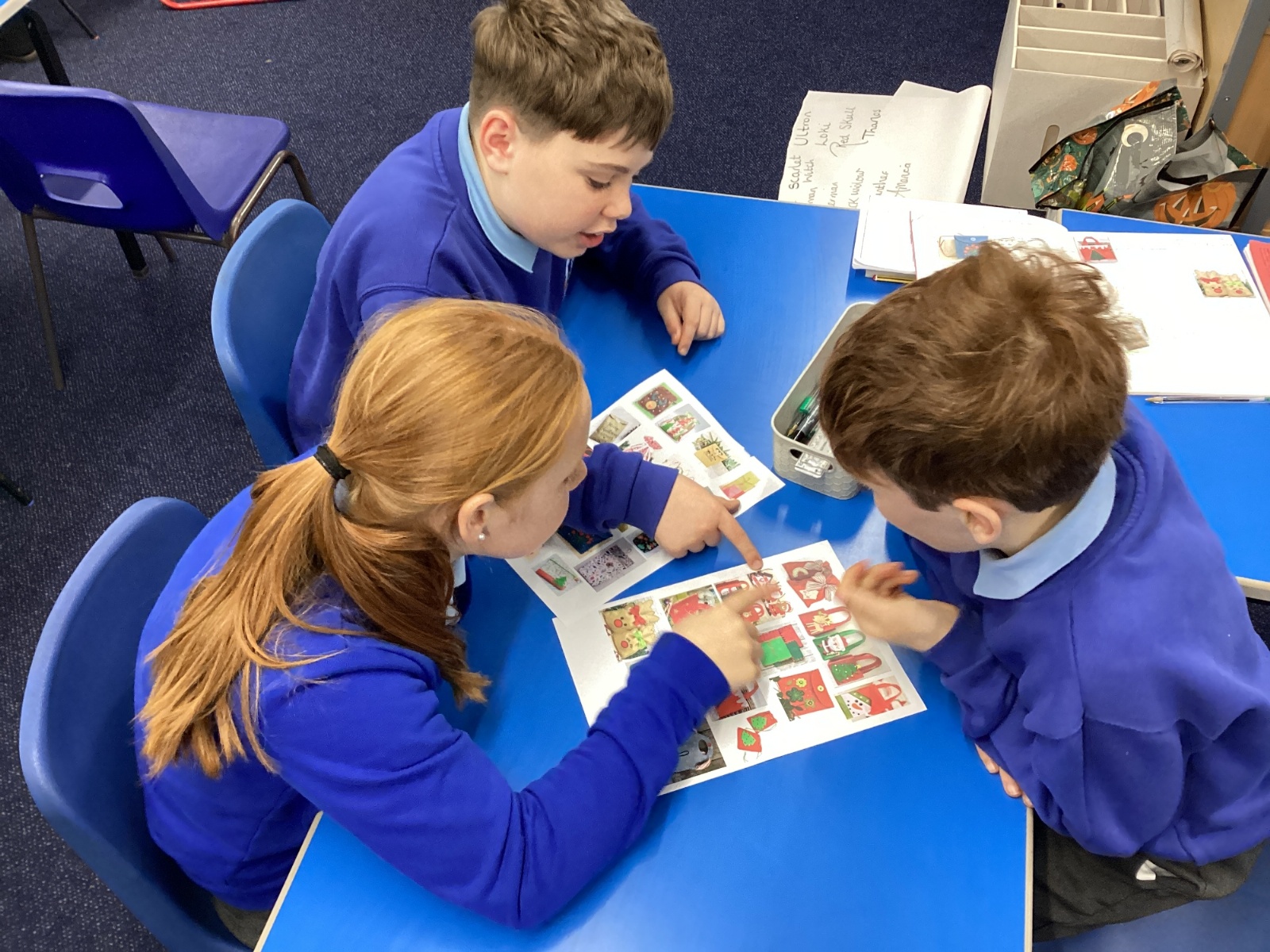
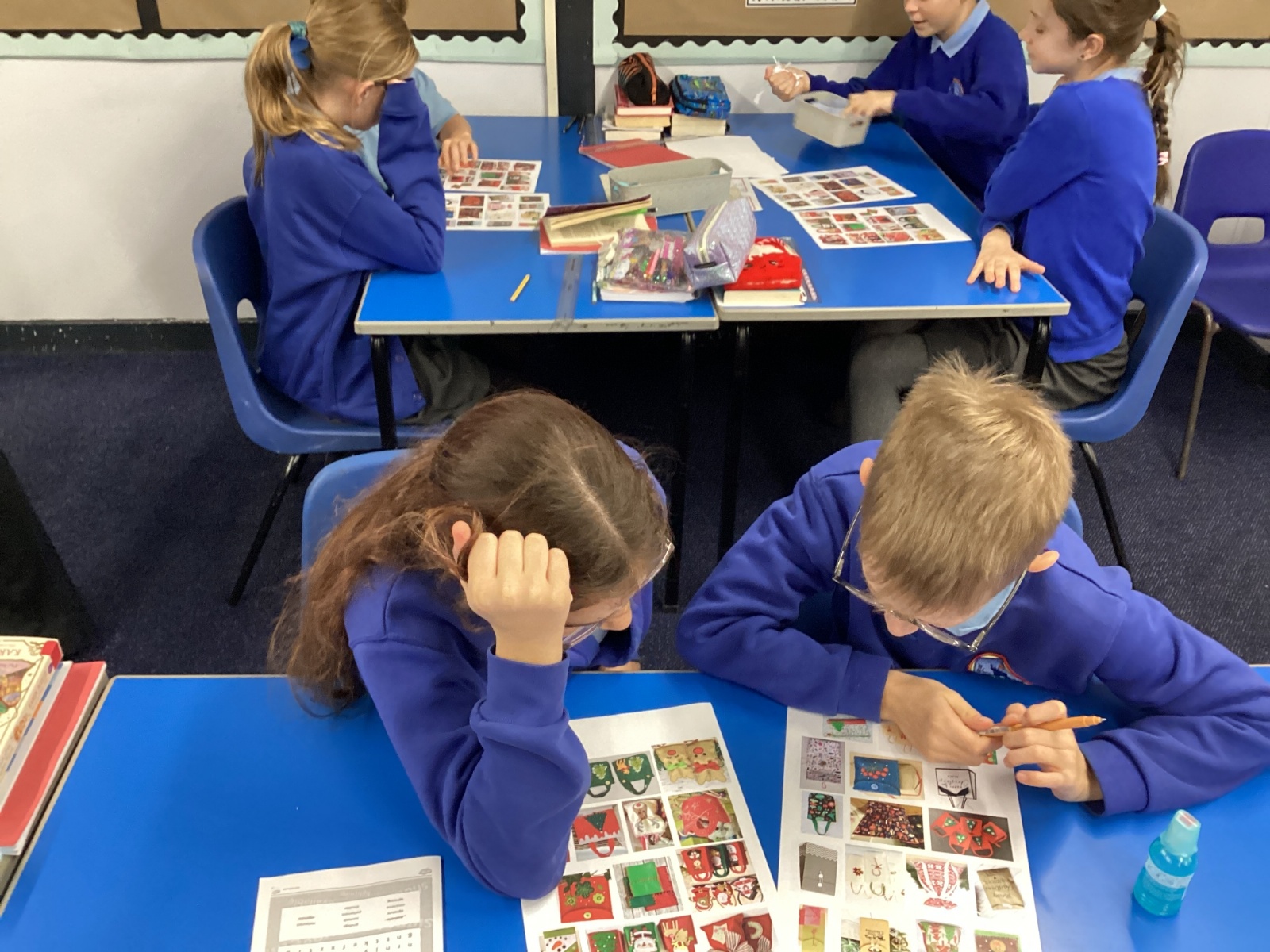
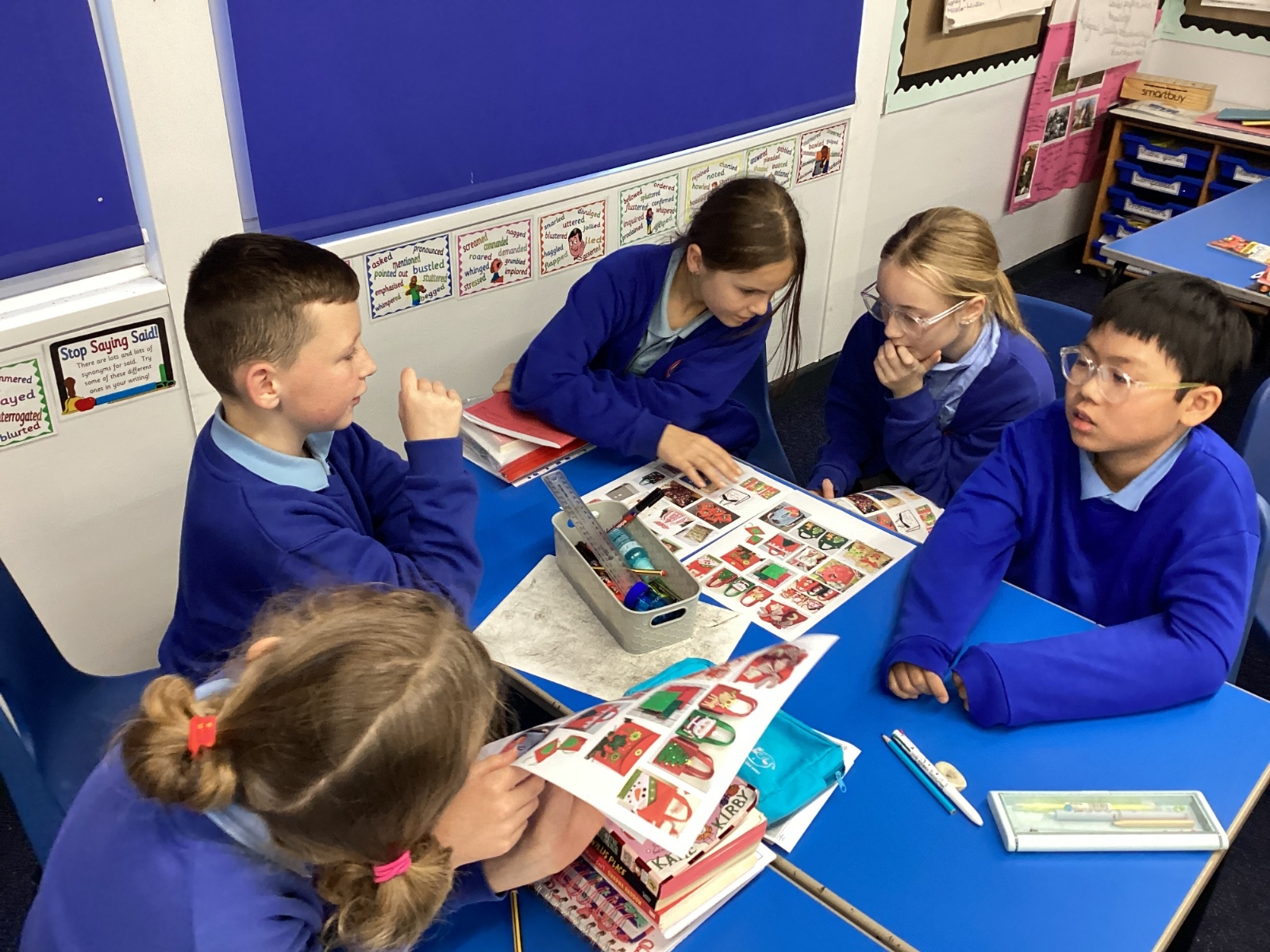
Welcome to Year 6. We are incredibly excited about teaching your children this year. We have many enjoyable opportunities, including school trips for the children to developing their learning.
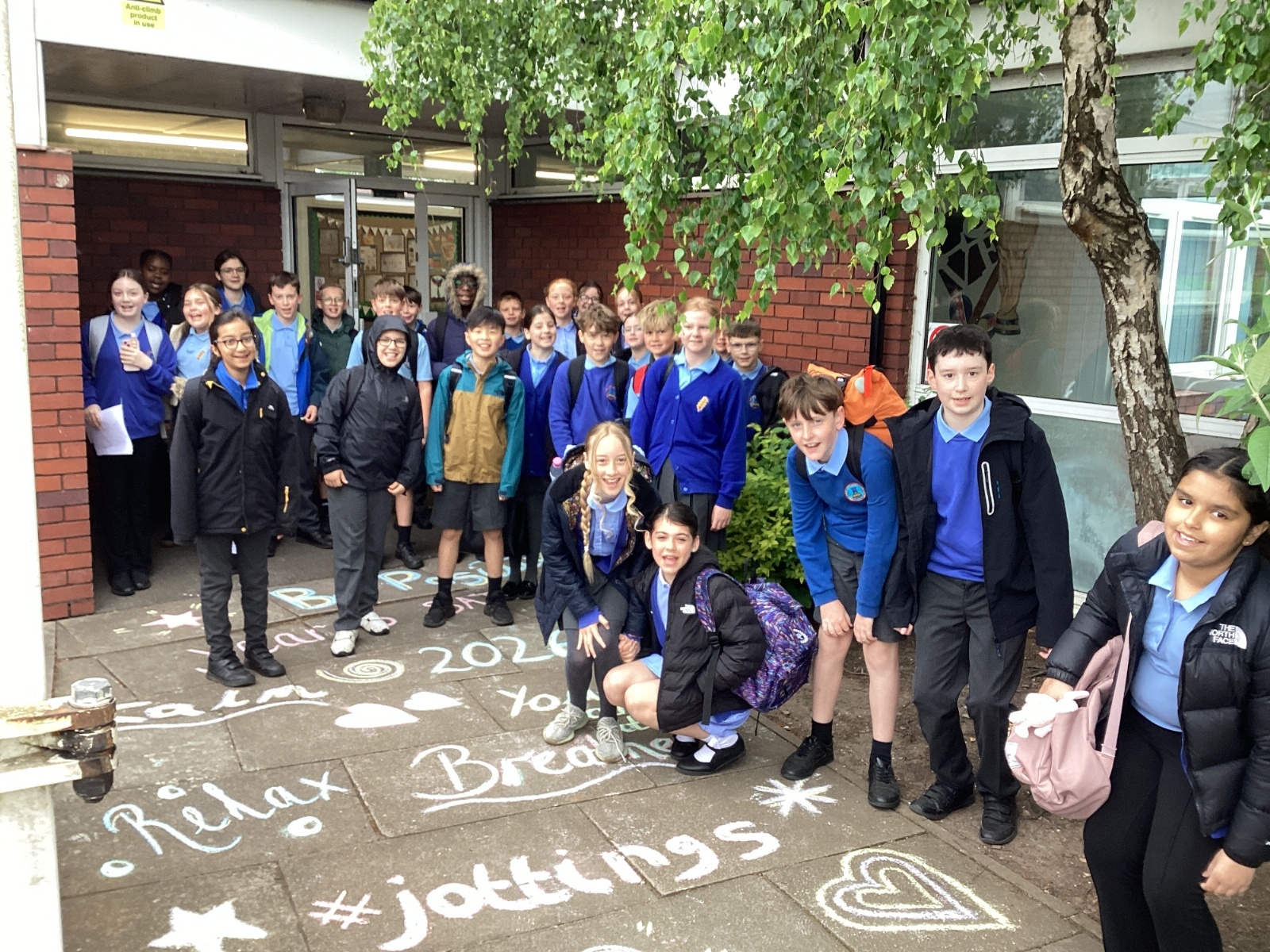
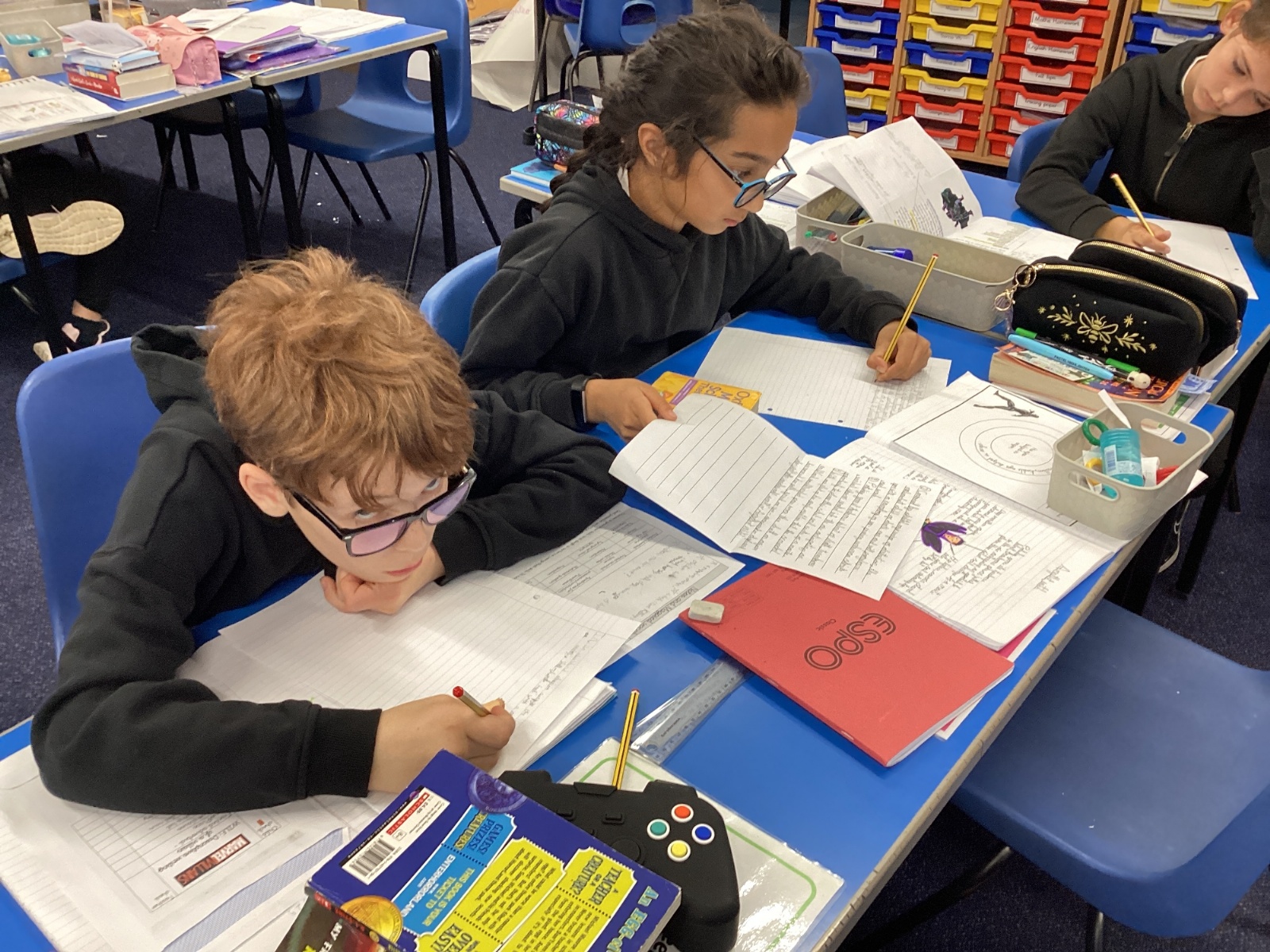
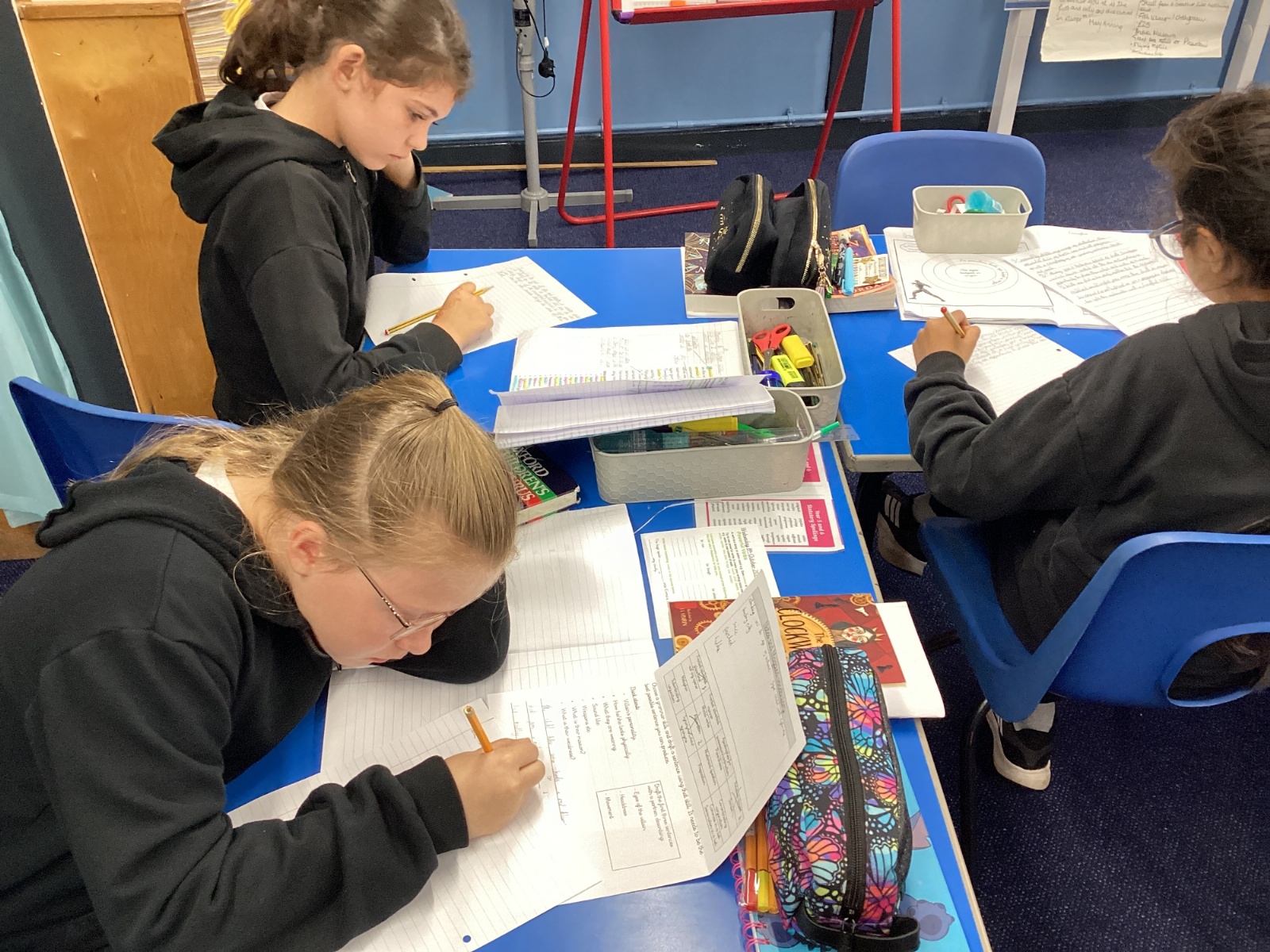
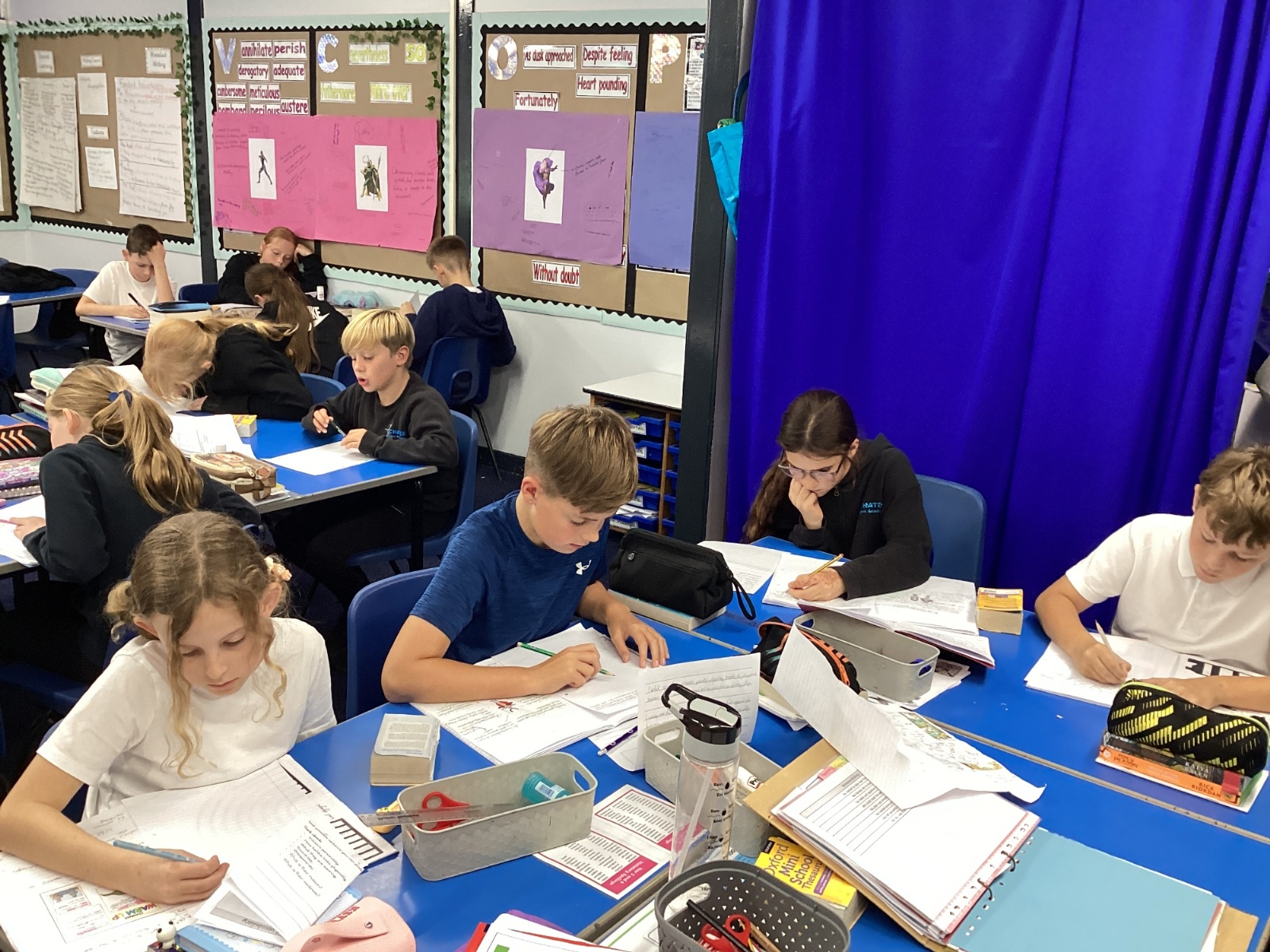
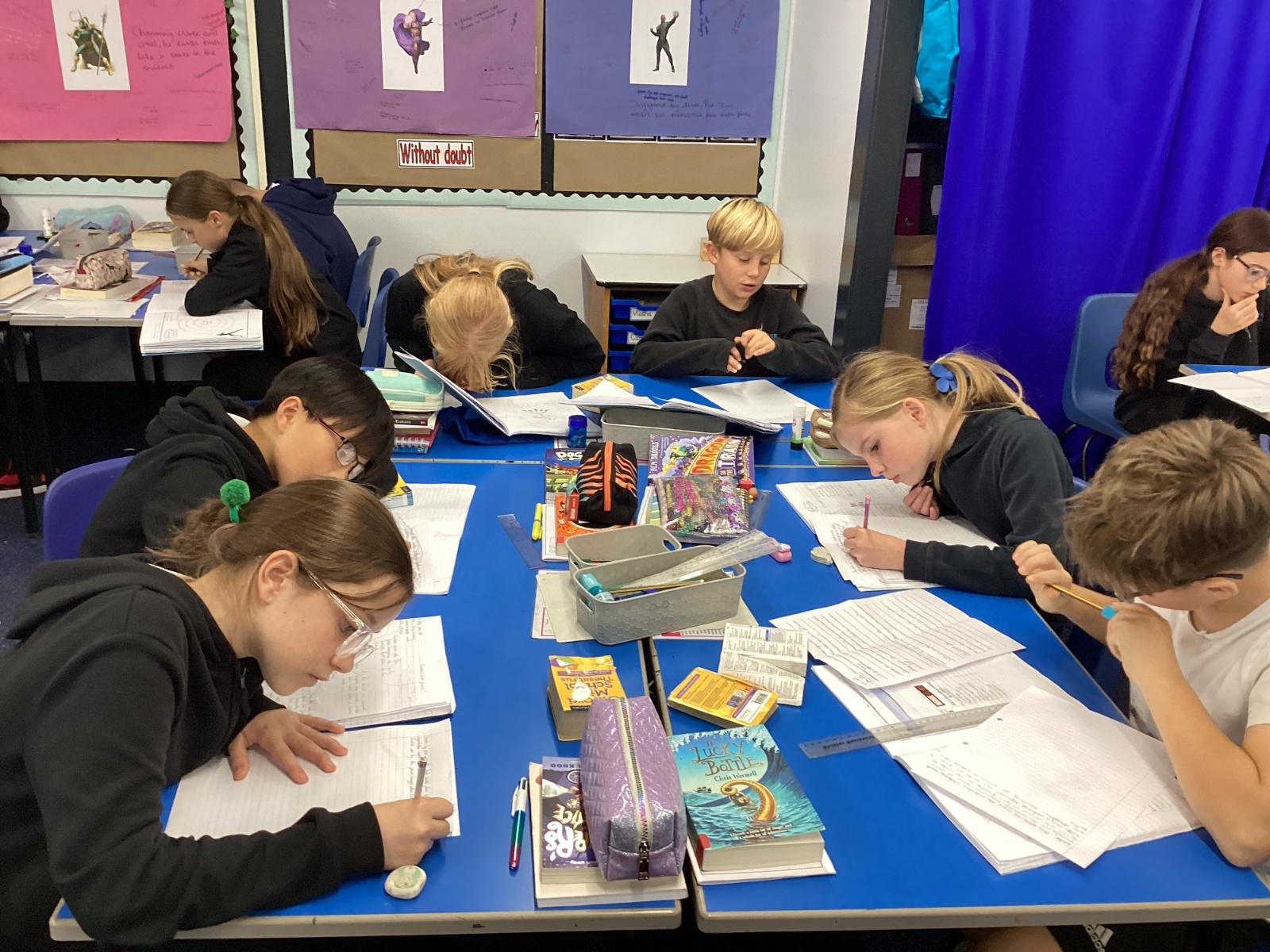
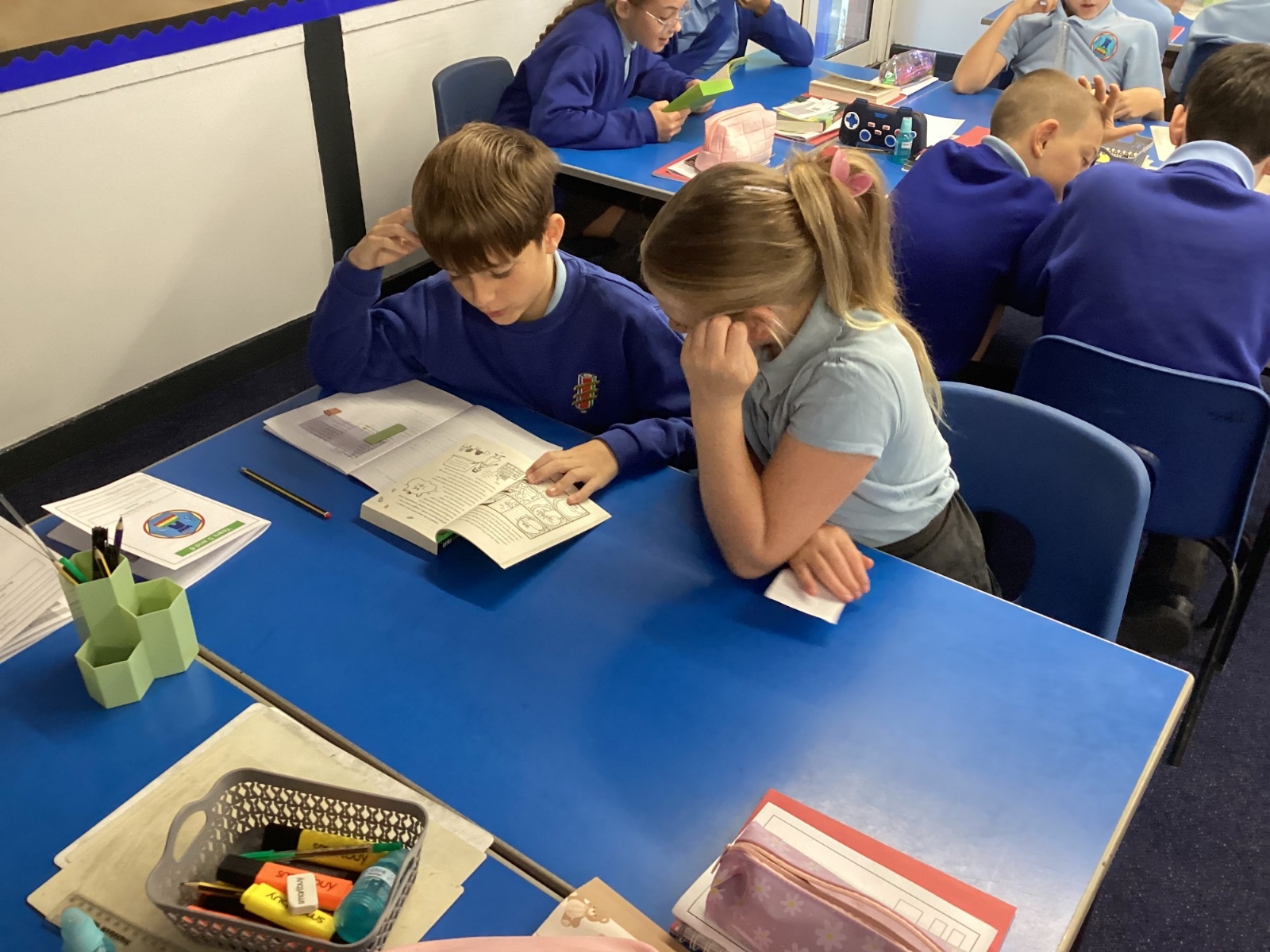
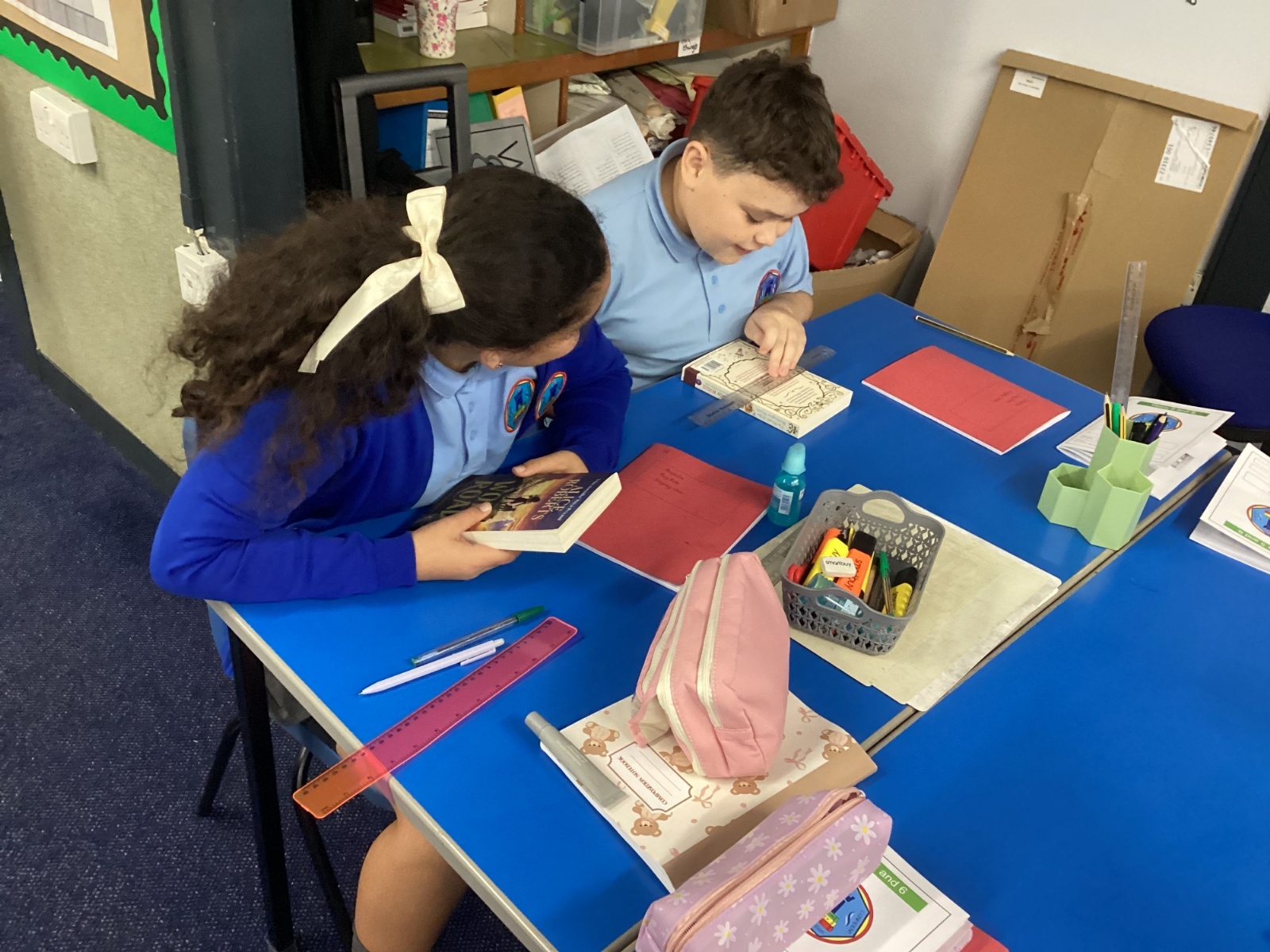
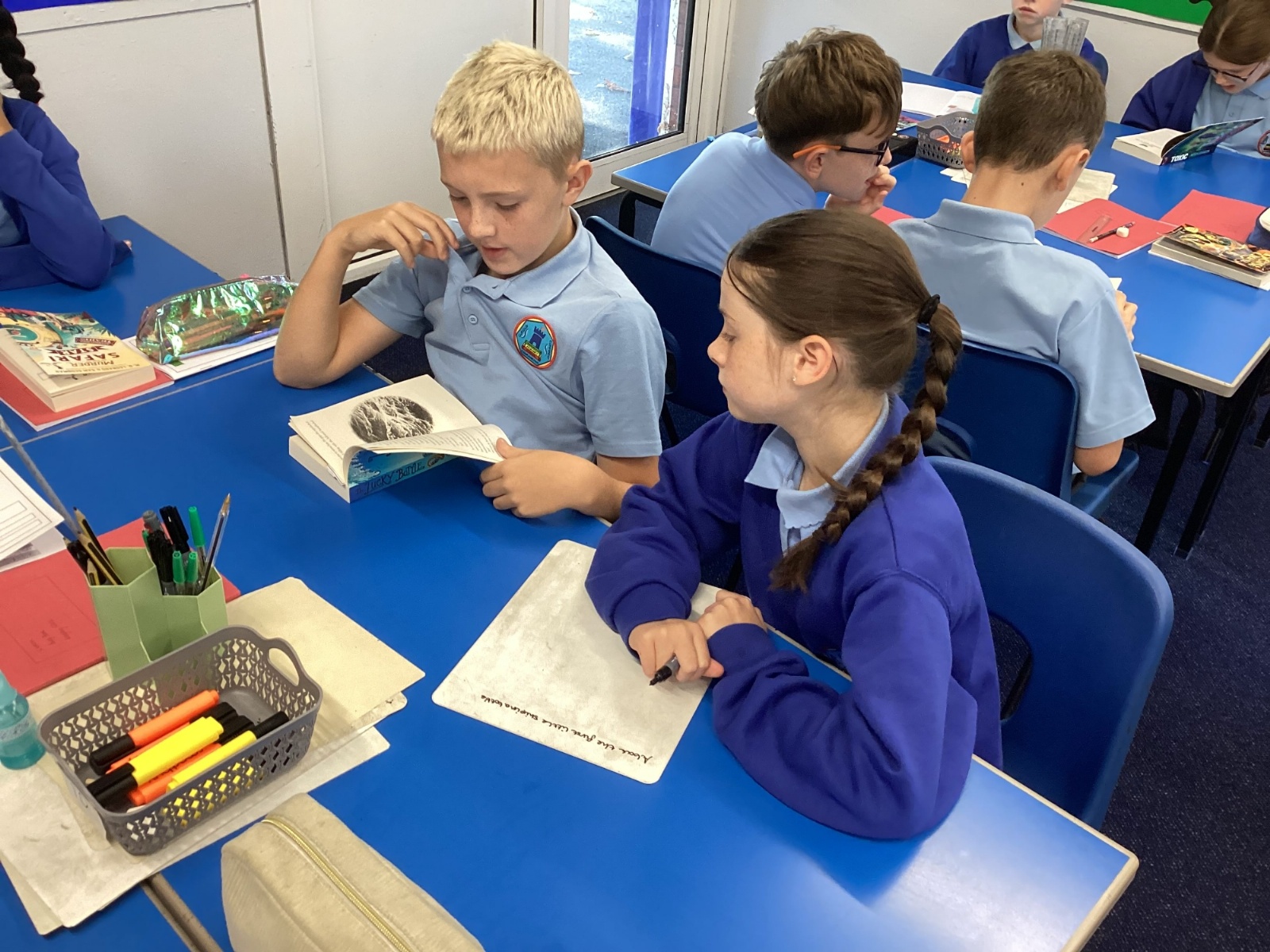
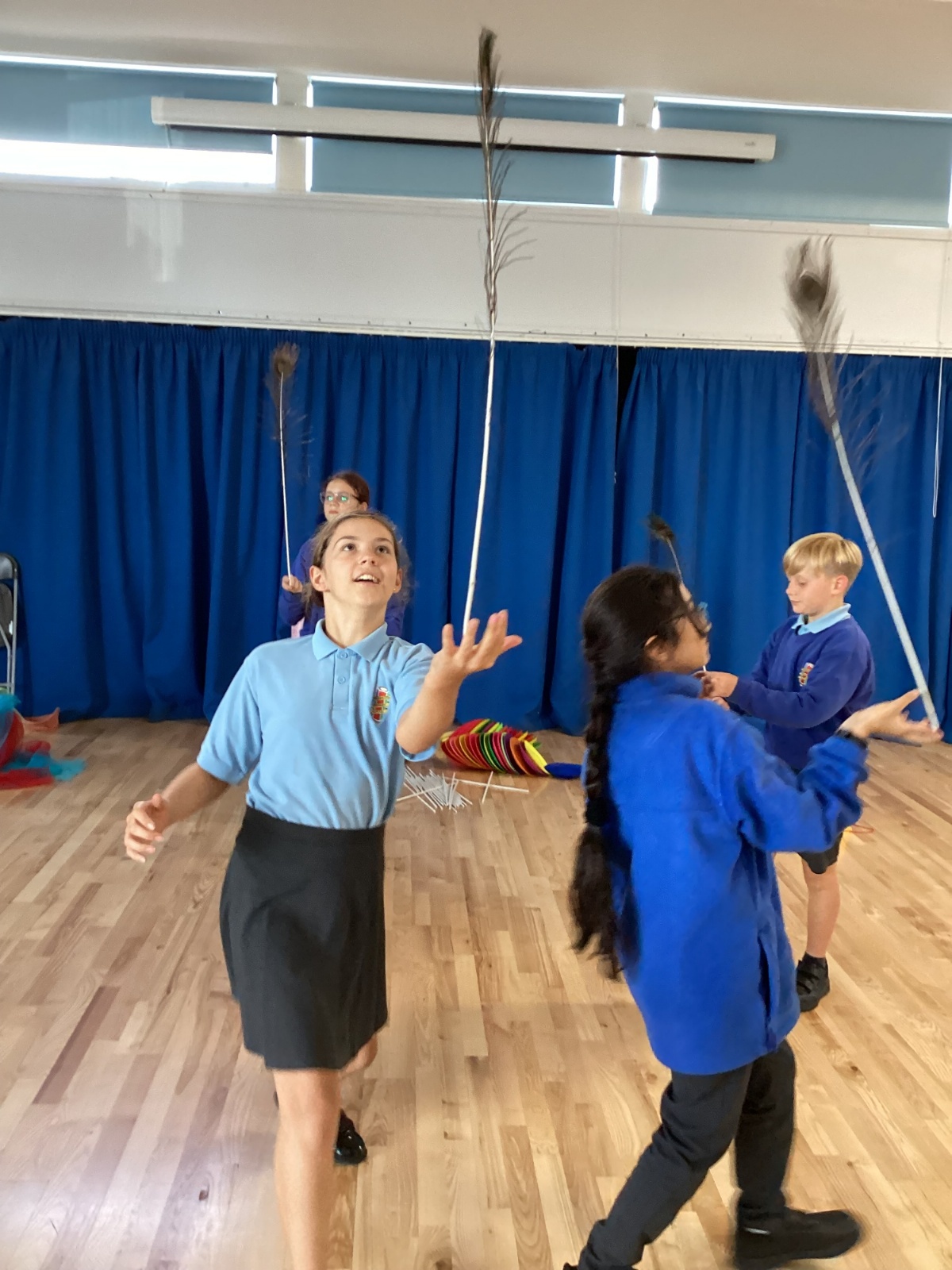
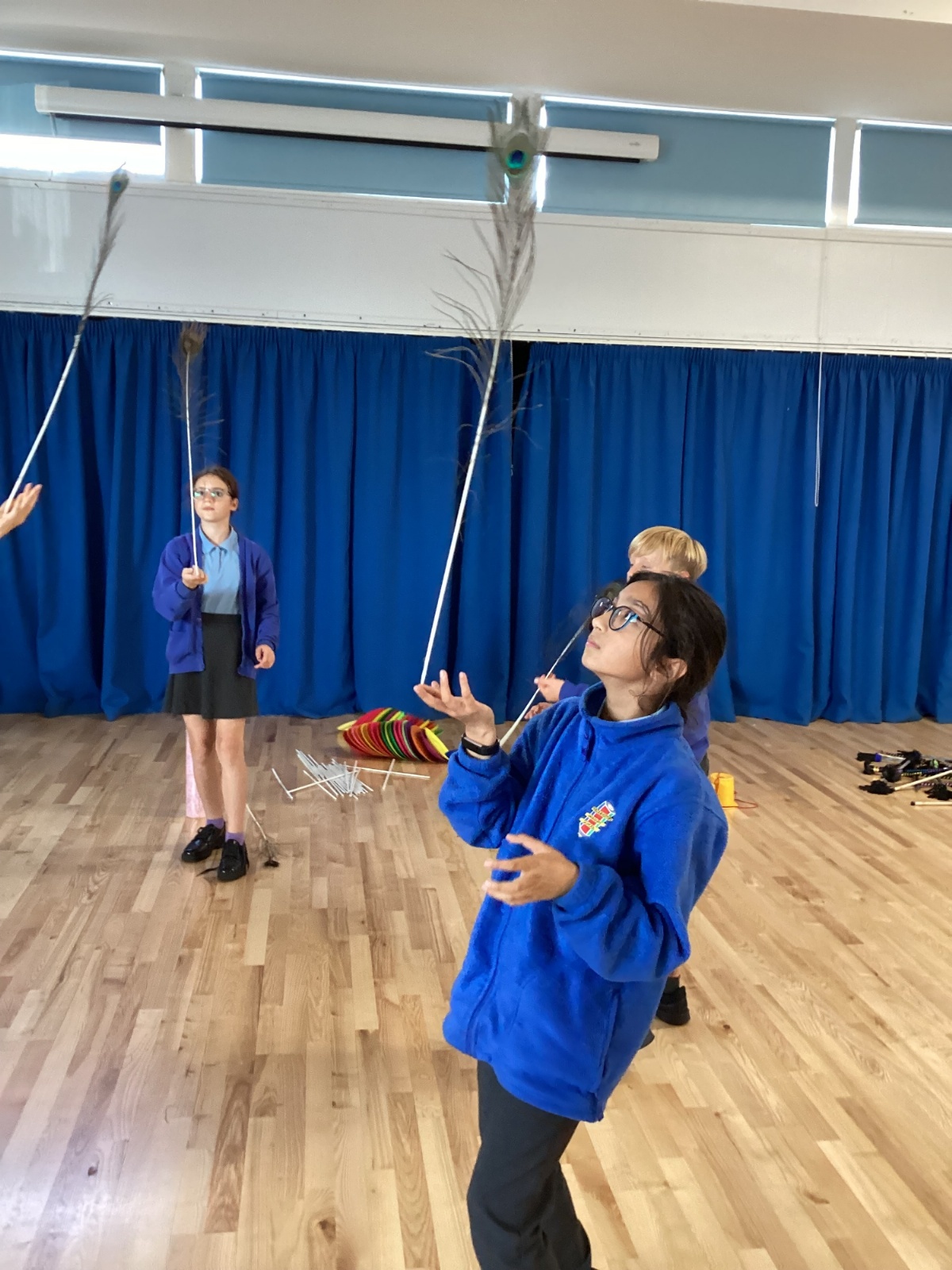
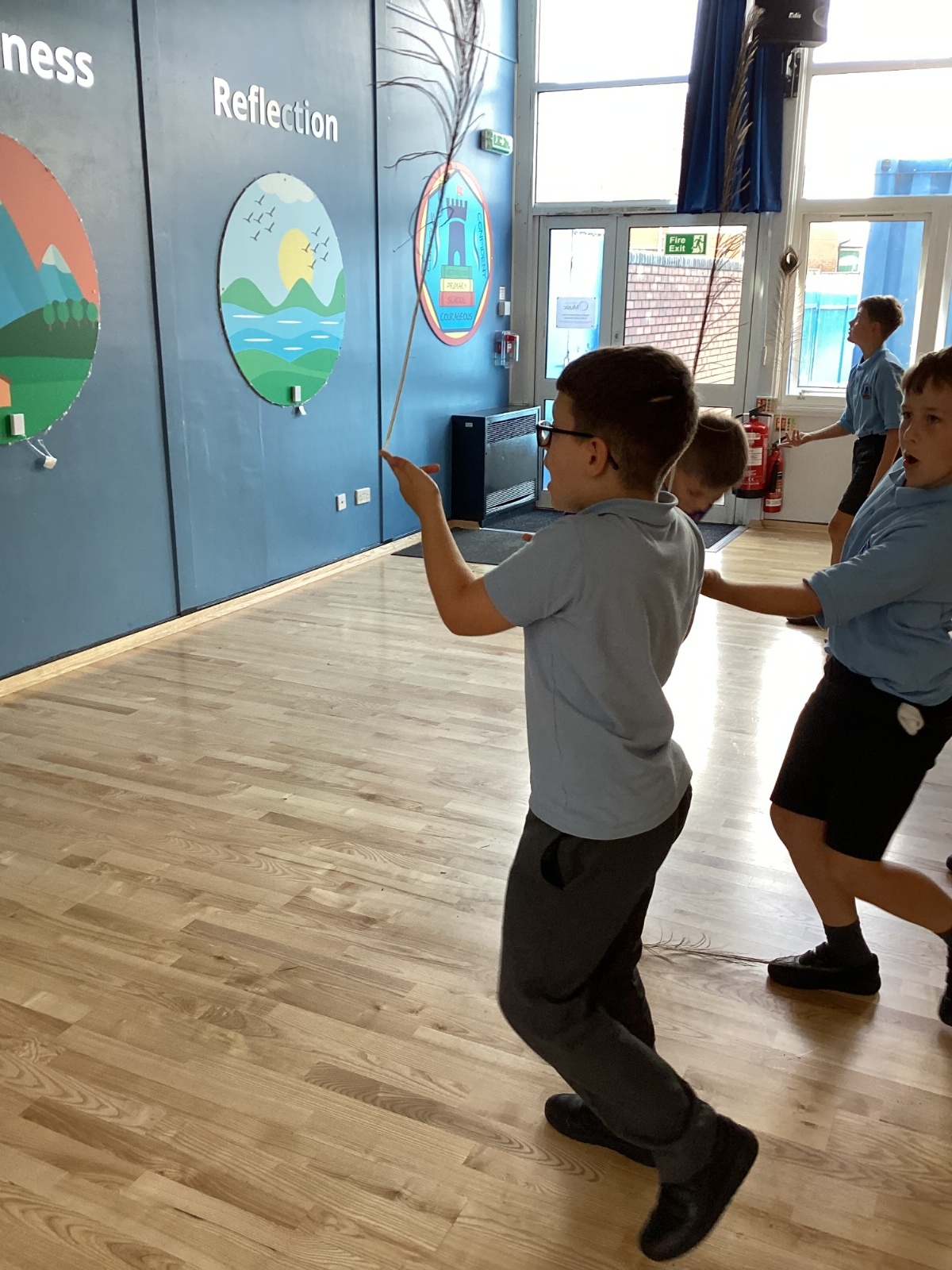
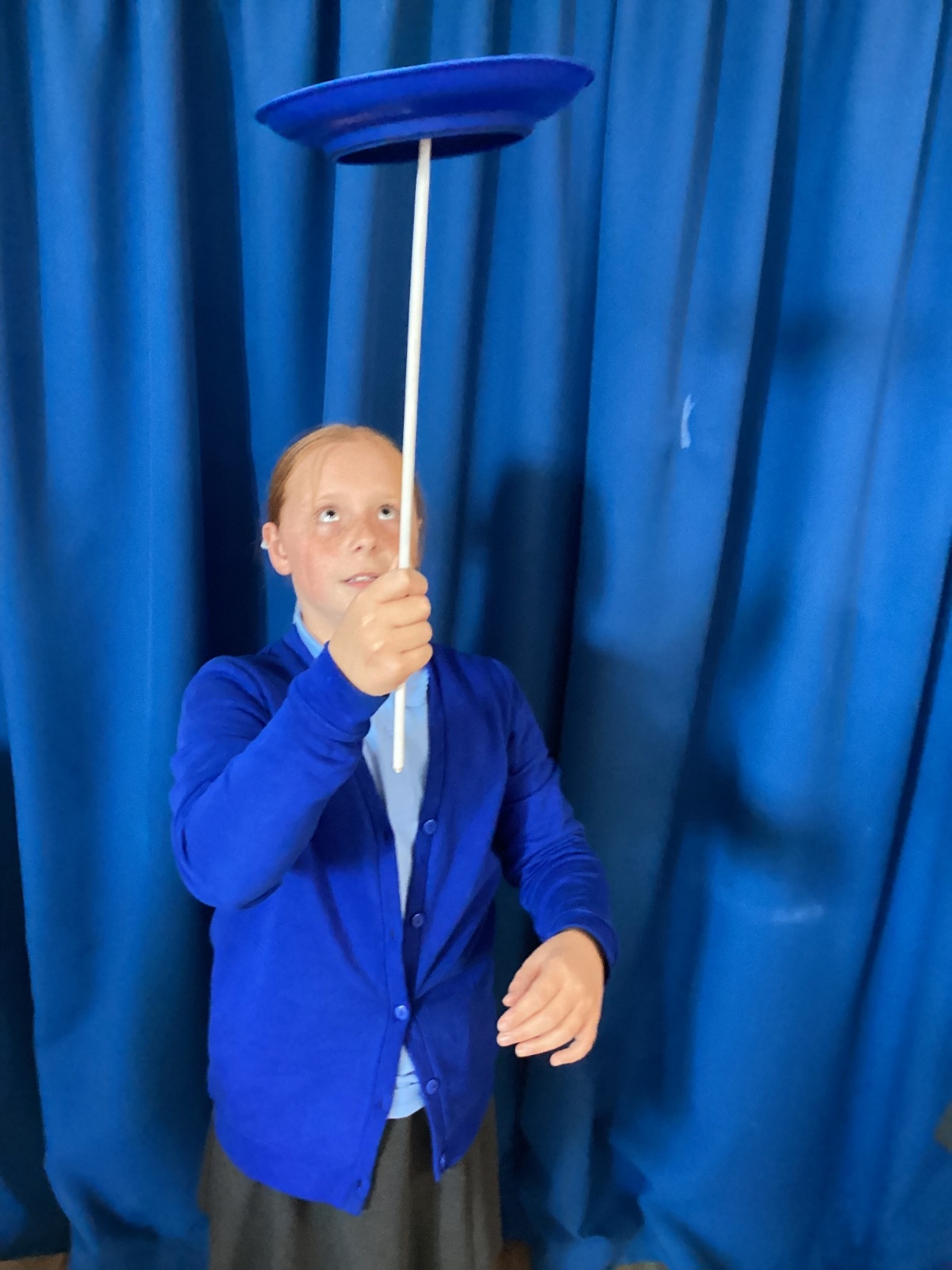
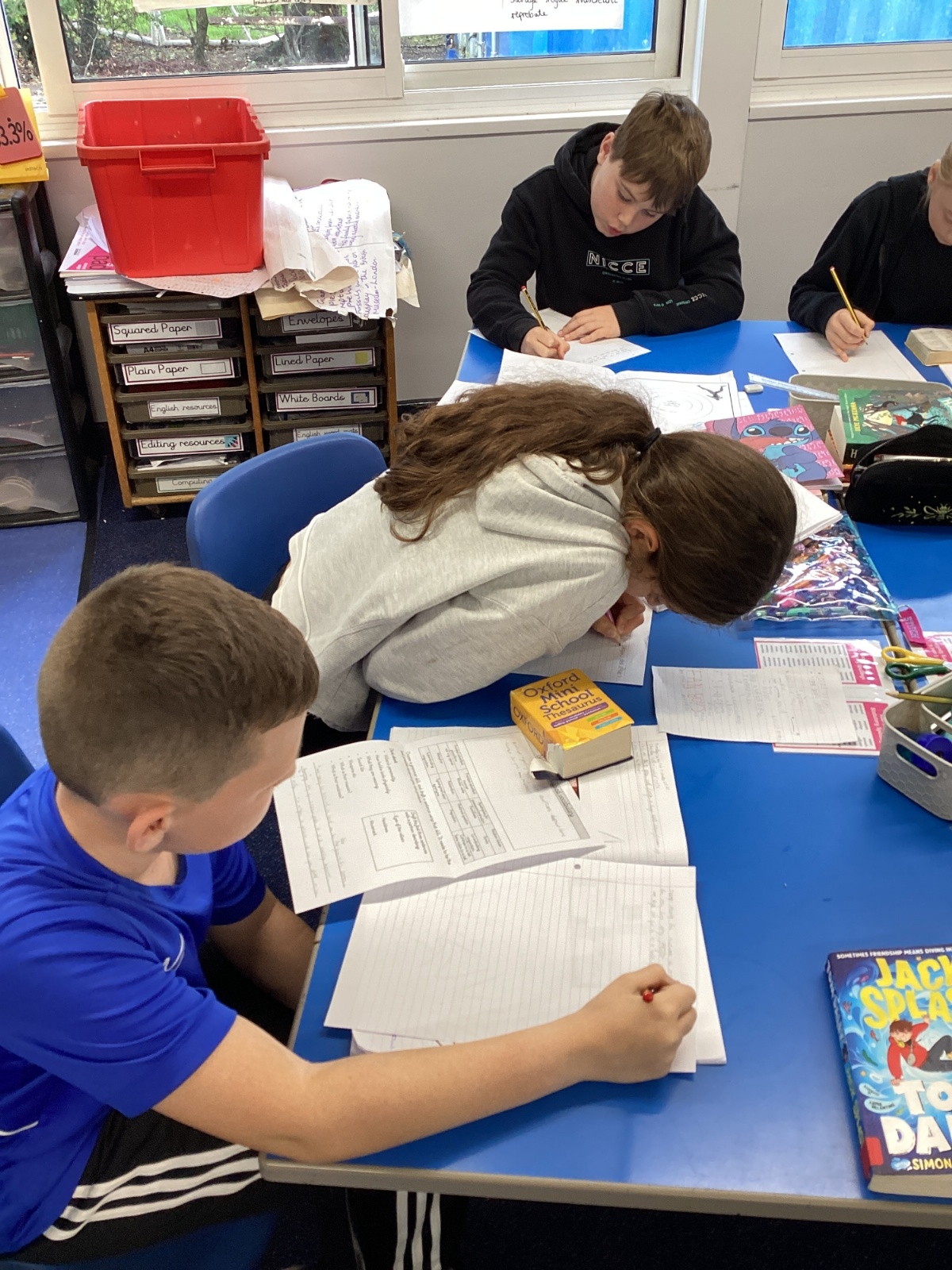
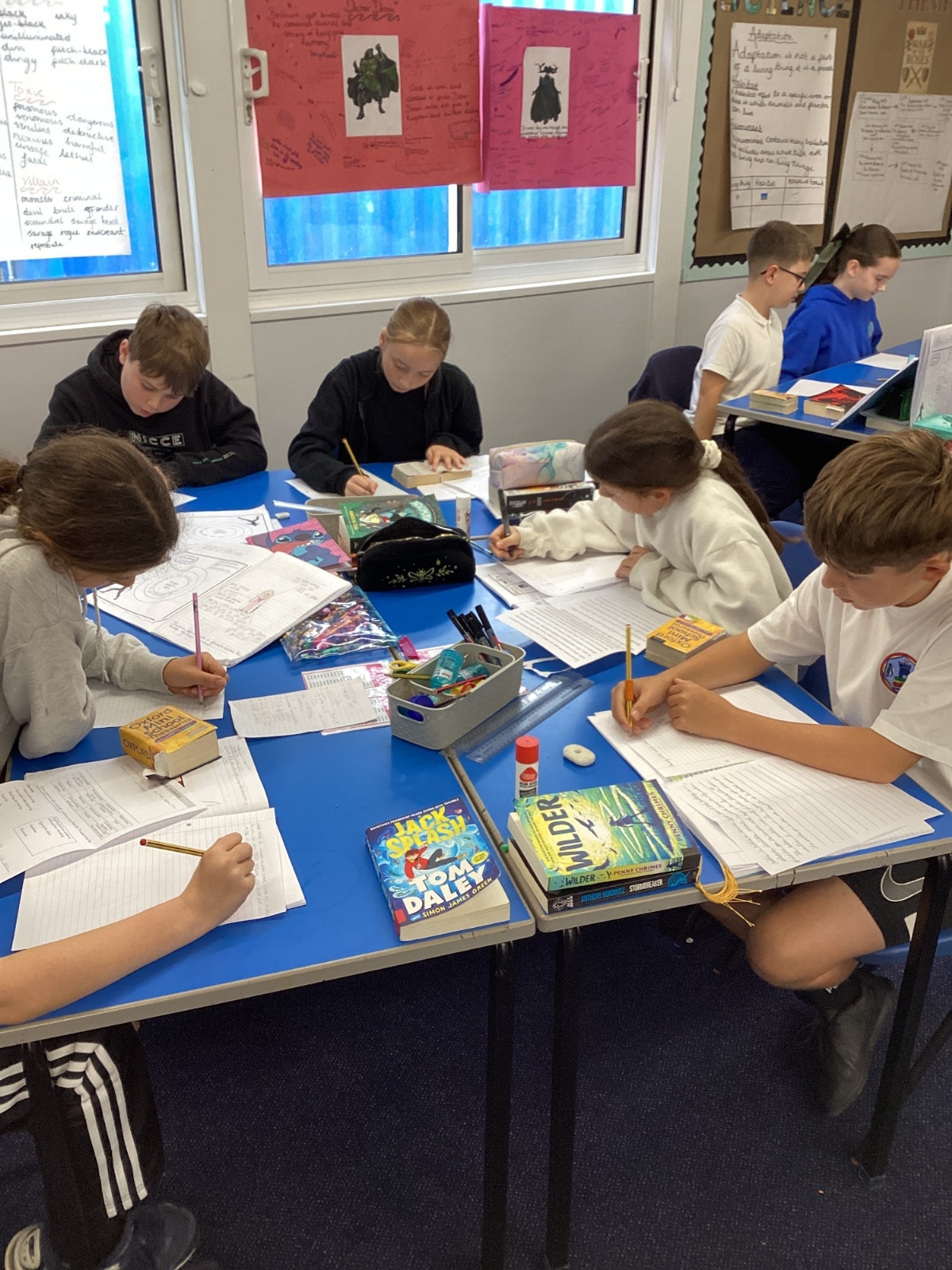
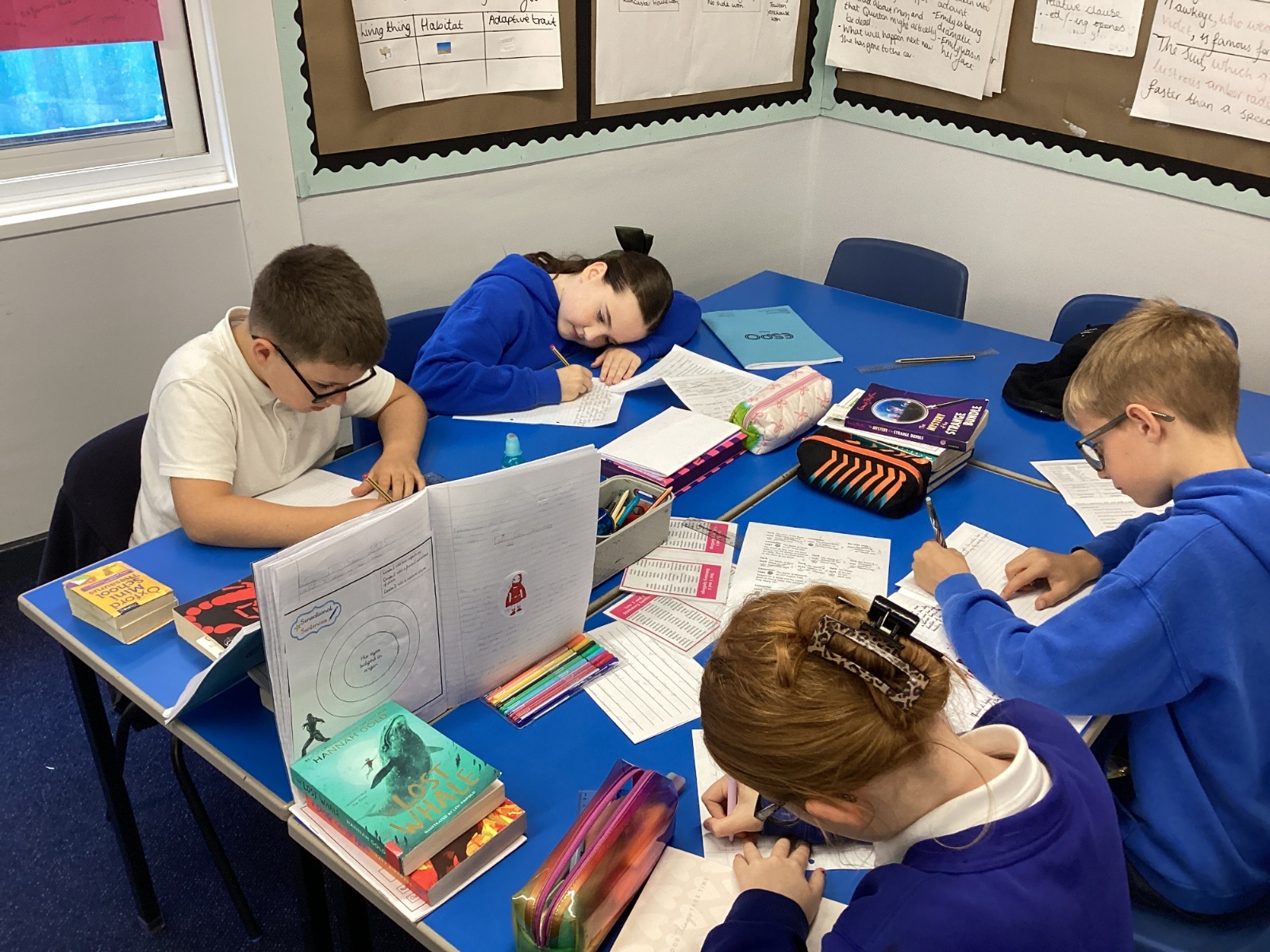
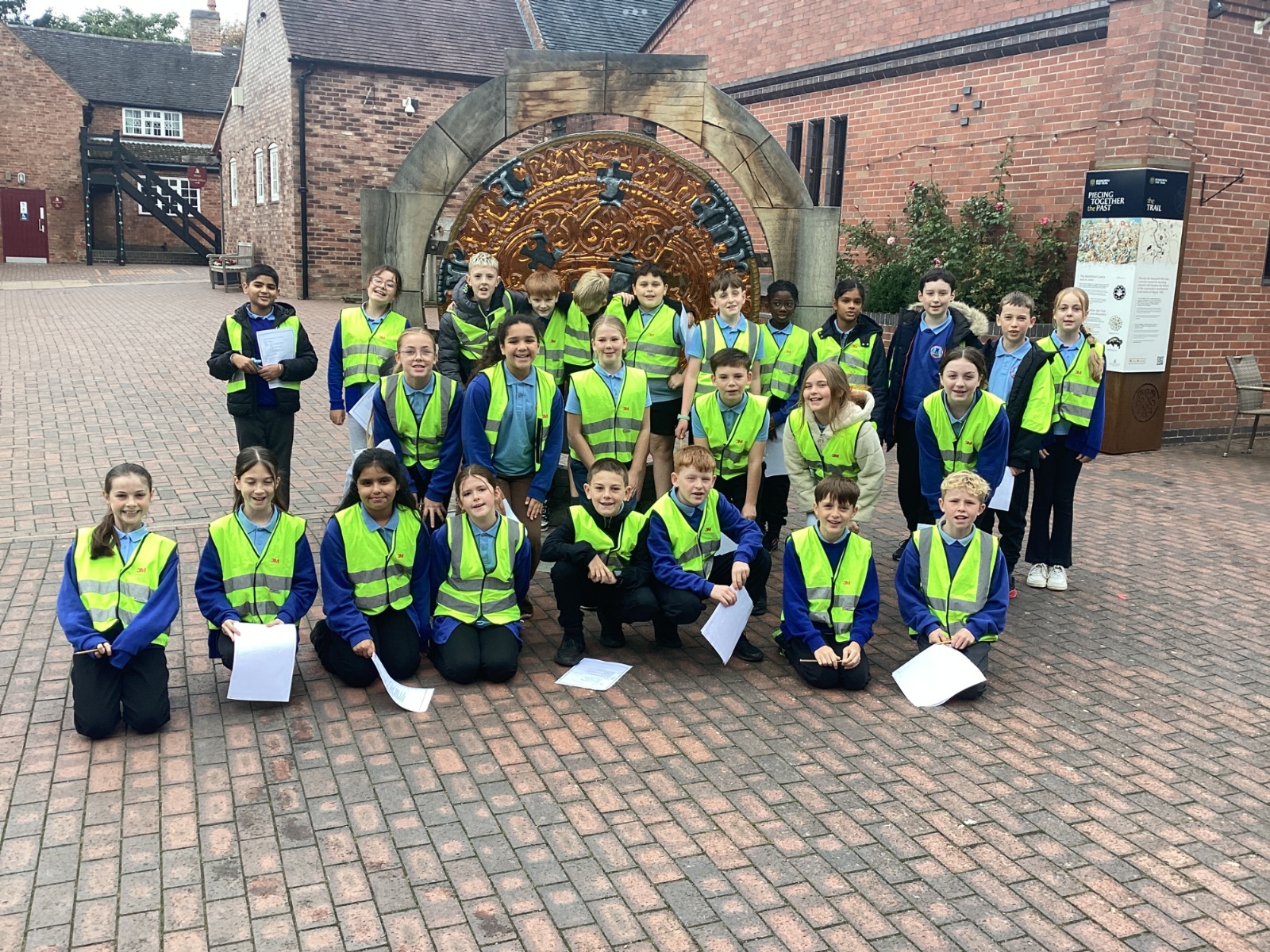
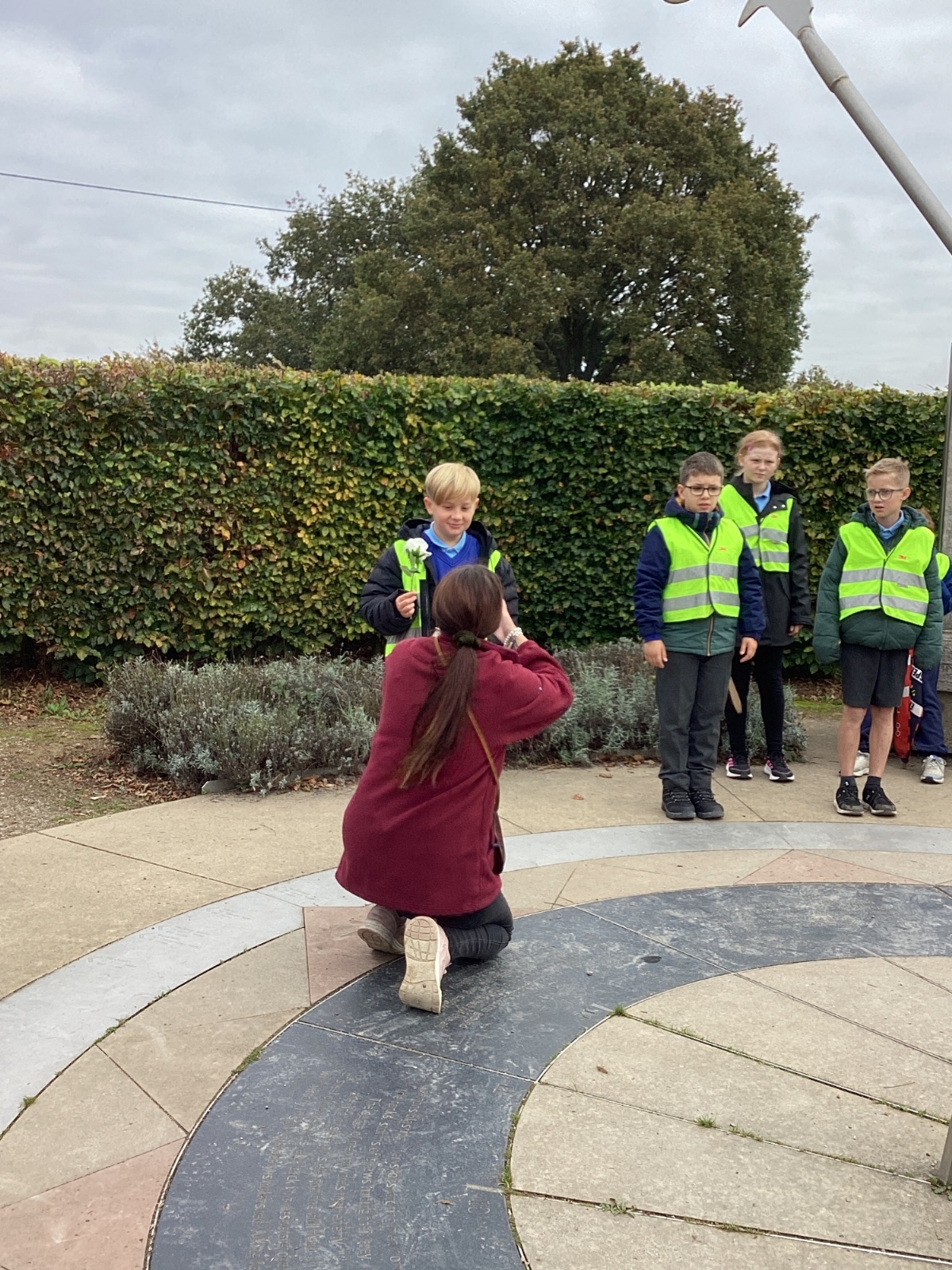
'Year 6 started this term with an exciting theme week, based on the film 'The Greatest Showman.’ During the week, the children explored their attributes and what makes them unique. They worked together to understand the characteristics of a successful team and how everyone has their part to play. The children listened to, and performed, ‘This is Me’ and explored how our 'Weddy Values' and vision linked to the lyrics of the song. During the week, the children read, annotated, planned and wrote their own motivational speech, to encourage others to showcase their brilliance, whilst also applying a range of grammar skills to engage the listener. In Art, the children have used watercolour to create a unique, personal piece of art reflecting their attributes.
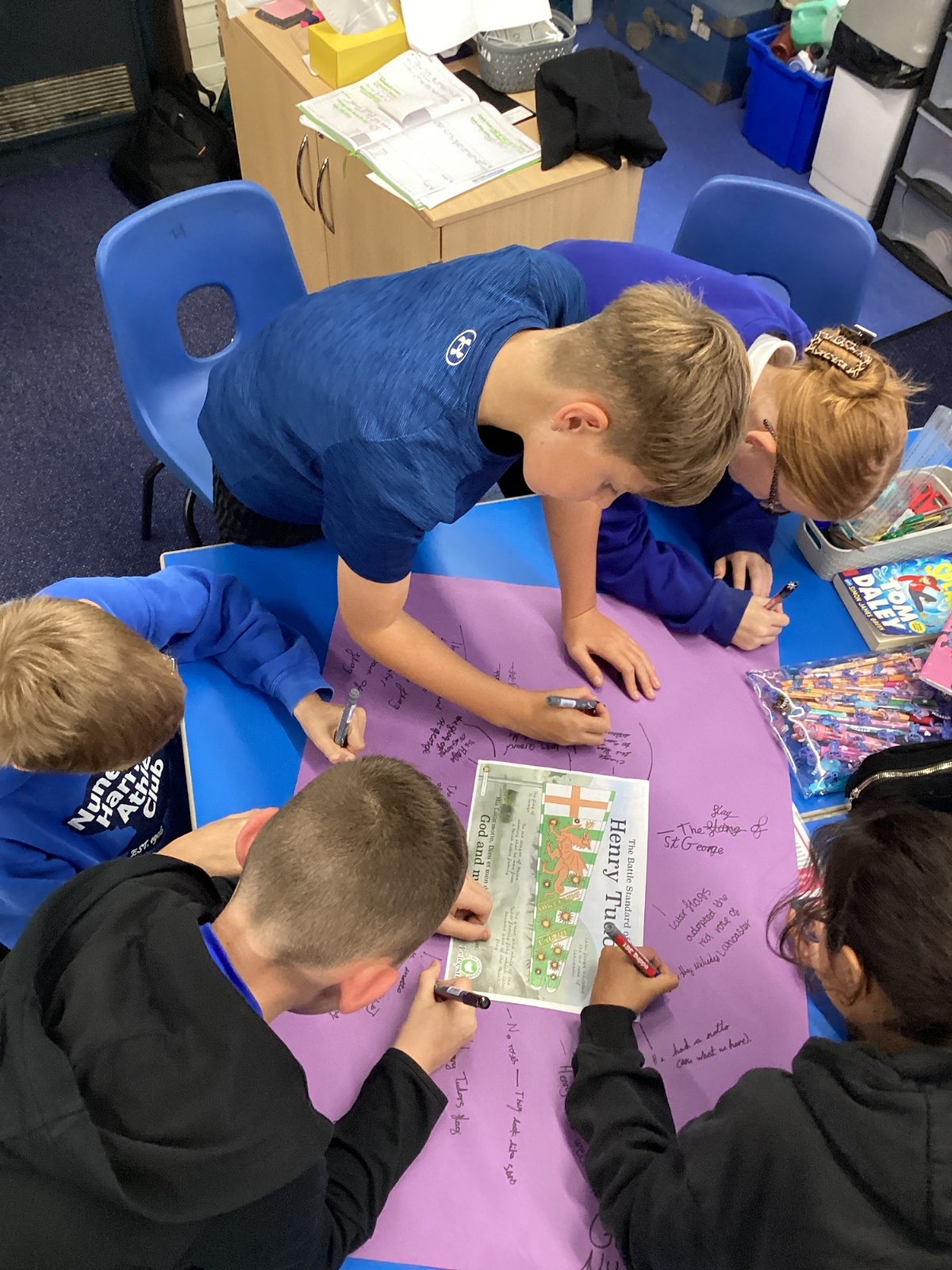
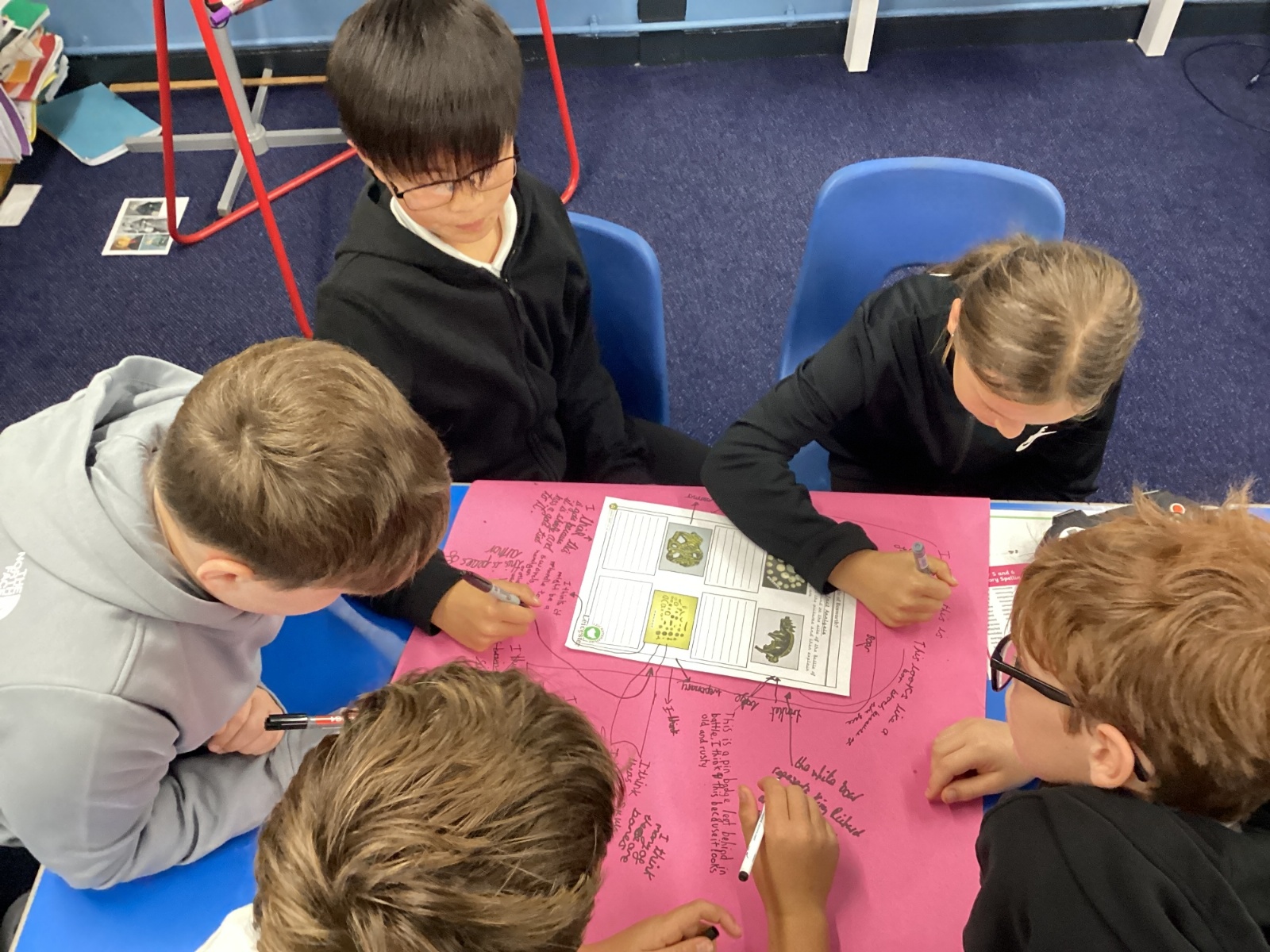
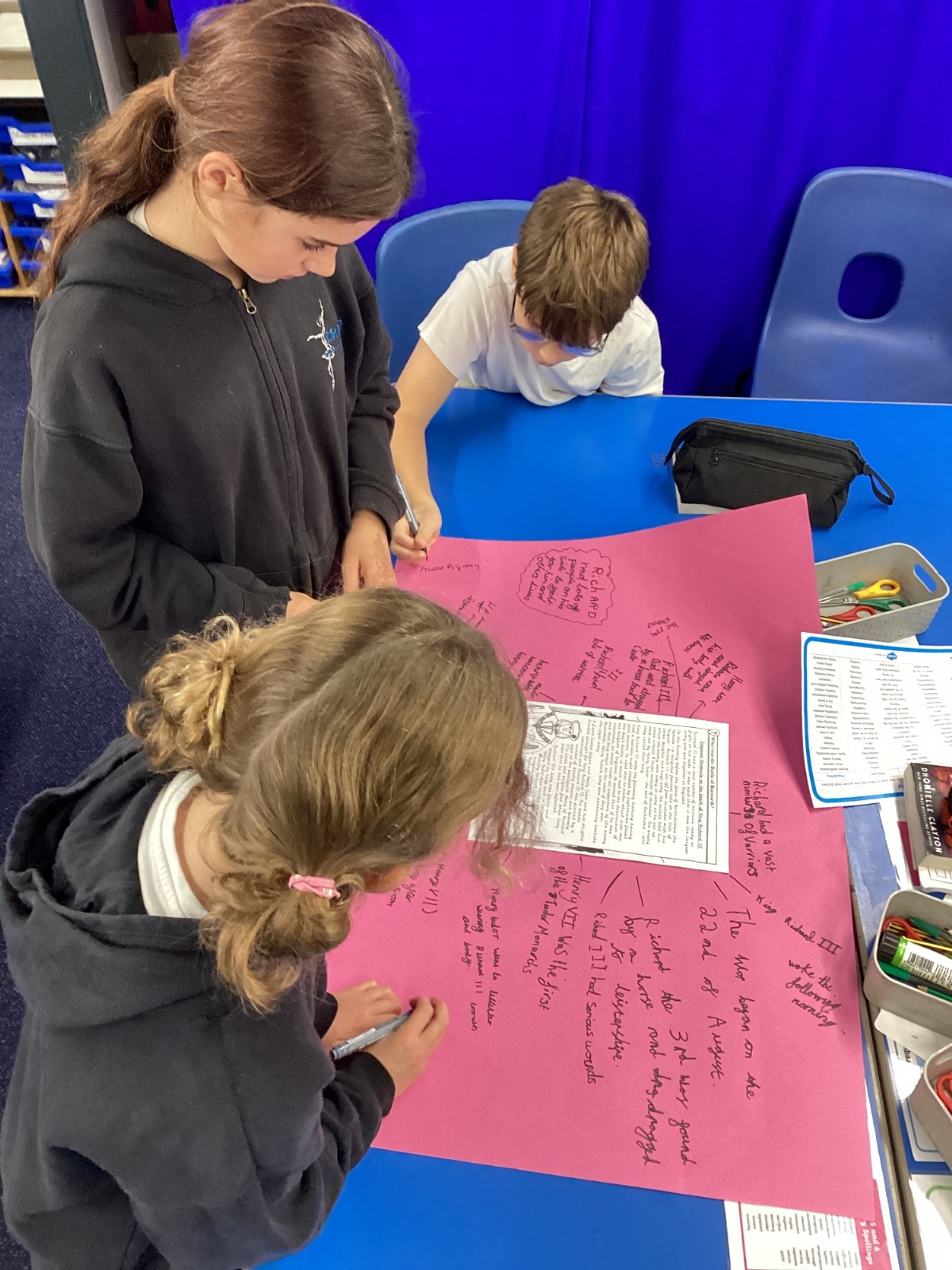
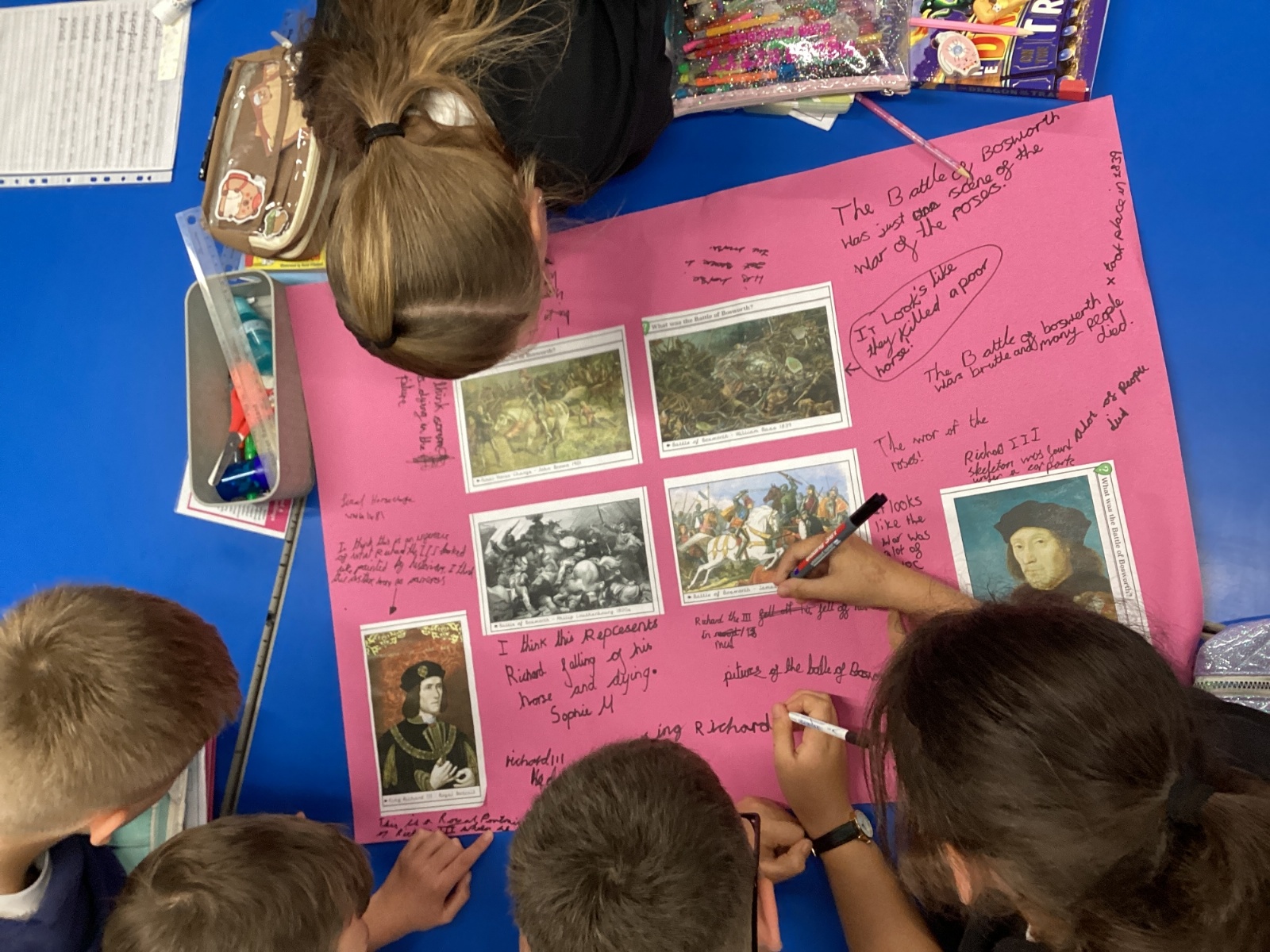
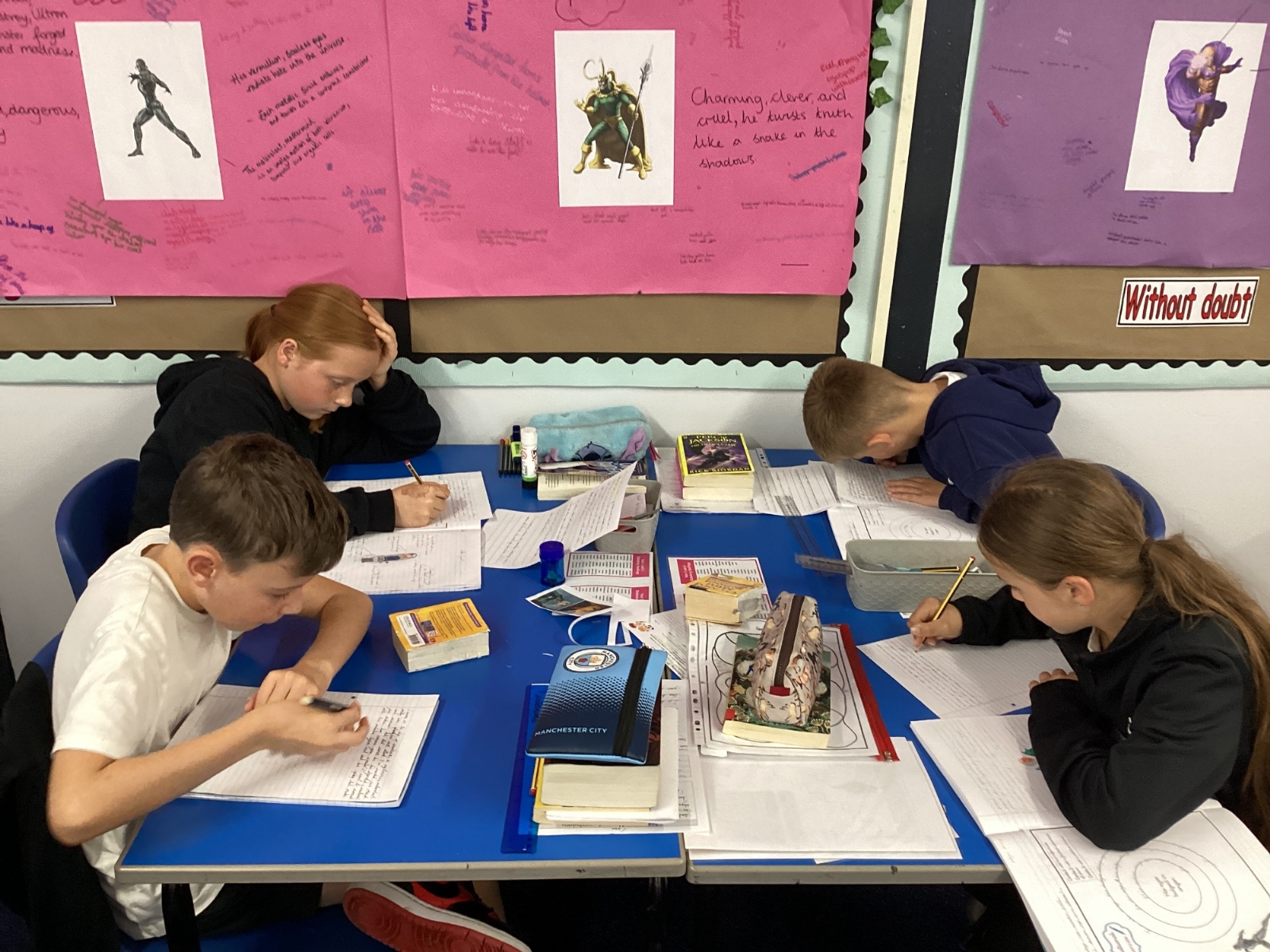
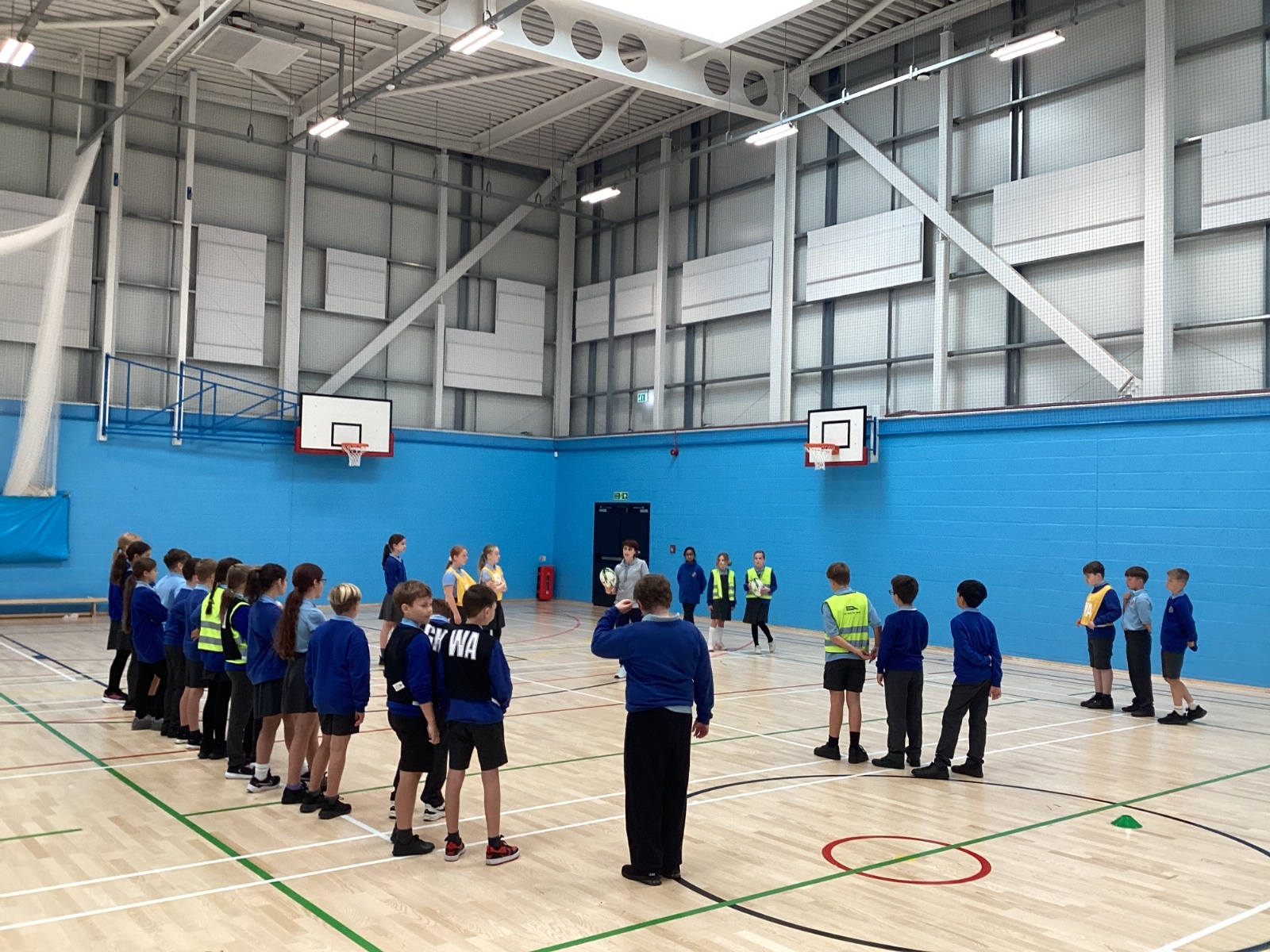
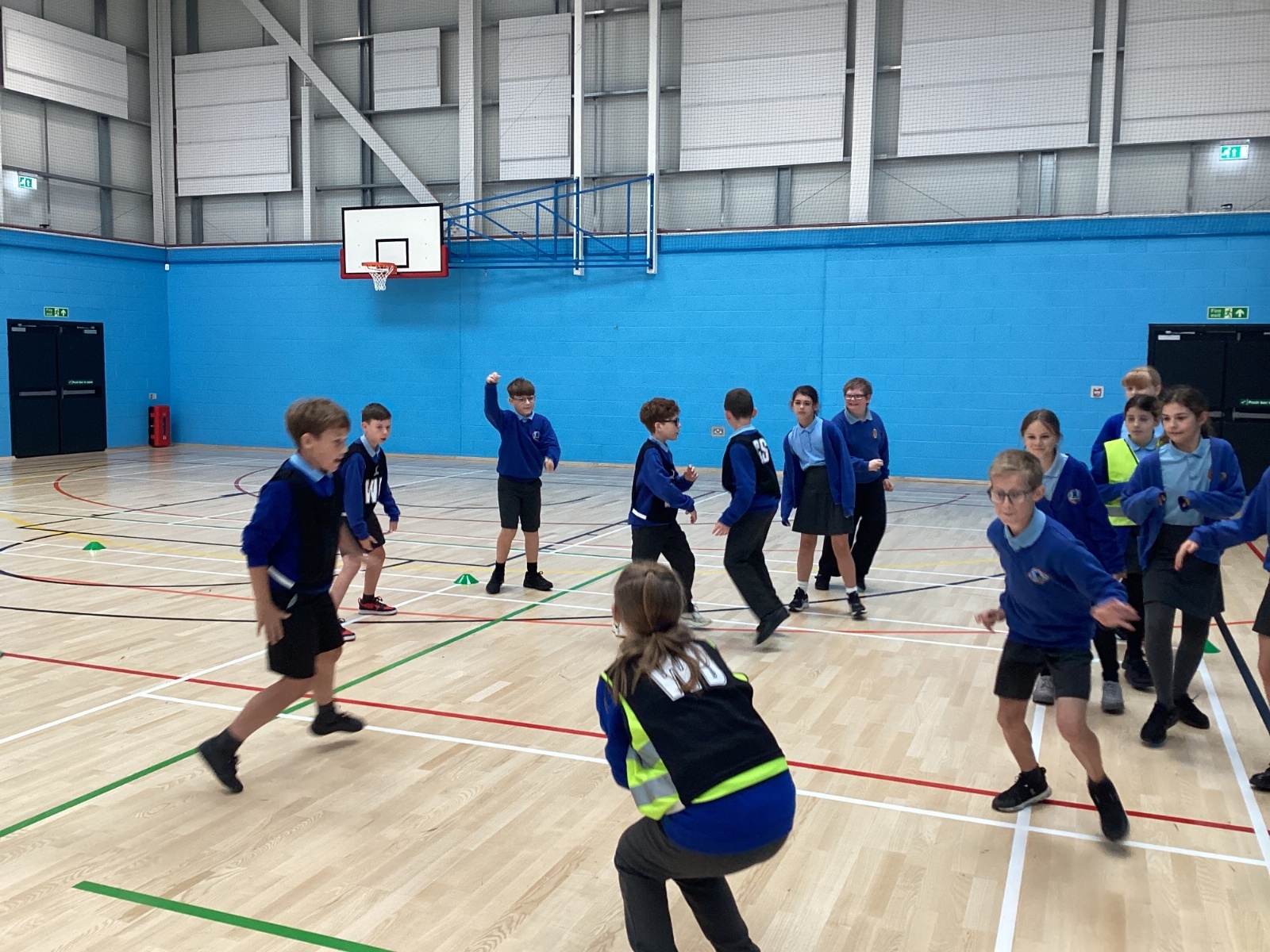
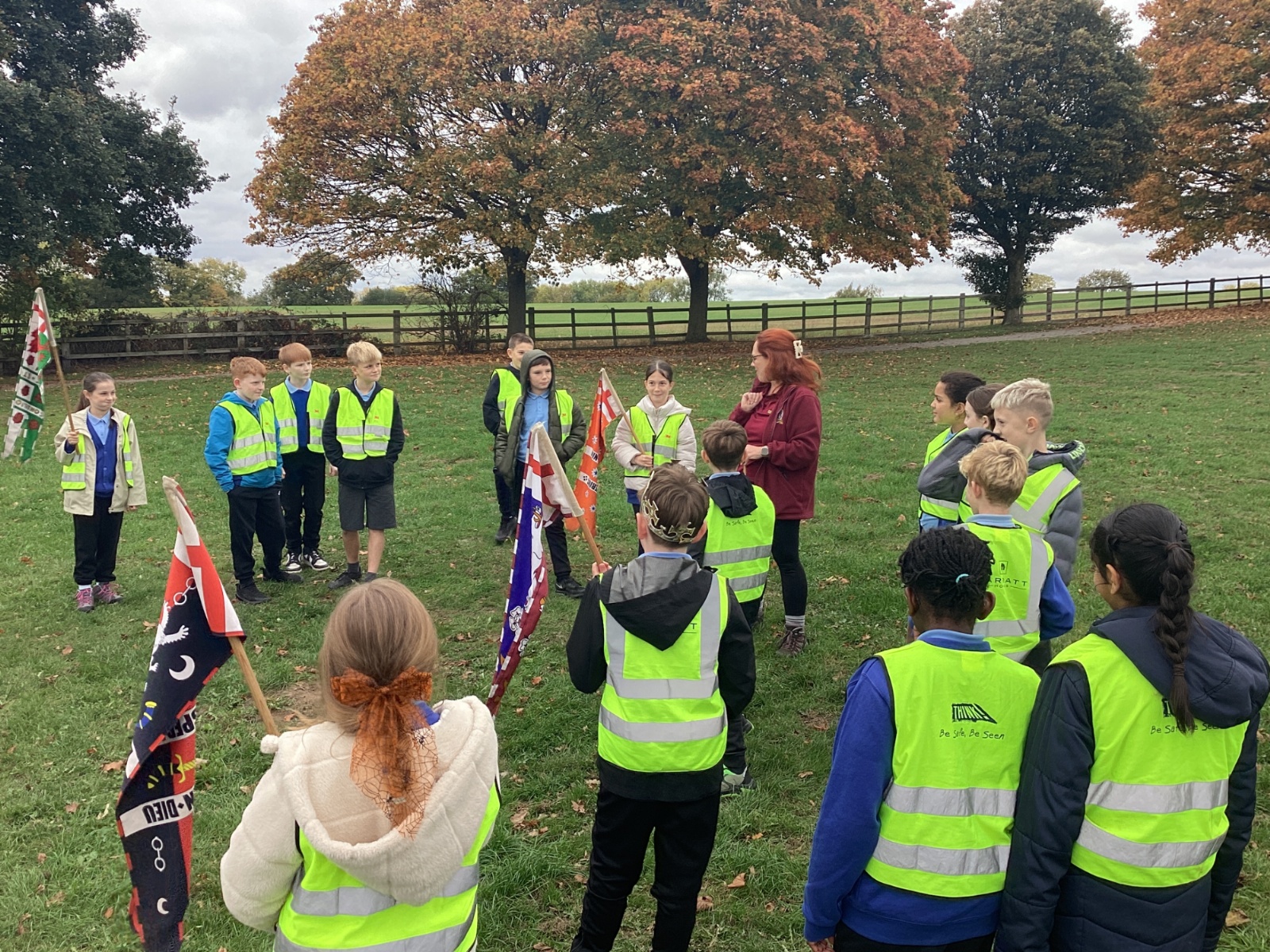
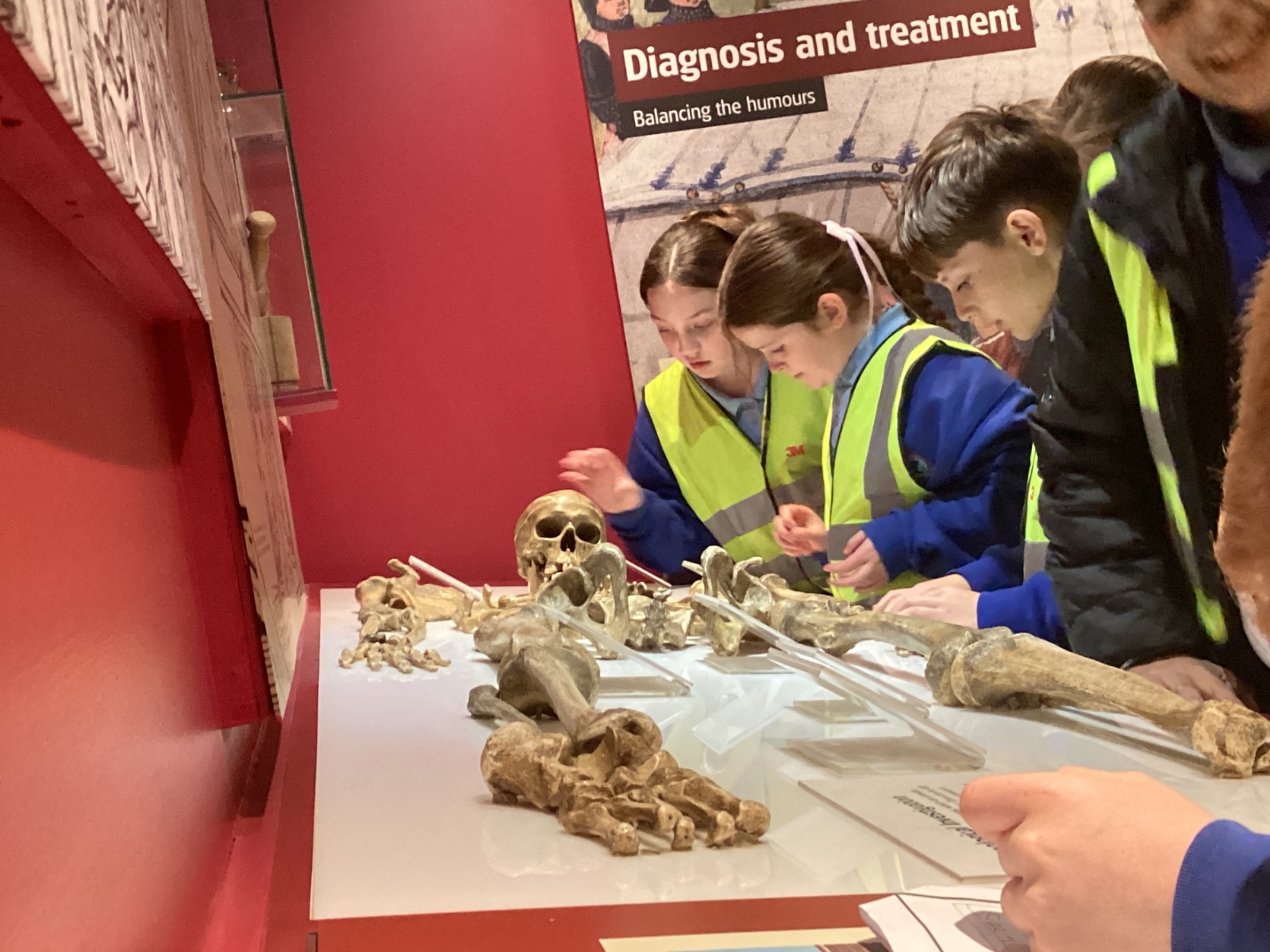
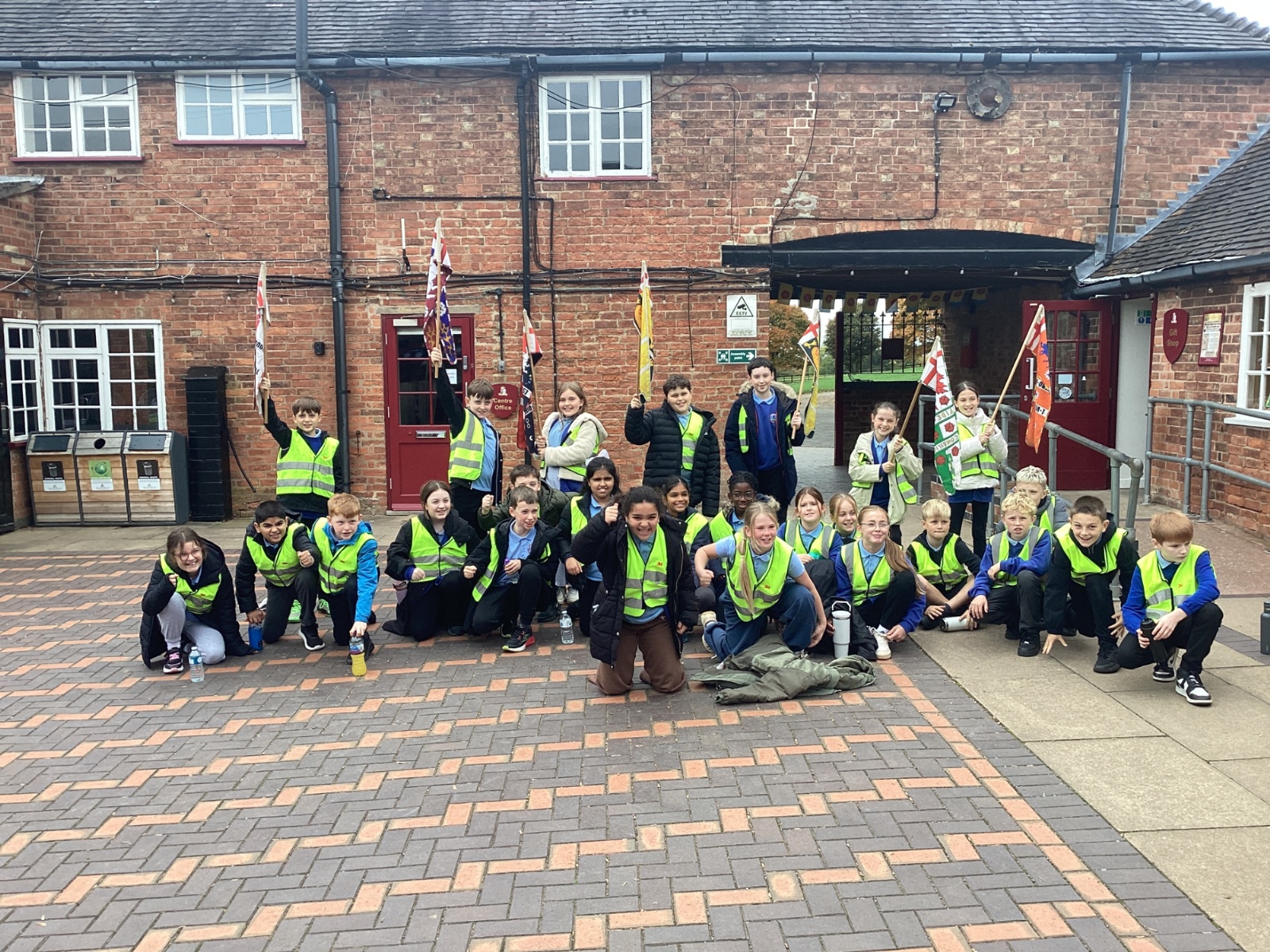
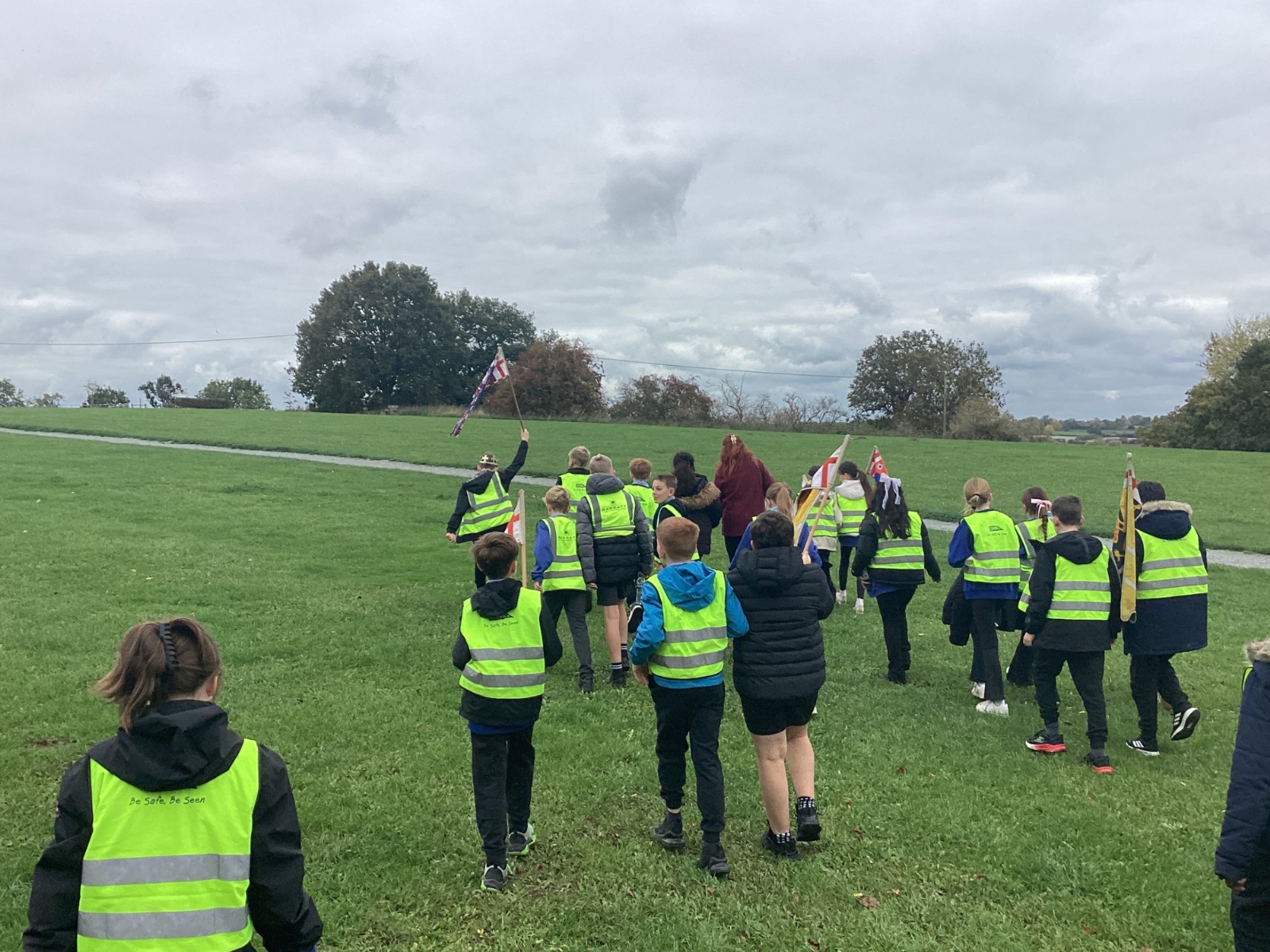
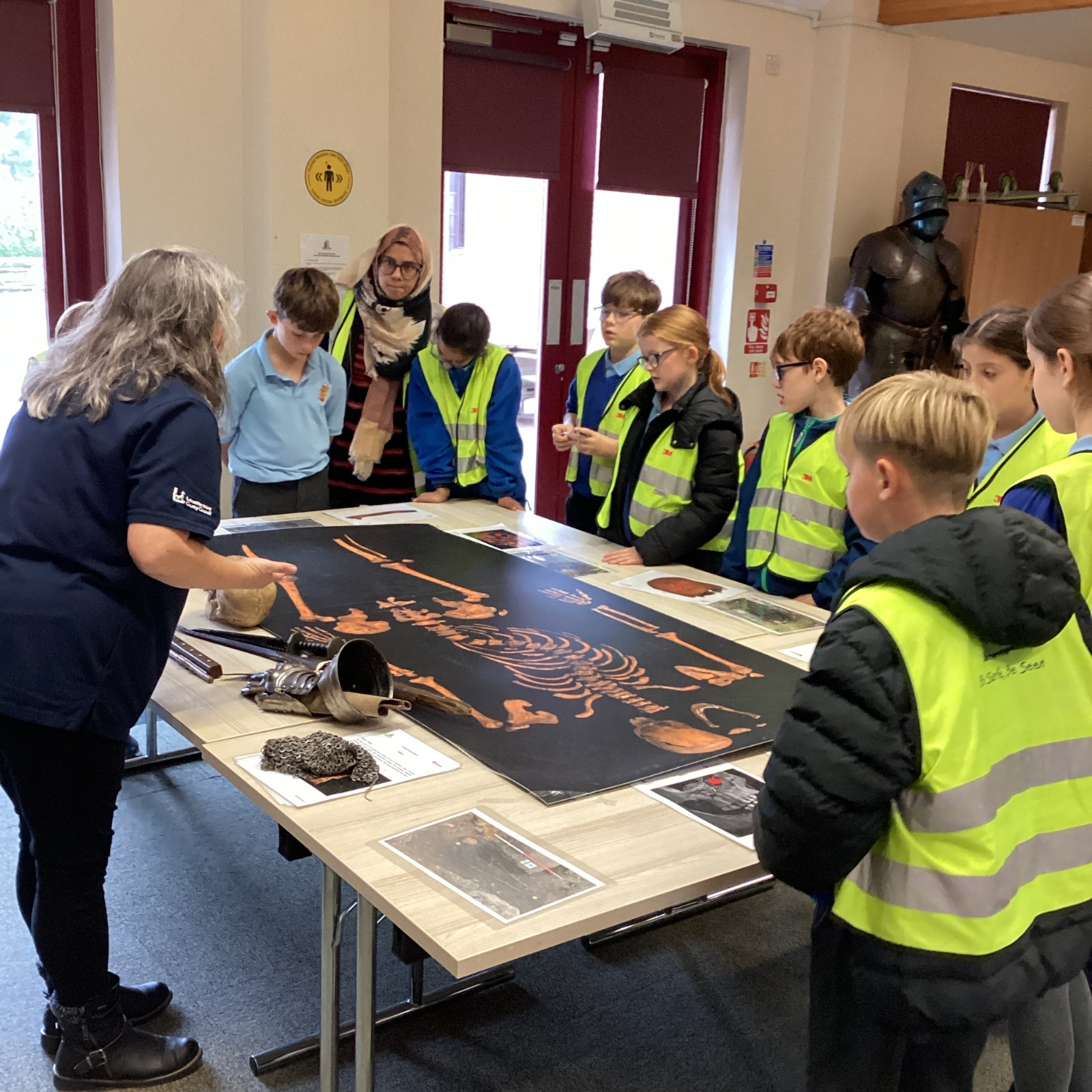
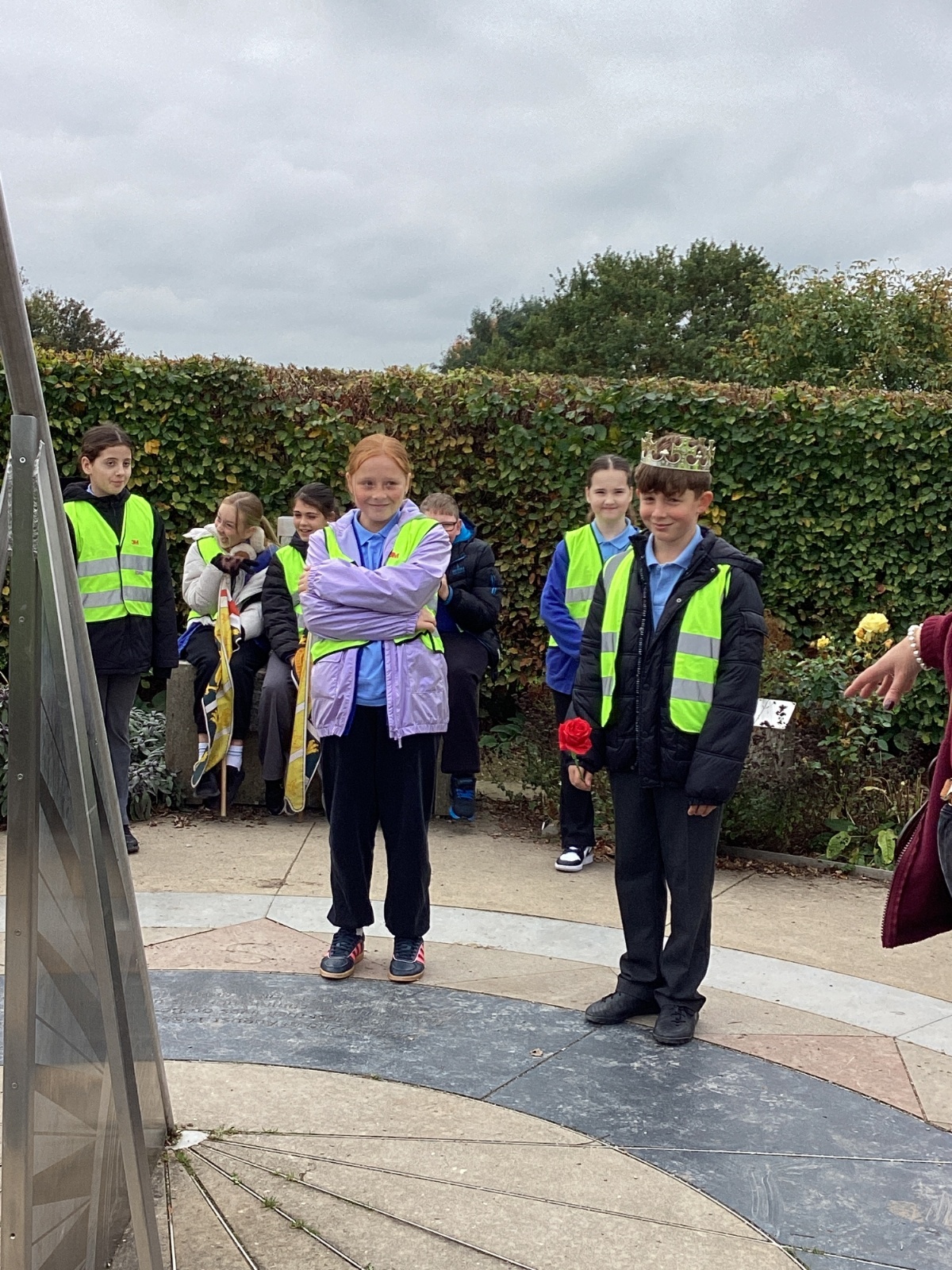
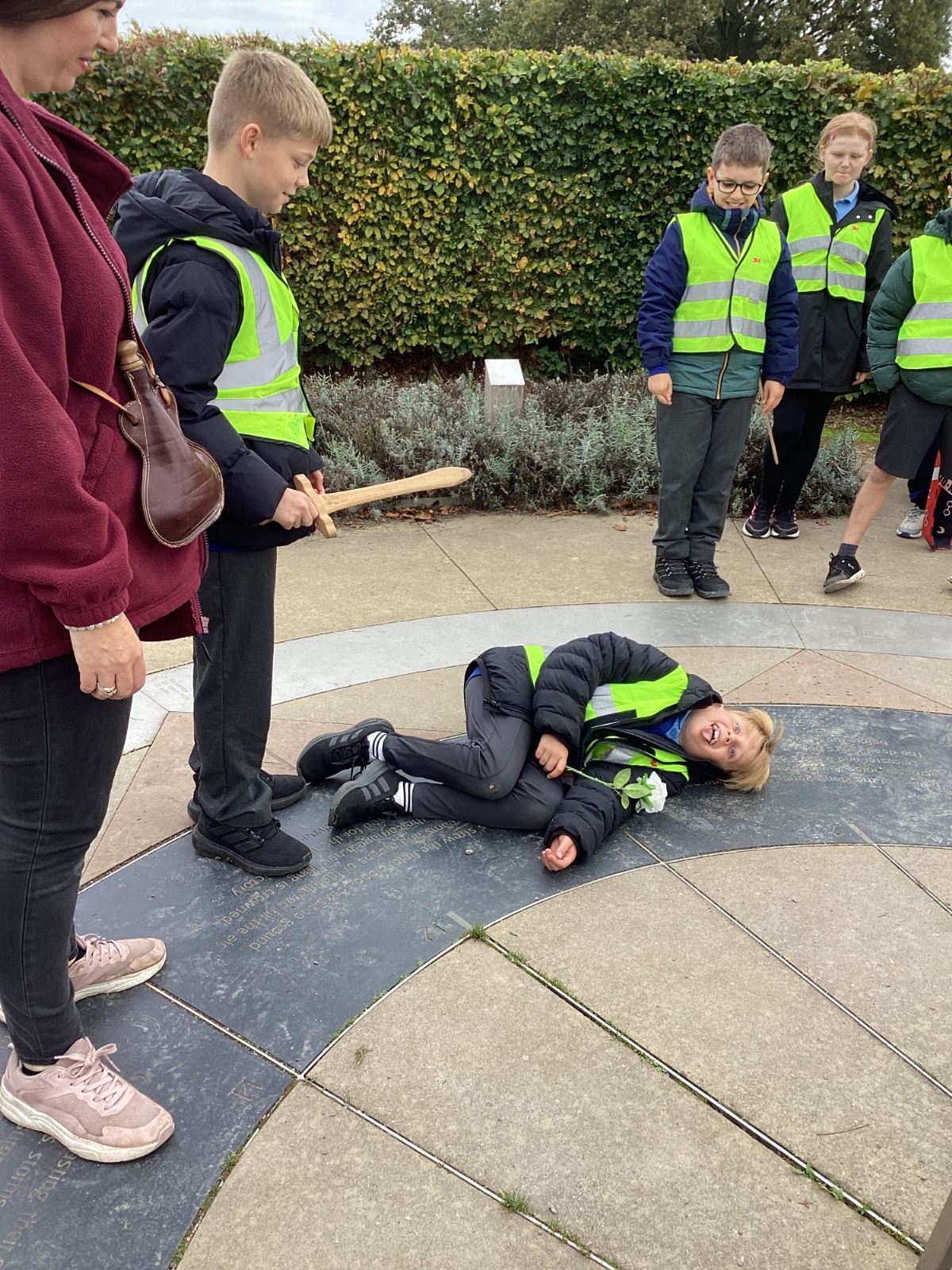
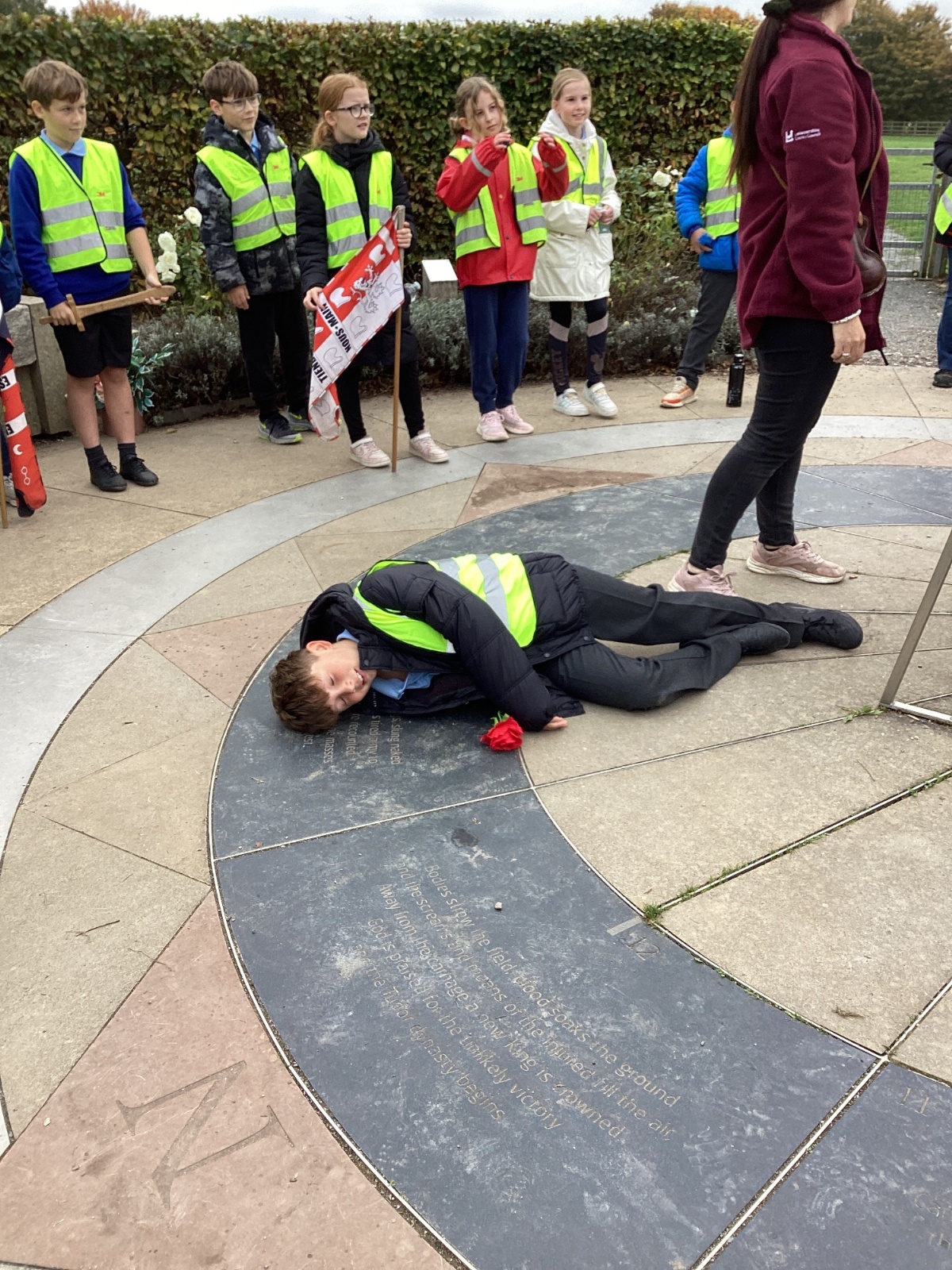
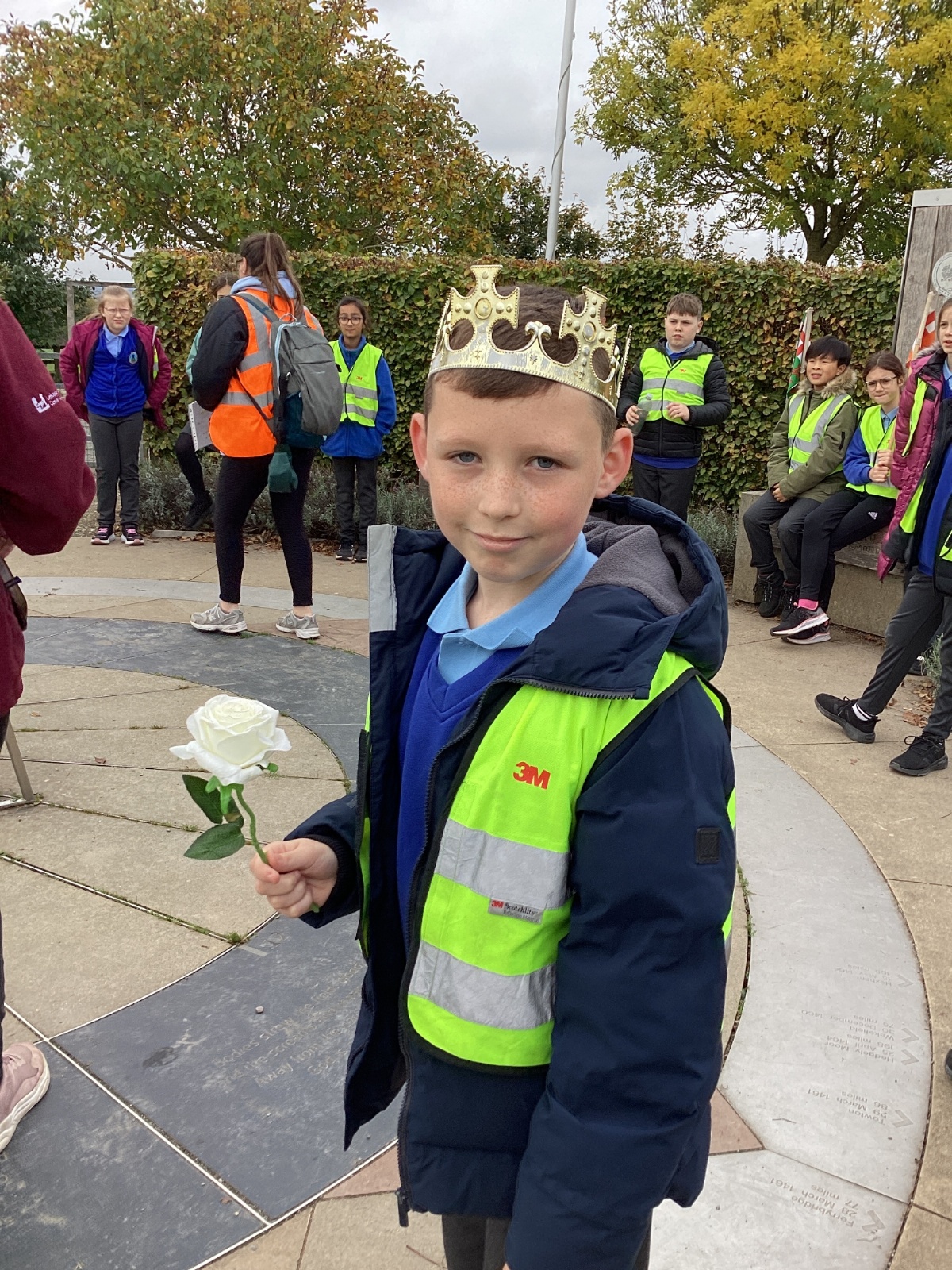
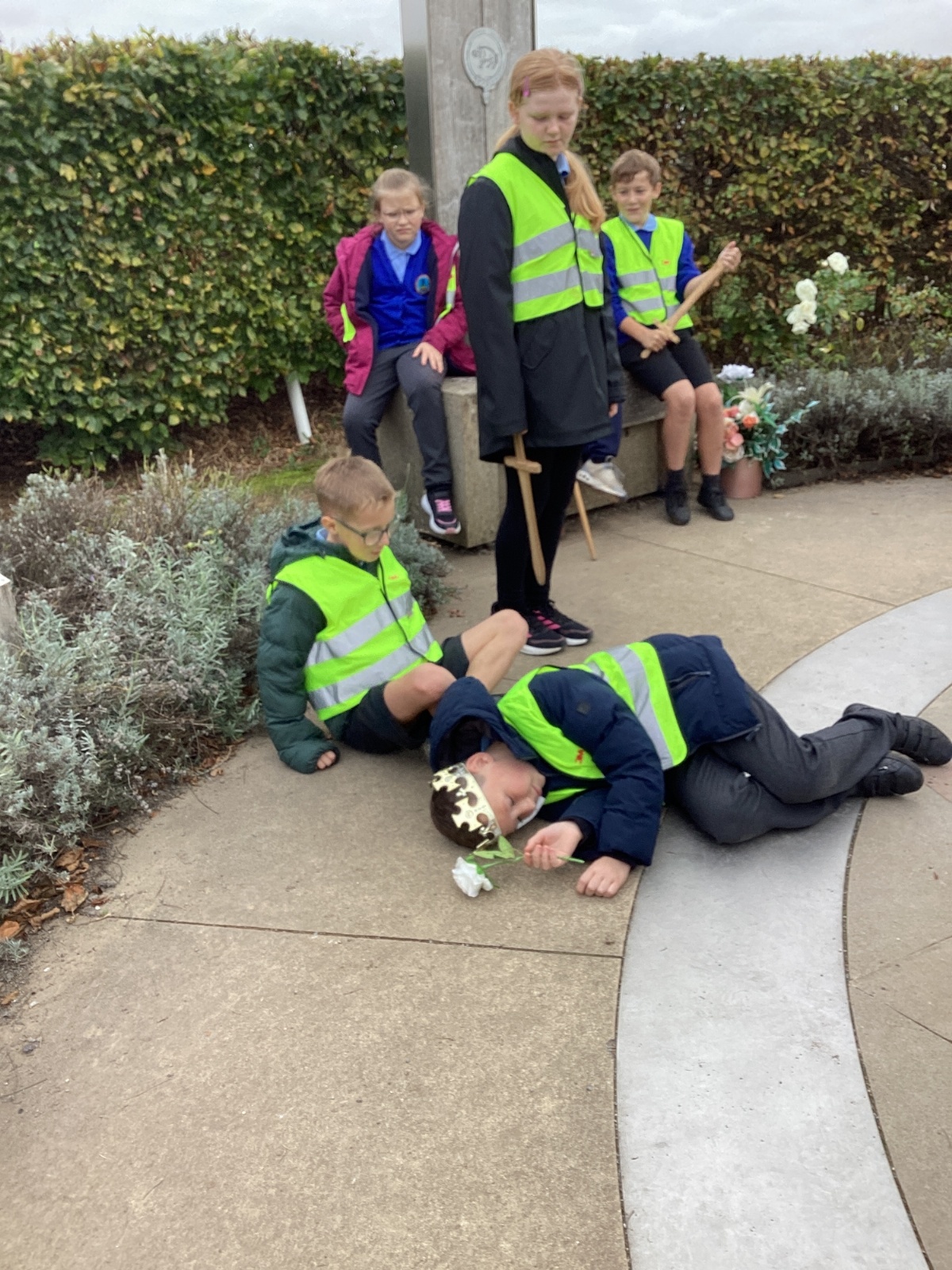
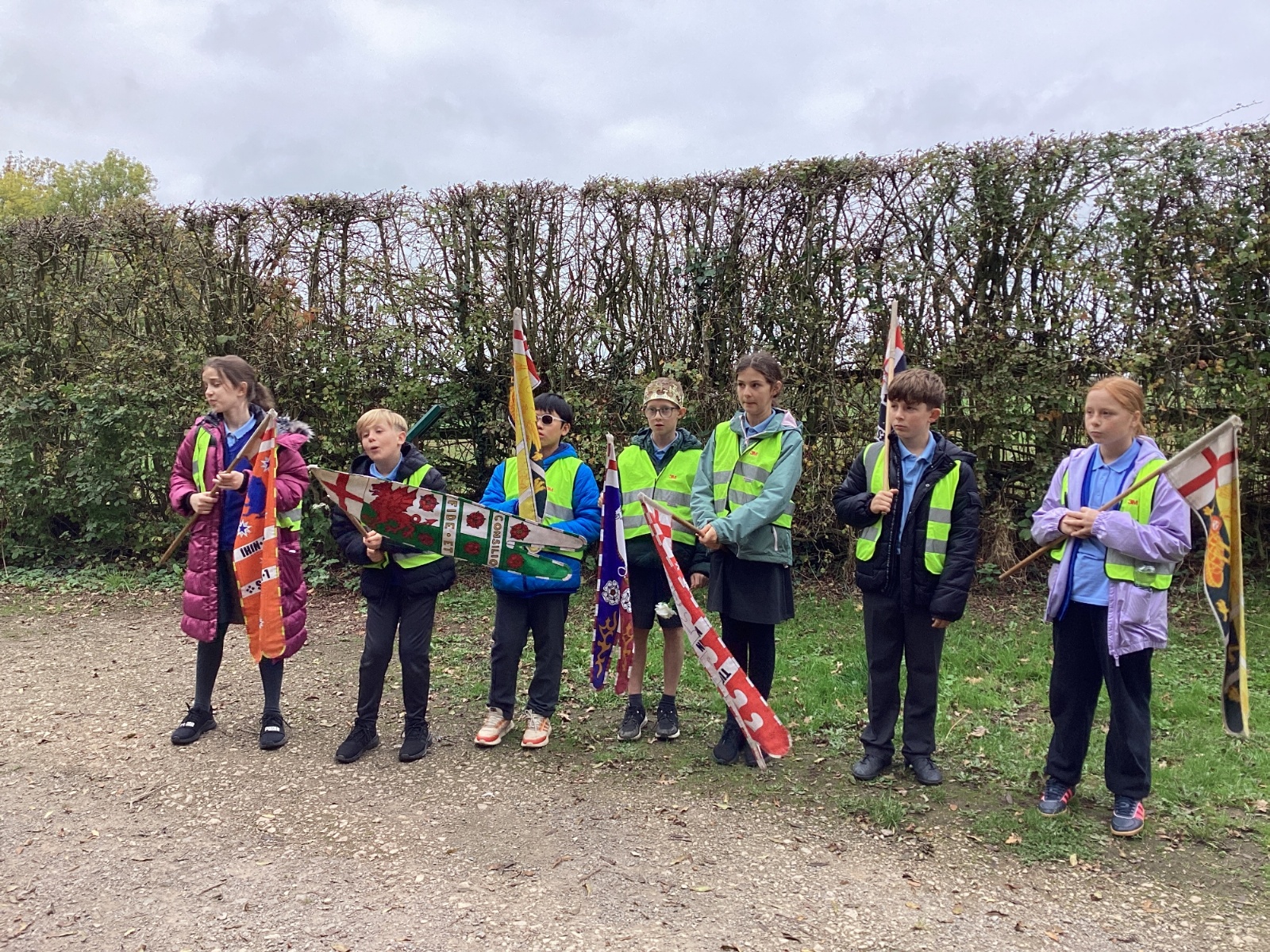
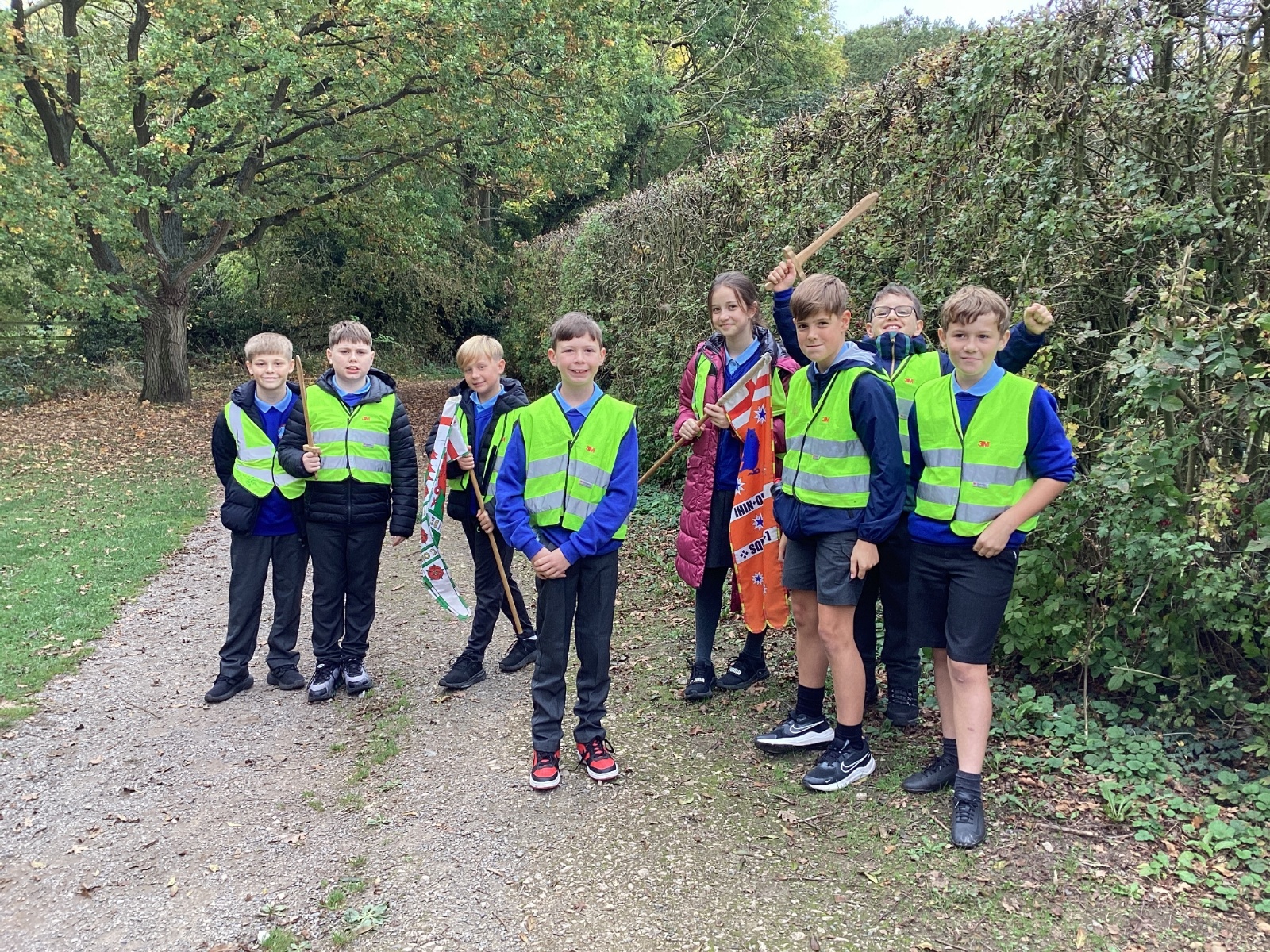
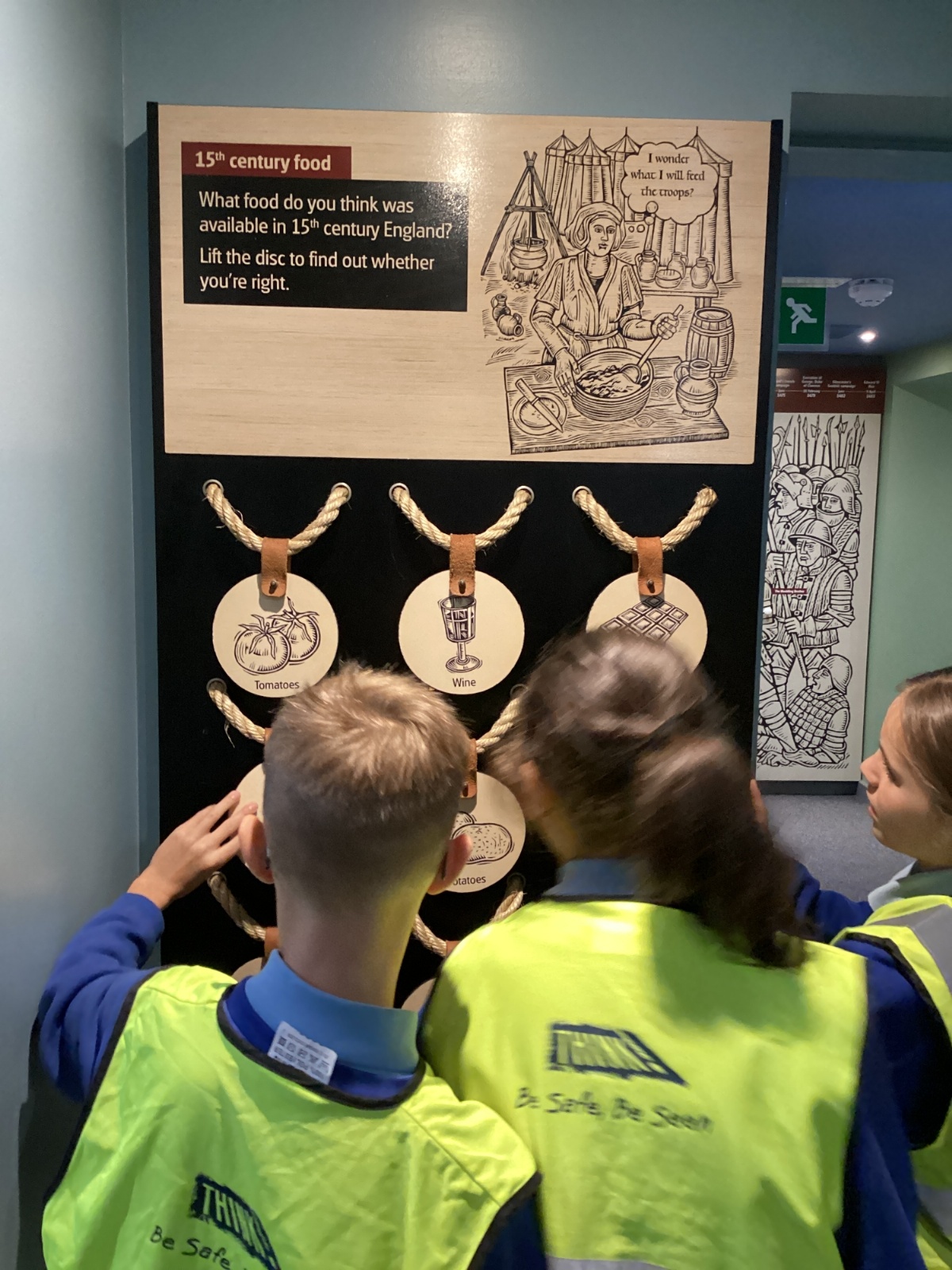
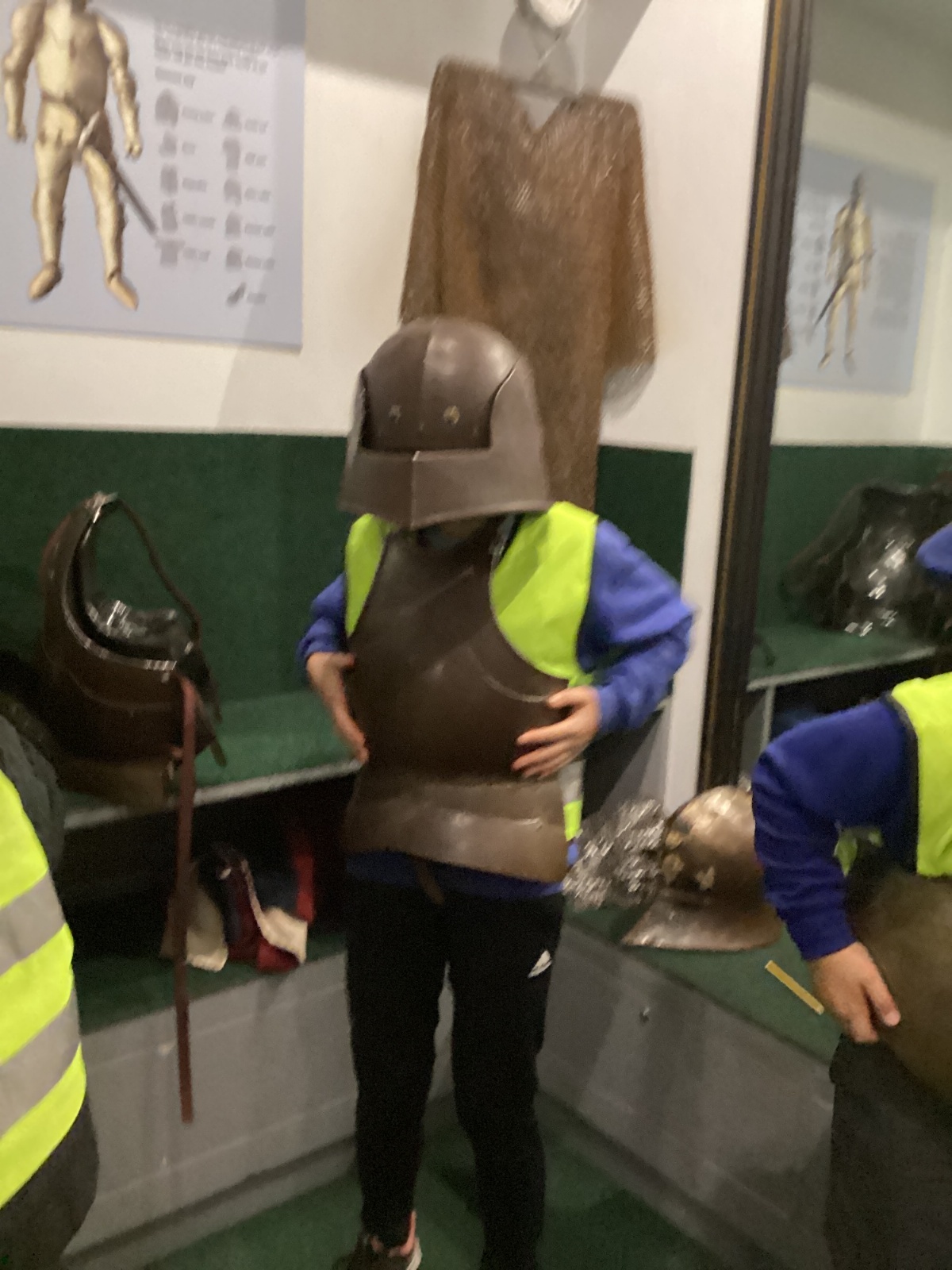
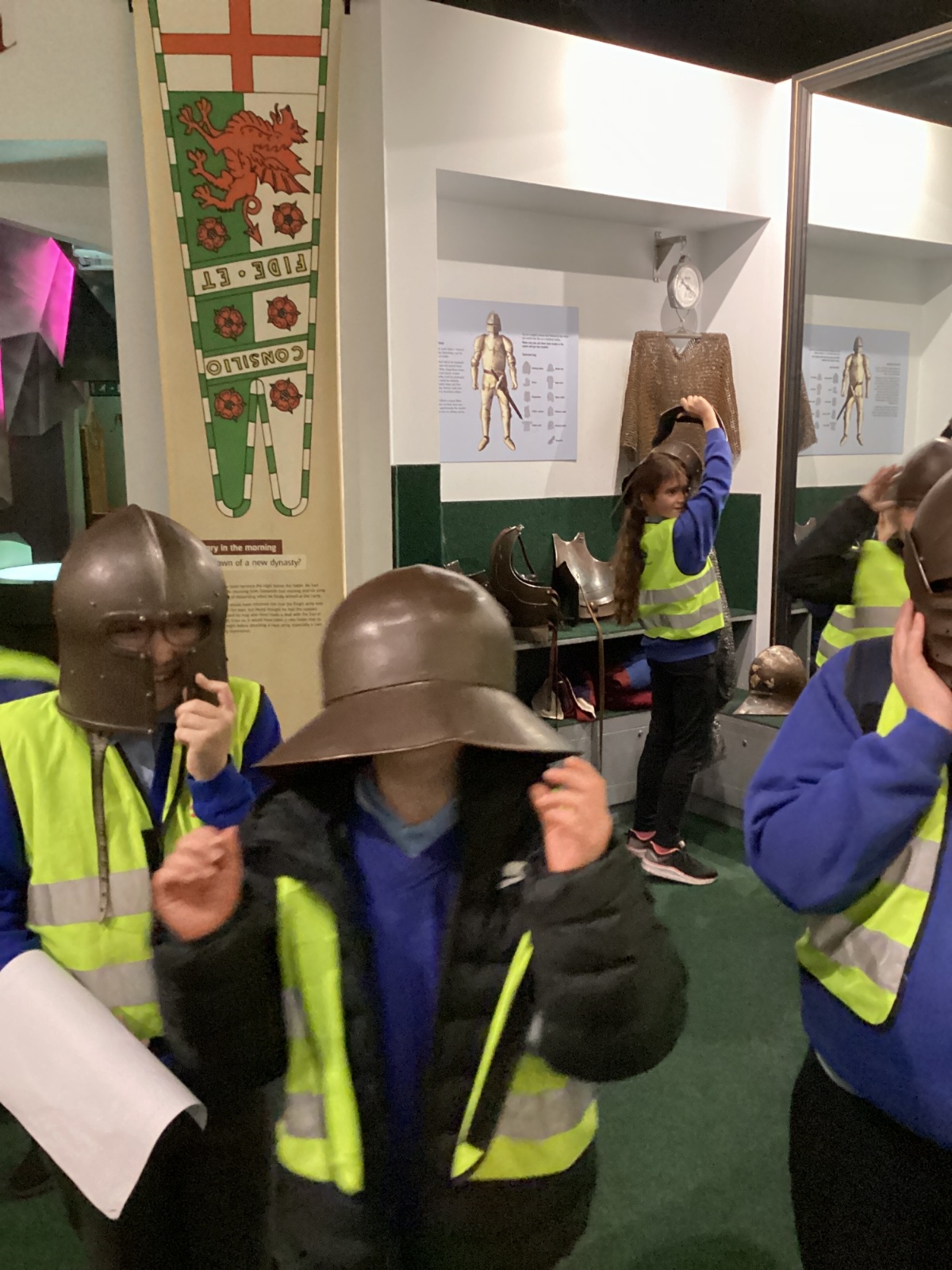
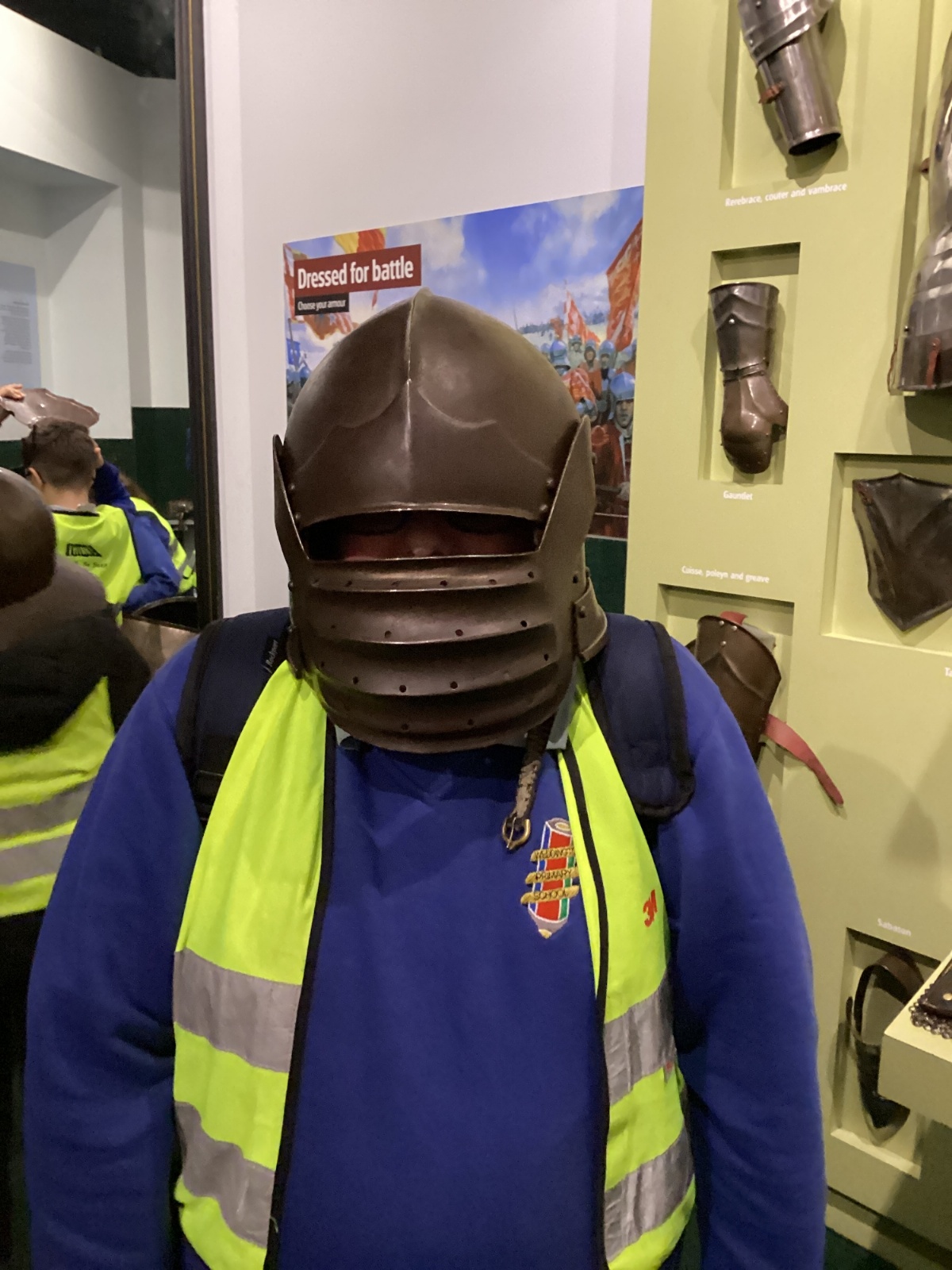
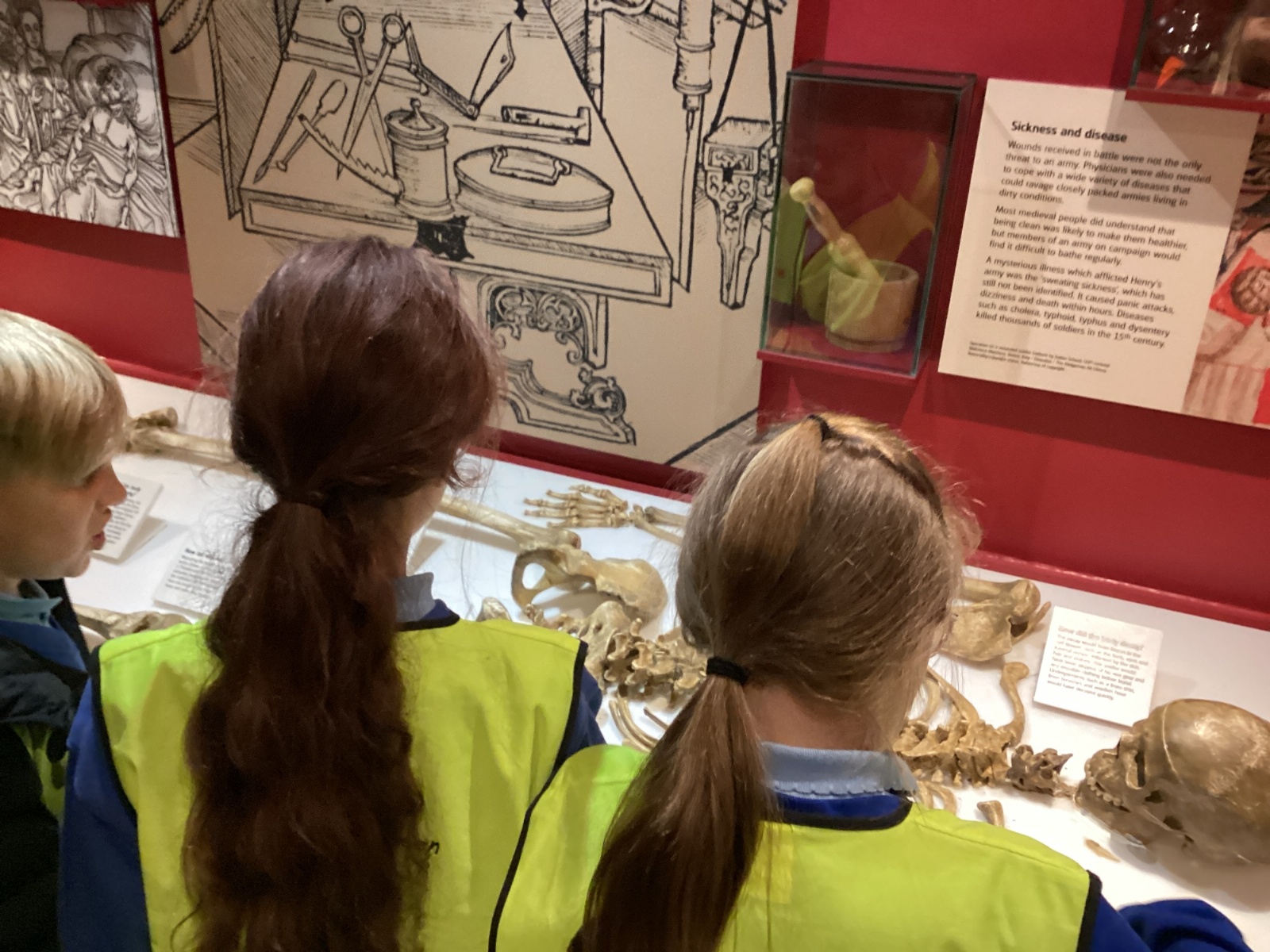
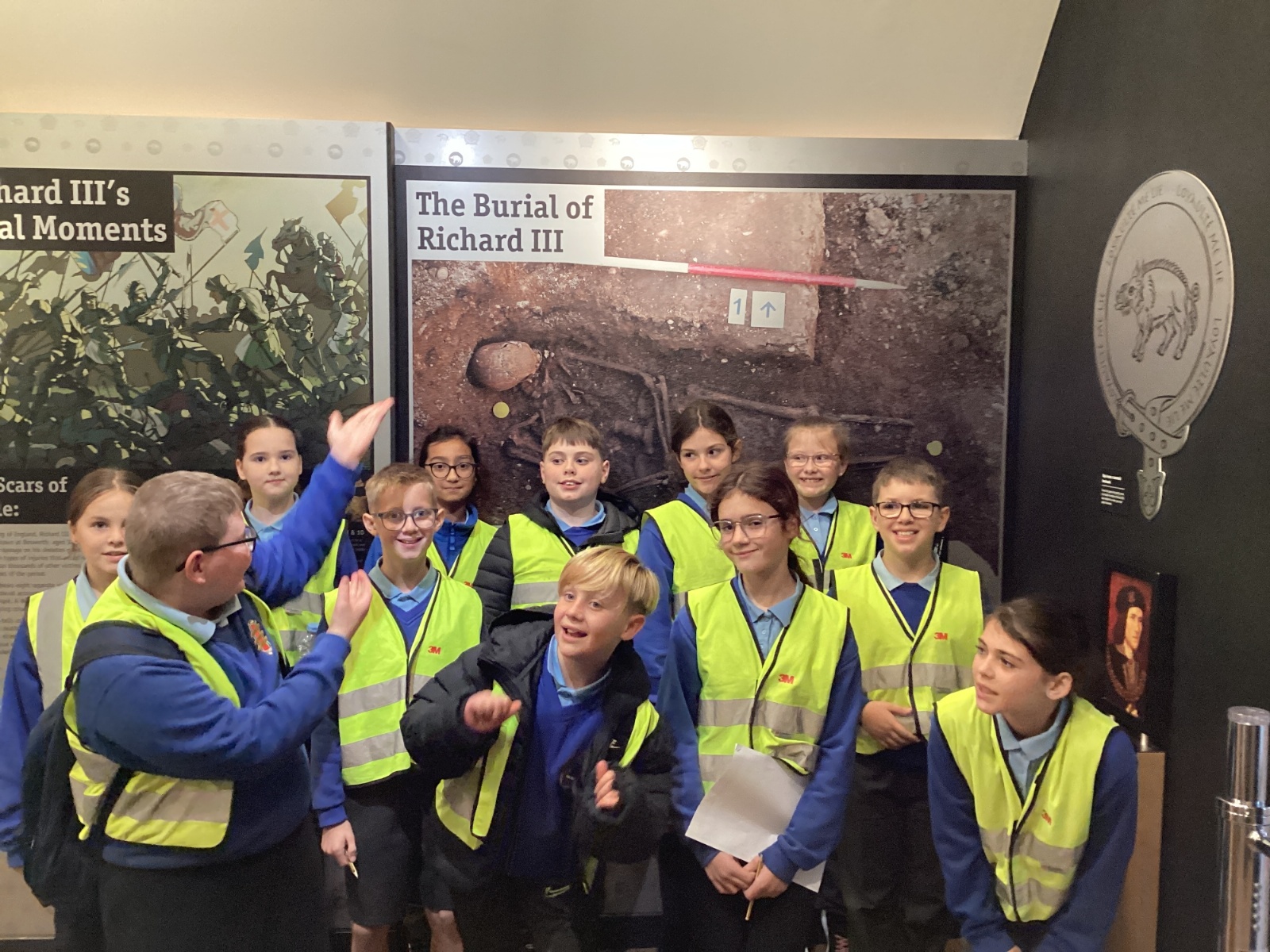
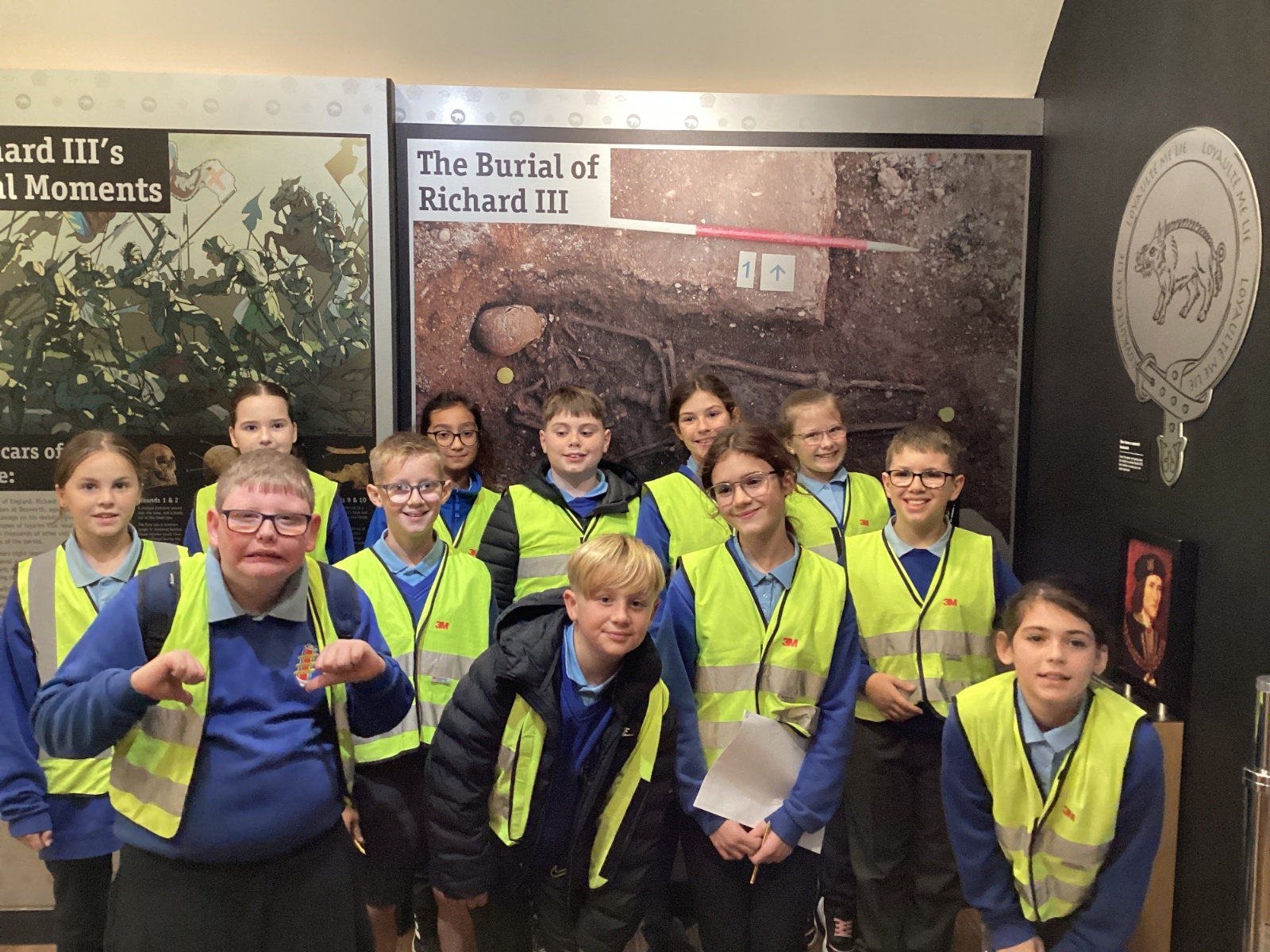
This term in English, the children will produce a range of genres, including comic strips, letter writing, character descriptions and Playscripts, linking to our theme 'Avengers Assemble.' Throughout the term, the children will engage in a variety of Grammar lessons, developing their knowledge of Year 6 Grammar skills. In Maths, the children will develop their knowledge of place value in numbers up to ten million, as well as learning the four methods of calculation, which they will begin to apply to Year 6 arithmetic style questions. It is crucial children know their times tables up to 12 times 12, so please ensure they practise these regularly. In History, the children will carry out research into a study of the local area and our topic is, 'War of the Roses'. Our Science topic is 'Evolution and Inheritance' which is an exciting topic exploring which of our attributes are inherited as well as learning about Charles Darwin and Mary Anning. In PE, the children will develop their skills of throwing and catching and will learn the rules of Netball, applying these to games. They will also take part in indoor circuit training to develop their core strength. The children have lots of exciting lessons and learning to look forward to during this Autumn term.
Autumn

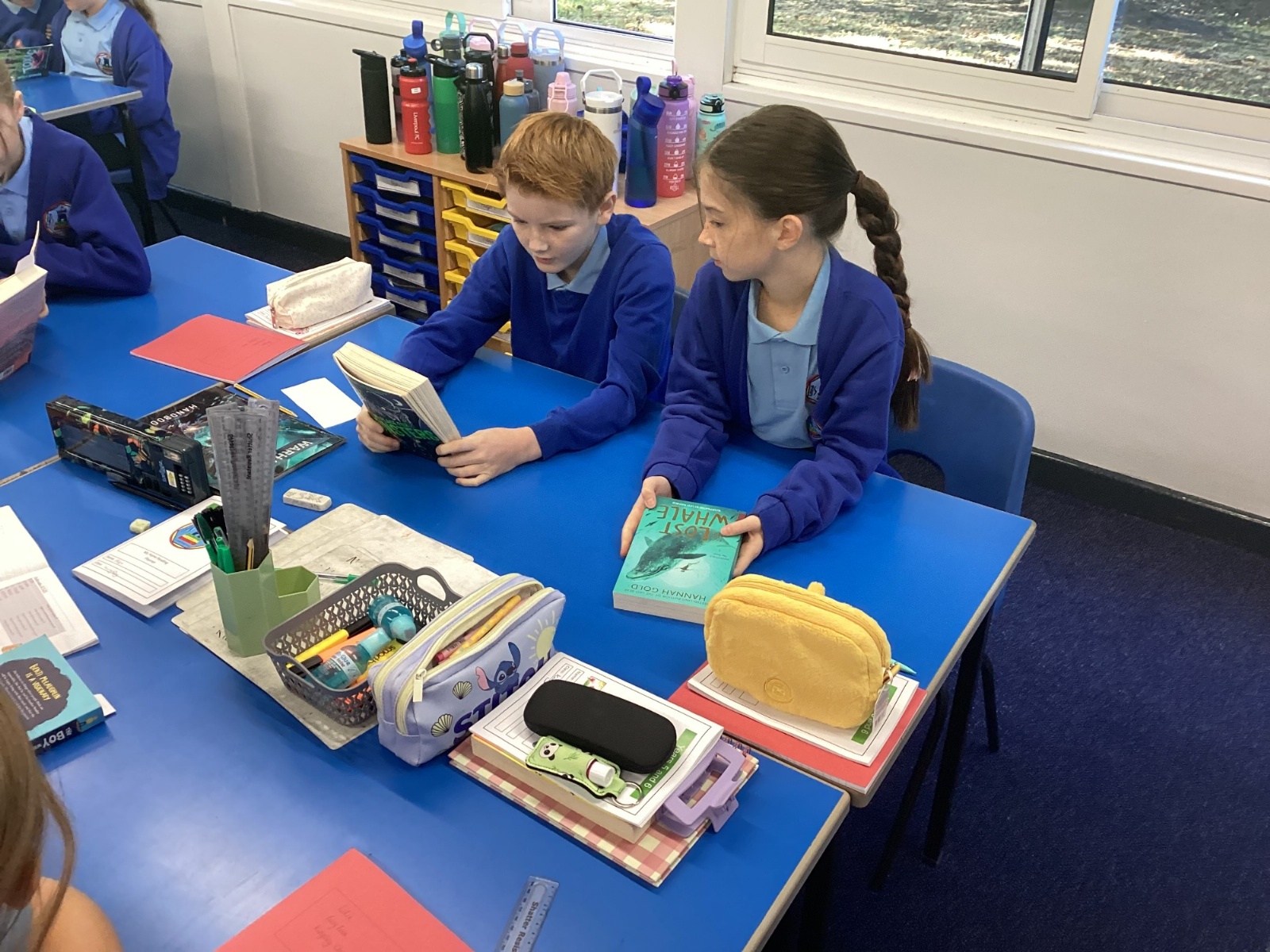
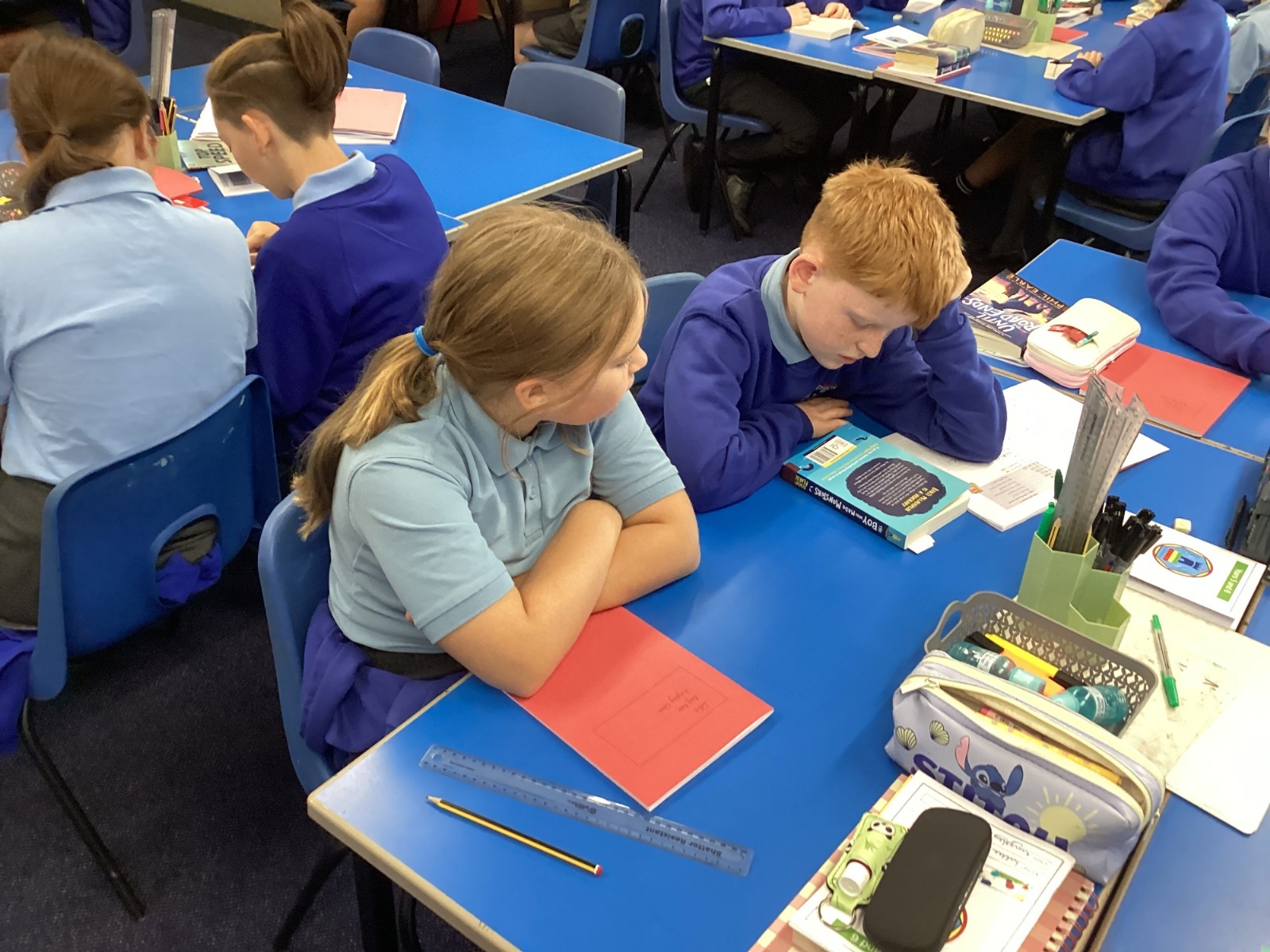
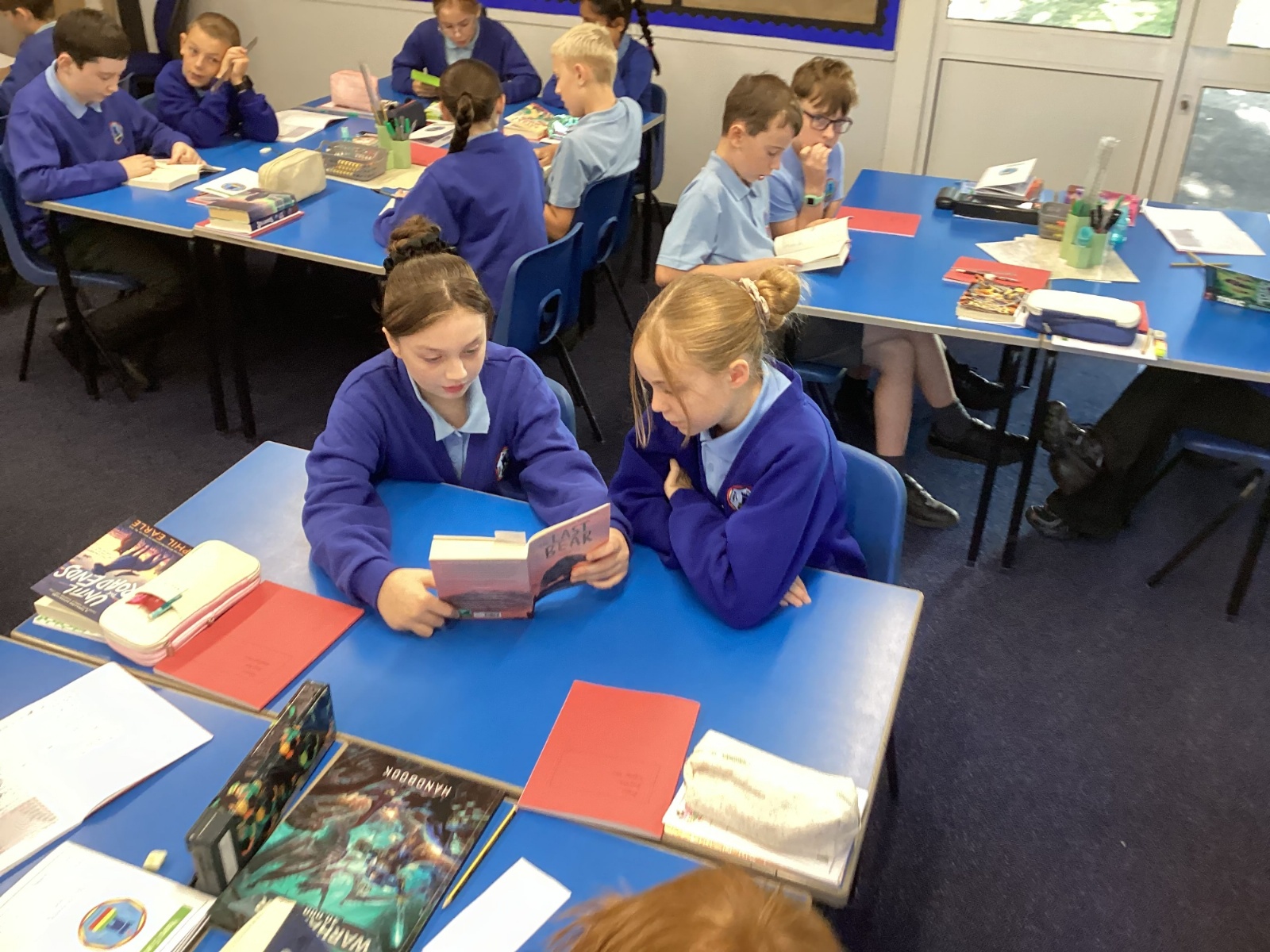
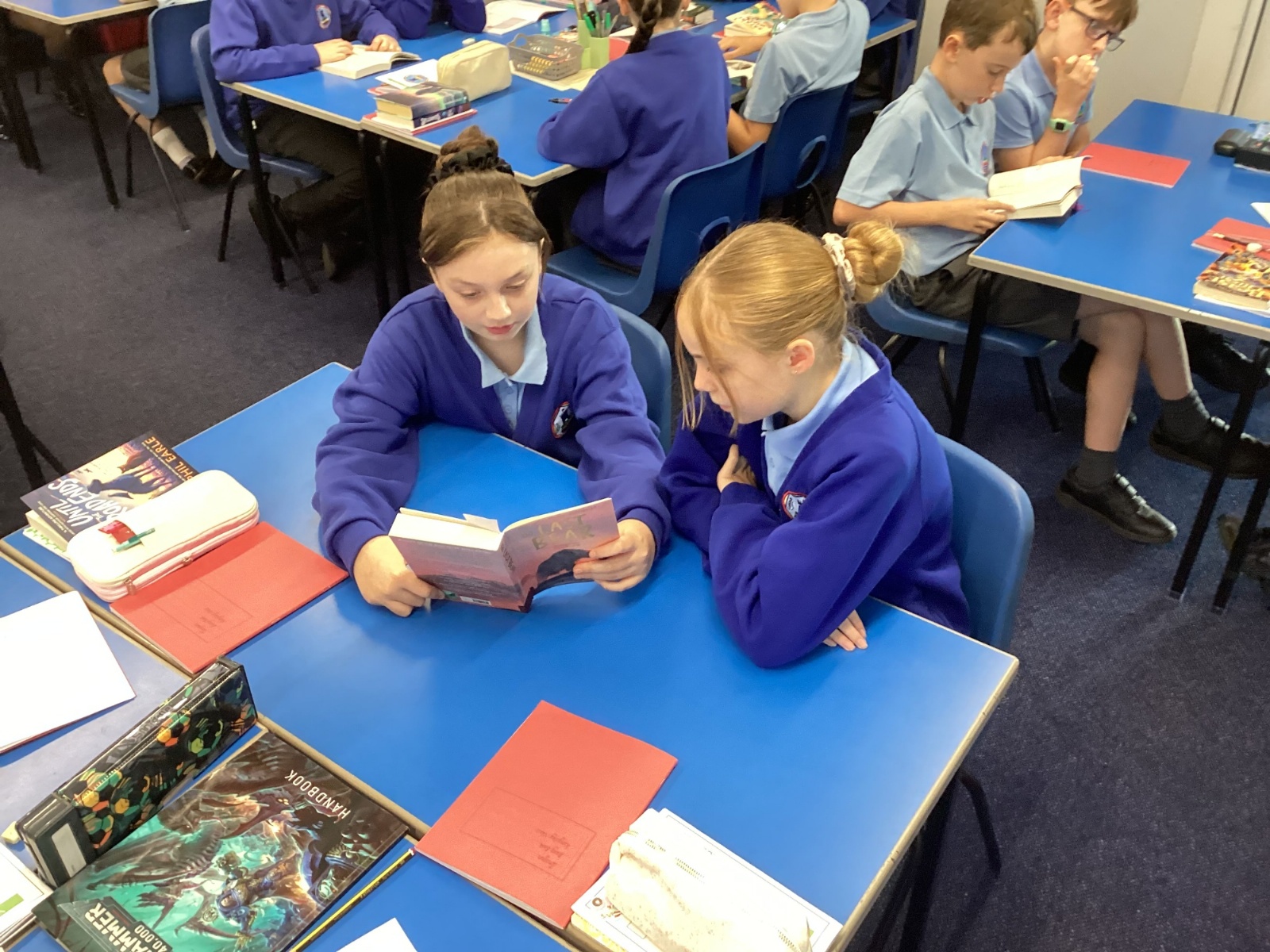
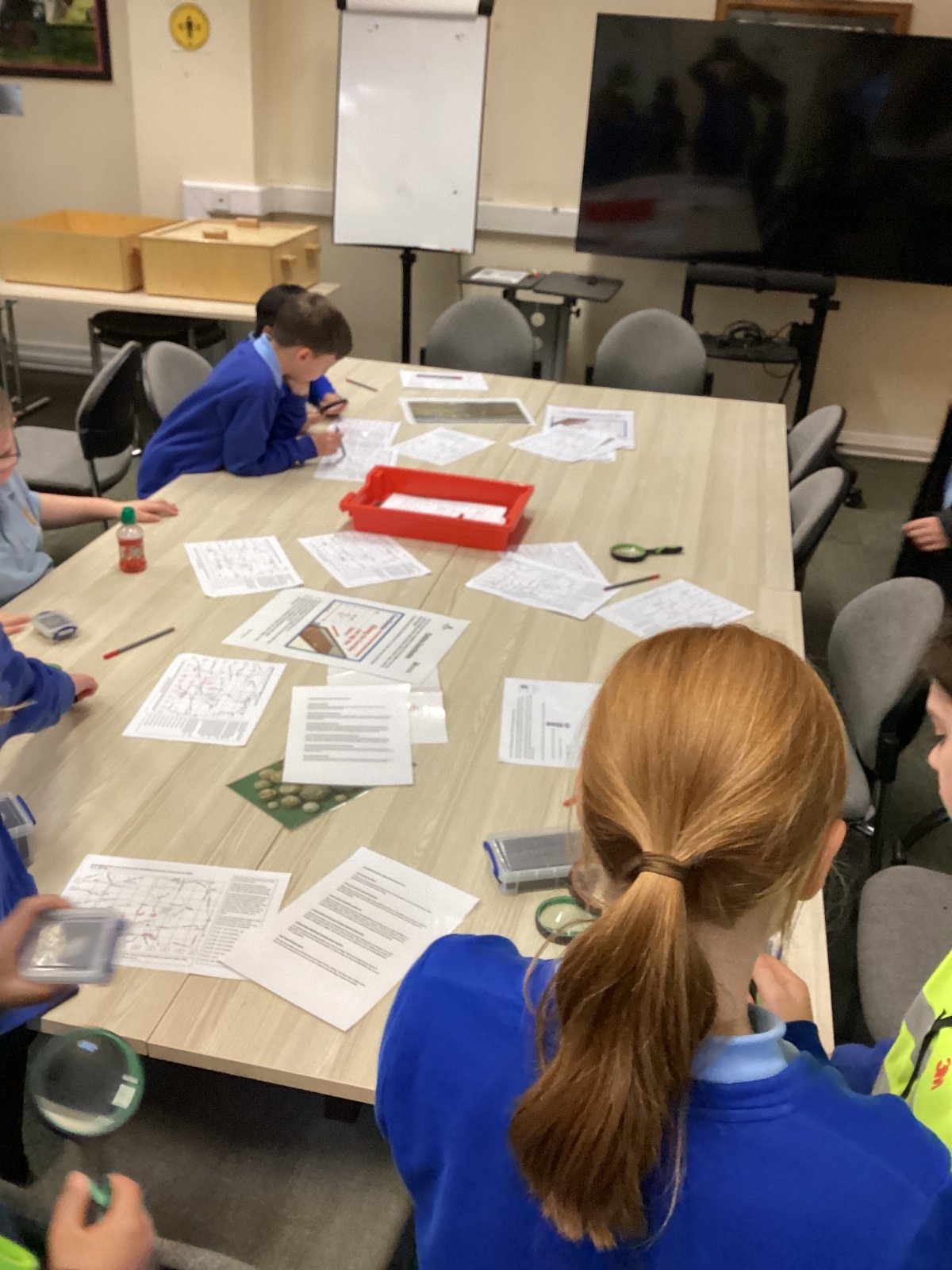
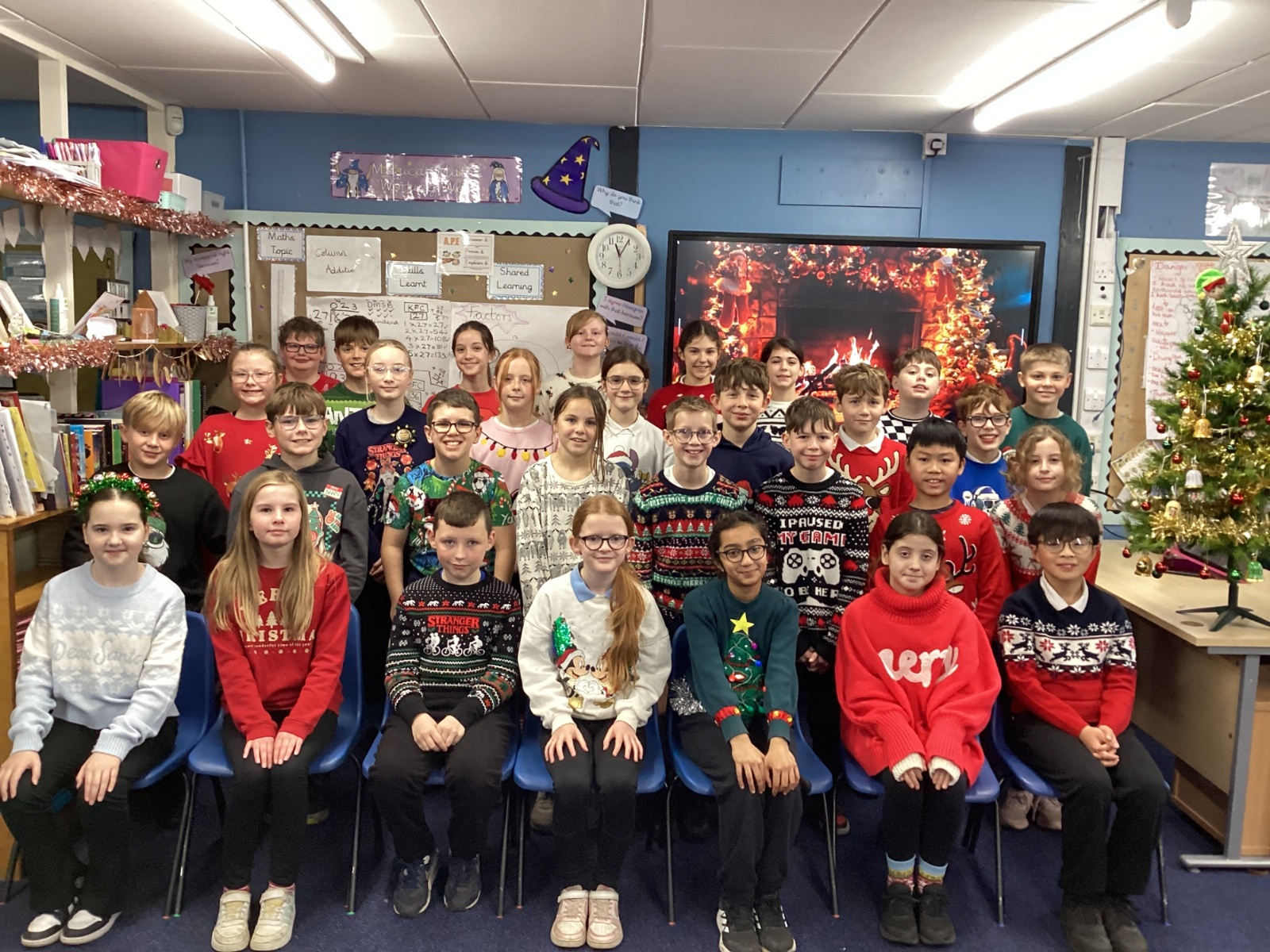
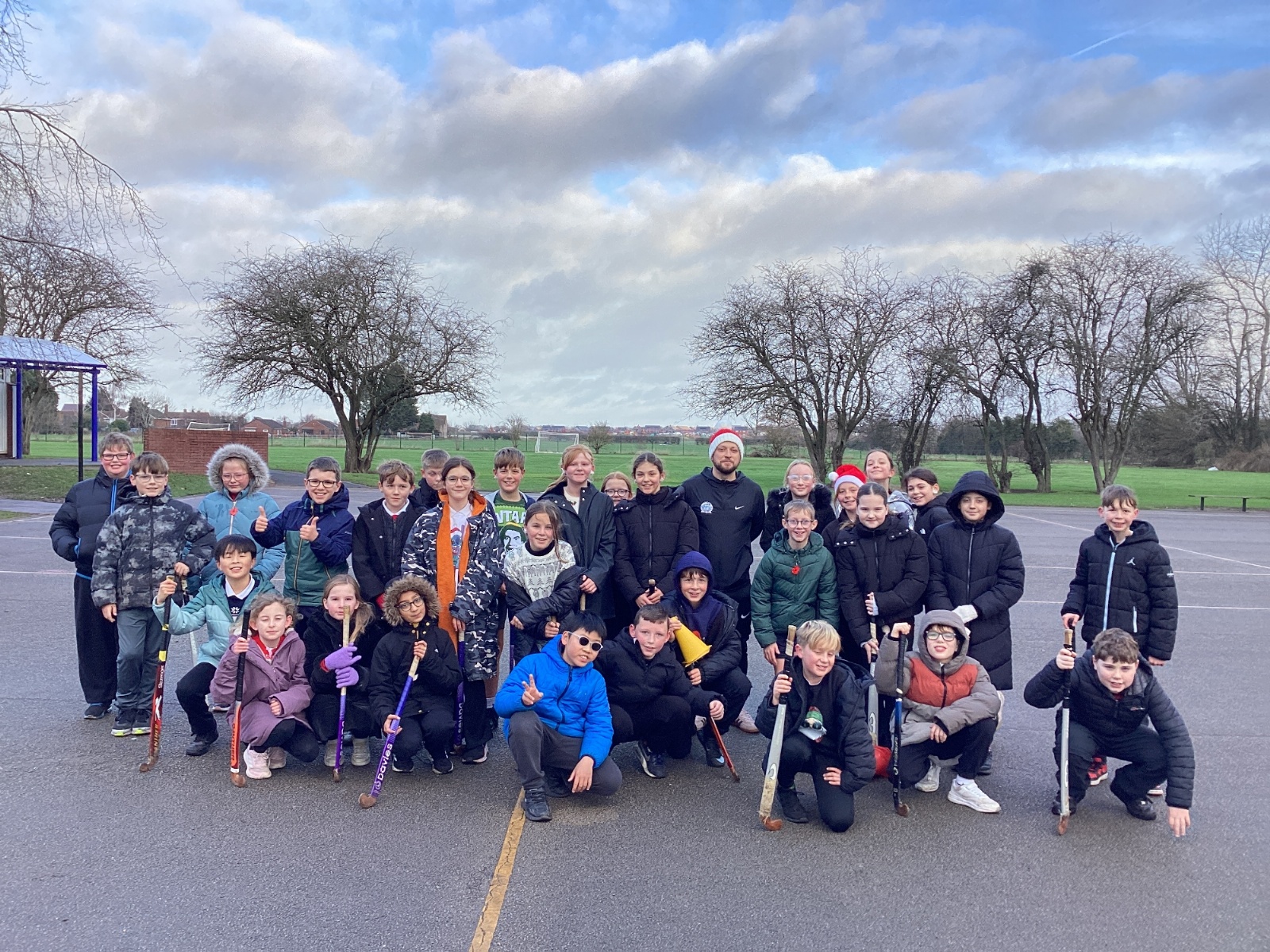
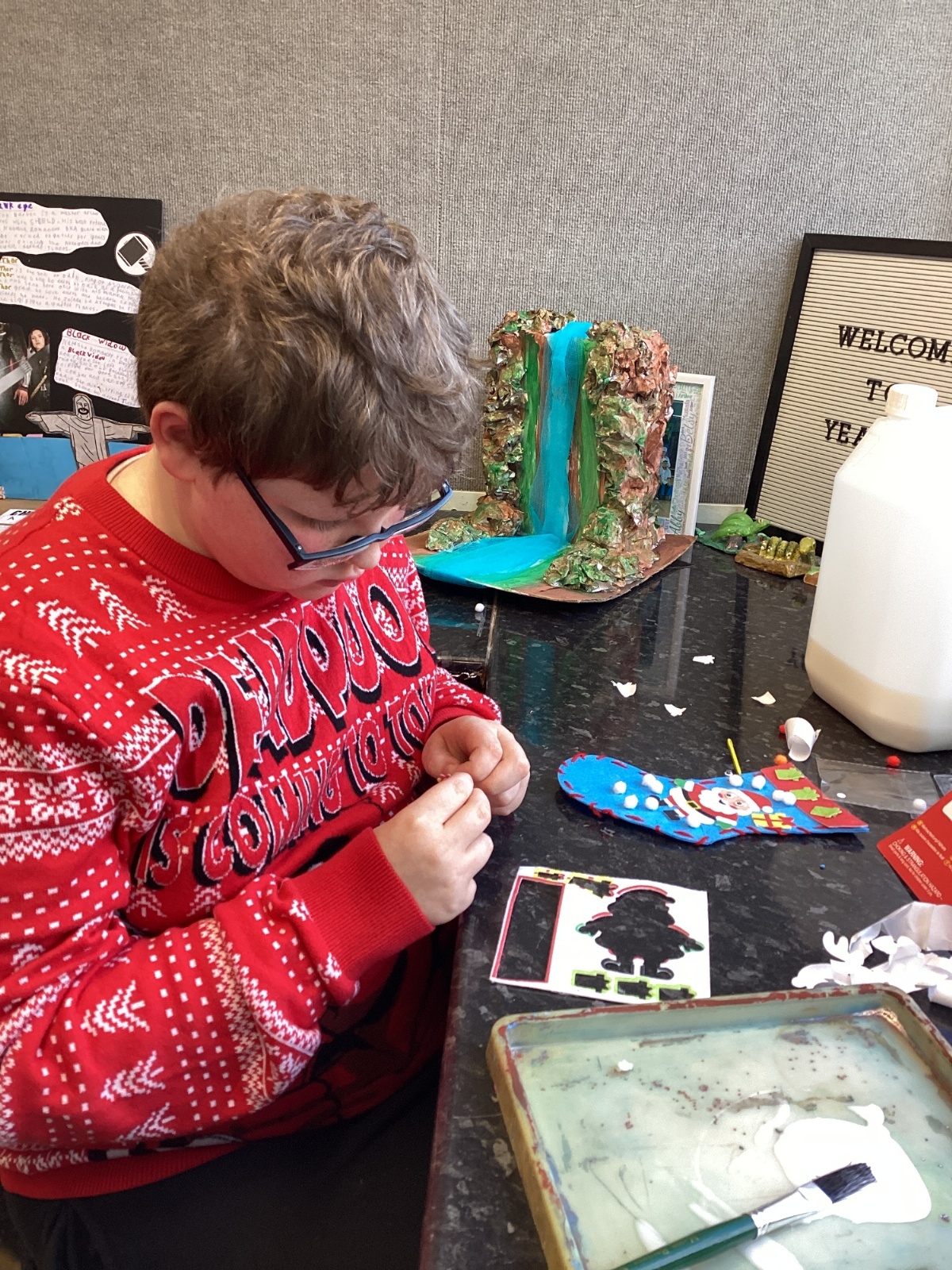
Year 6 SATs
 SATs are national tests that children take at the end of Key Stage 2 (KS2) in Year 6. These standardised tests are actually known as End of Key Stage Tests and Assessments, but most people know them as SATs (Standard Assessment Tests) .
SATs are an indicator of the progress your child has made at school so far. They are not a measure of whether your child is passing or failing; they simply show what level your child is currently working to. Pupils sit their second set of SATs at KS2 level in Year 6. These tests are more formal than those taken in KS1 and have set exam days as well as external marking in the majority of schools. Children will take exams in English reading comprehension, grammar, punctuation, spelling, mathematical reasoning, and arithmetic.
Once the KS2 SATs are complete, they will be sent away for external marking and children should receive their results towards the end of the summer term in July of Year 6. You will receive a report stating your child’s:
- Raw score – simply, the actual number of marks they received in their SATs
- Scaled score – a conversion score that allows results to be compared year-on-year
- Expected standard – whether or not they have achieved the national standard
KS2 Reading
The reading test is a single paper with questions based on three passages of text. Your child will have one hour, including reading time, to complete the test.
There will be a selection of question types, including:
- Ranking/ordering, e.g. ‘Number the events below to show the order in which they happen in the story’
- Labelling, e.g. ‘Label the text to show the title of the story’
- Find and copy, e.g. ‘Find and copy one word that suggests what the weather is like in the story’
- Short constructed response, e.g. ‘What does the bear eat?’
- Open-ended response, e.g. ‘Look at the sentence that begins Once upon a time. How does the writer increase the tension throughout this paragraph? Explain fully, referring to the text in your answer.’
KS2 Grammar, Punctuation and Spelling (SPaG)
The grammar, punctuation and spelling test consists of two parts: a grammar and punctuation paper requiring short answers, lasting 45 minutes, and an aural spelling test of 20 words, lasting around 15 minutes.
The grammar and punctuation test will include two sub-types of questions:
- Selected response, e.g. ‘Identify the modal verbs/ determiners in the sentence below’
- Constructed response, e.g. ‘Correct/complete/rewrite the sentence below,’ or, ‘The sentence below has an apostrophe missing. Explain why it needs an apostrophe.’ Explain in detail how the comma changes the meaning of the sentence.
- Tick to show ether the sentence is written in the Active or Passive voice.
KS2 Maths
Children sit three papers in maths:
- Paper 1: arithmetic, 30 minutes
- Papers 2 and 3: reasoning, 40 minutes per paper
Paper 1 will consist of fixed response questions, where children have to give the correct answer to calculations, including long multiplication and division. Papers 2 and 3 will involve a number of question types, including:
- Multiple choice
- True or false
- Constrained questions, e.g. giving the answer to a calculation, drawing a shape or completing a table or chart
- Less constrained questions, where children will have to explain their approach for solving a problem.
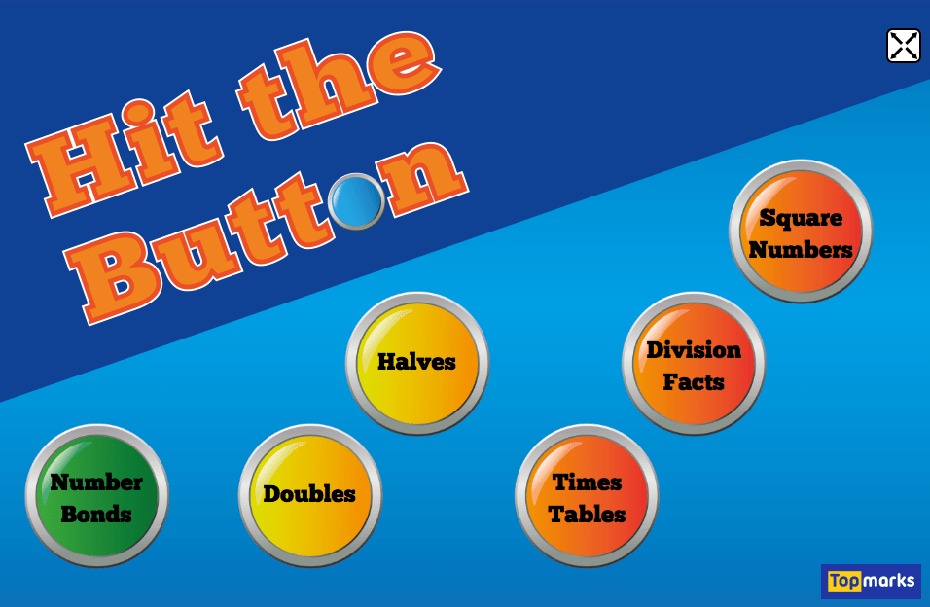
Hit the Button: Times Table Practice
-
Hit The Button: Times Table Practice A excellent website for children to practice their multiplication, division, number bonds and square numbers.
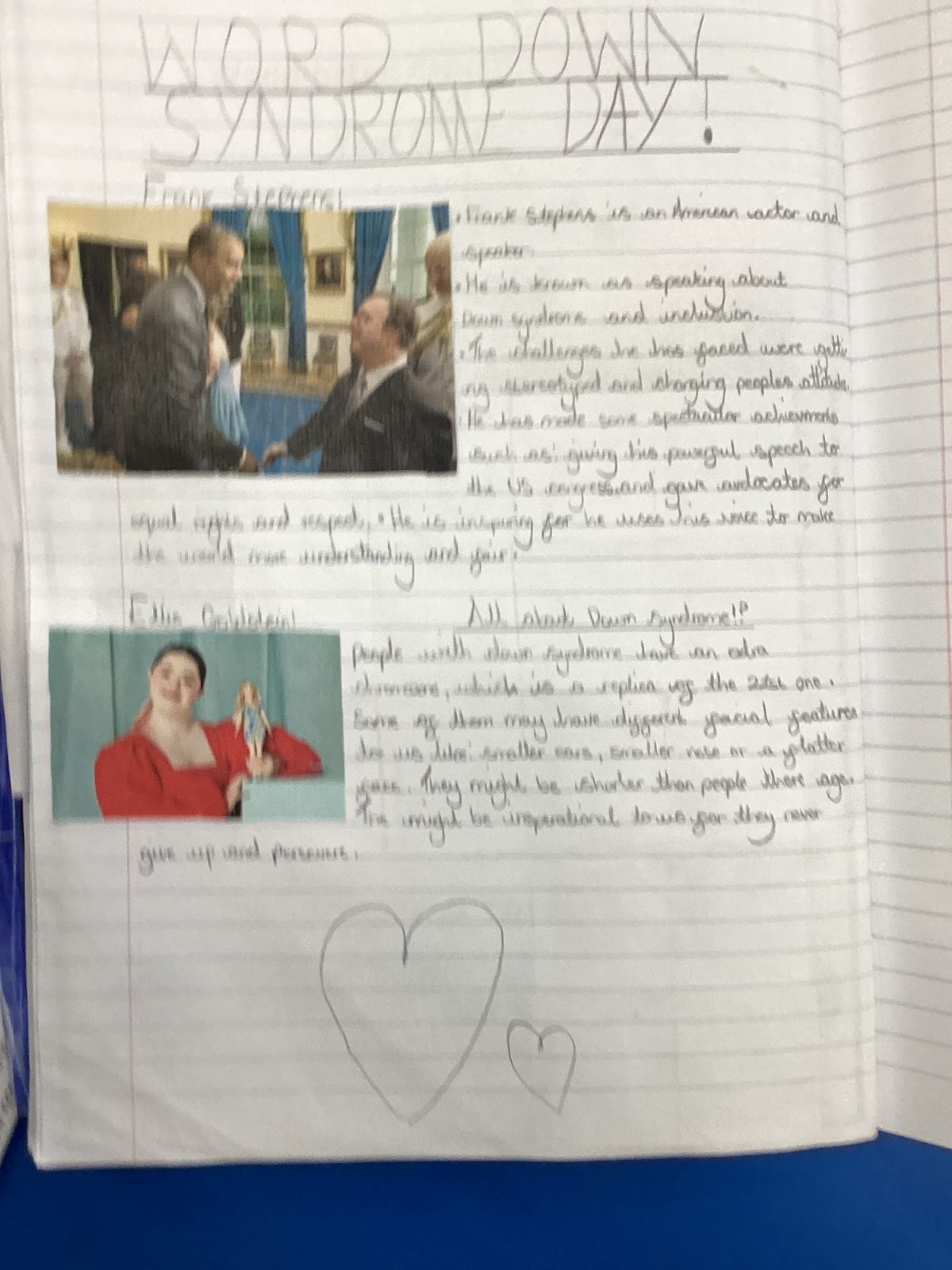
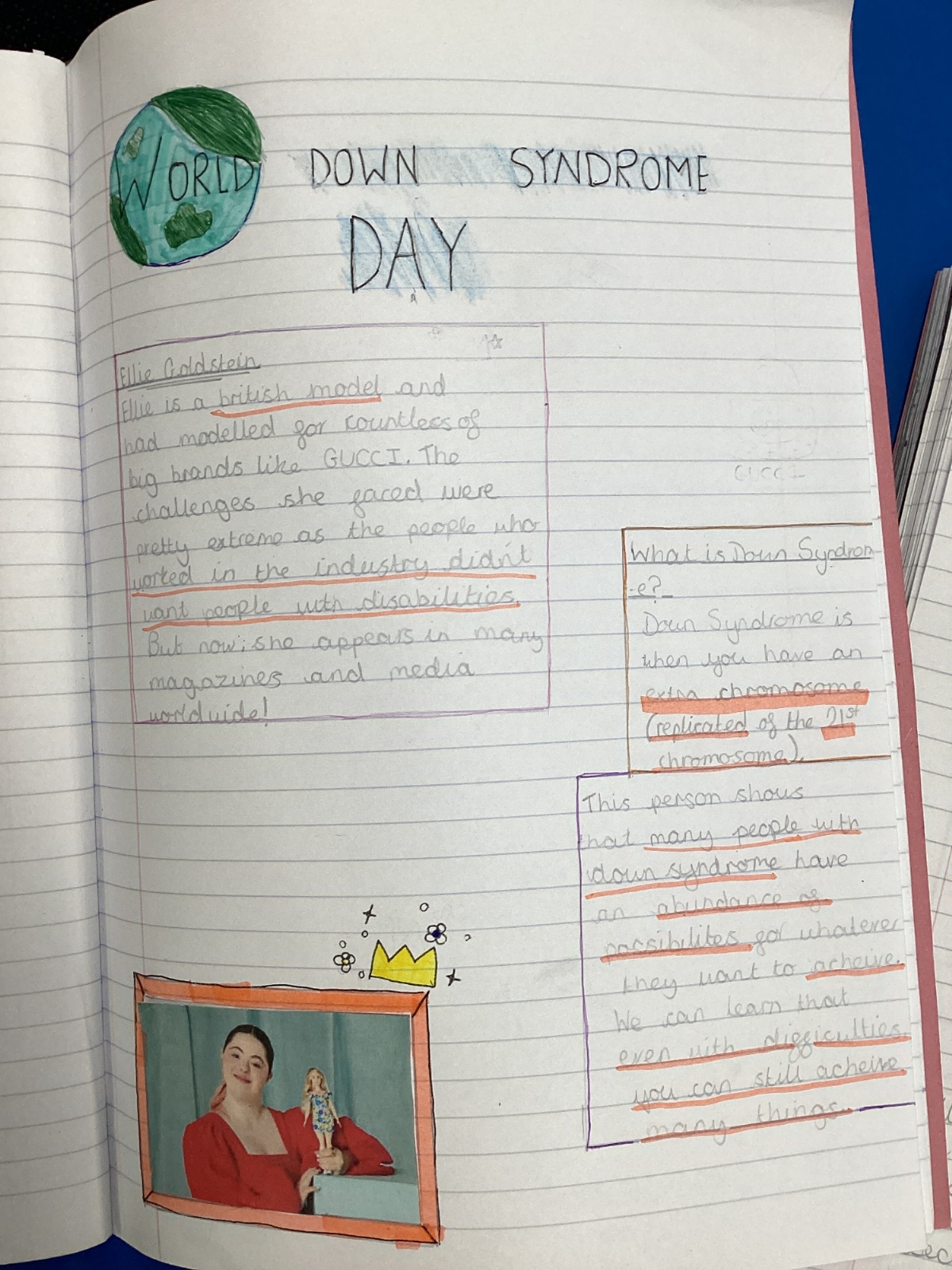
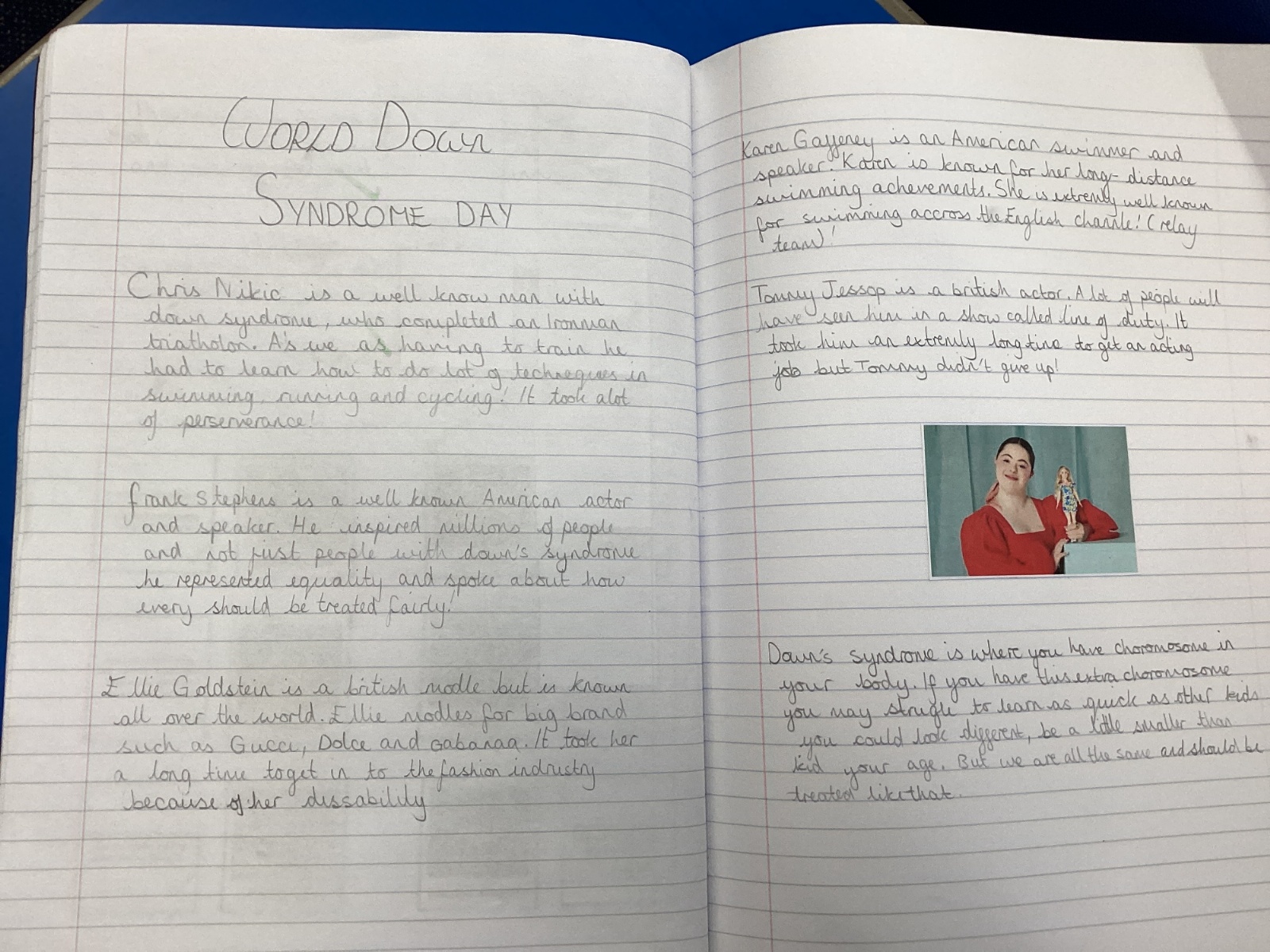
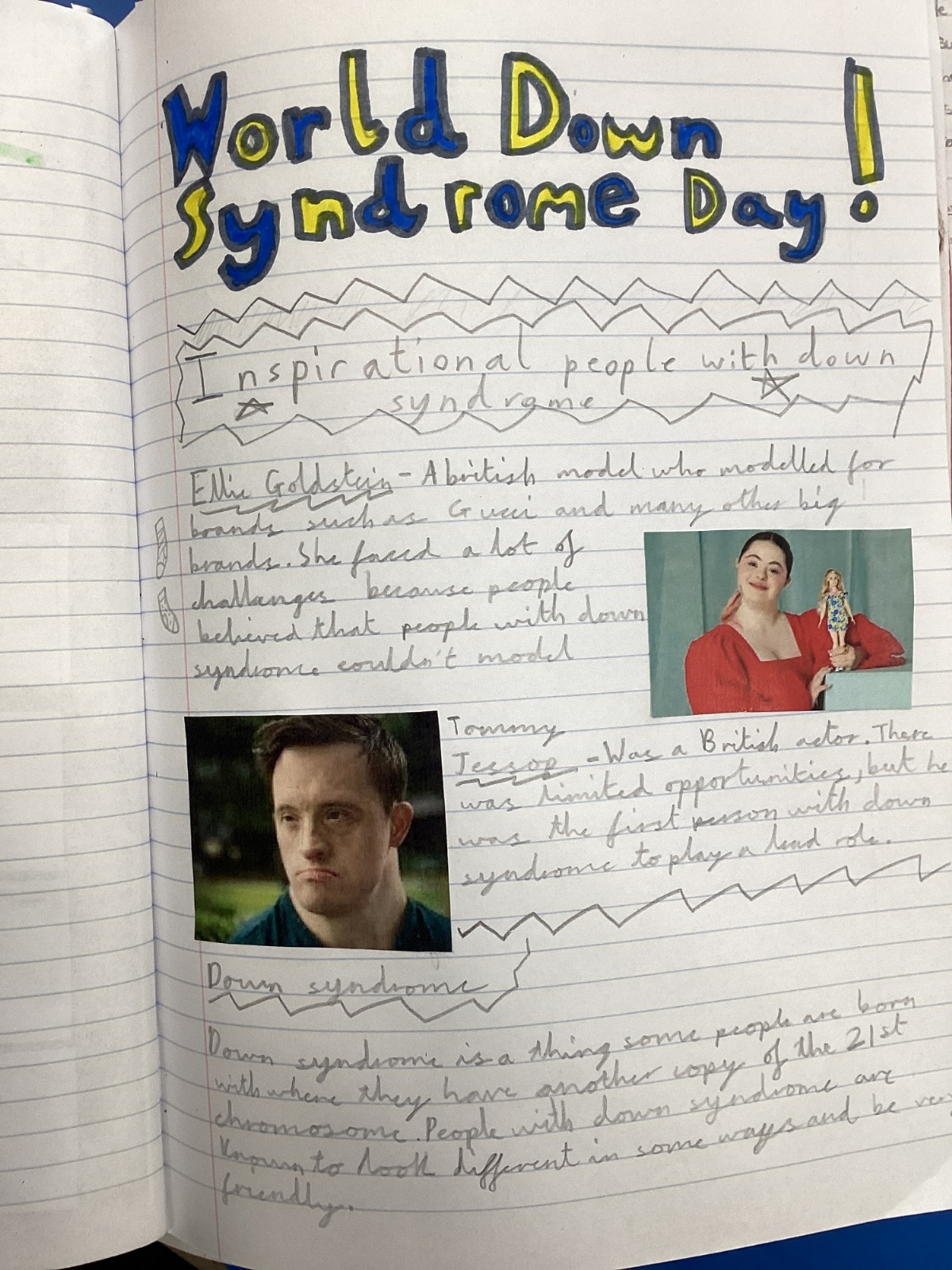
Handwriting - An example of the Year 6 EXPECTED standard for handwriting.
|
|
|
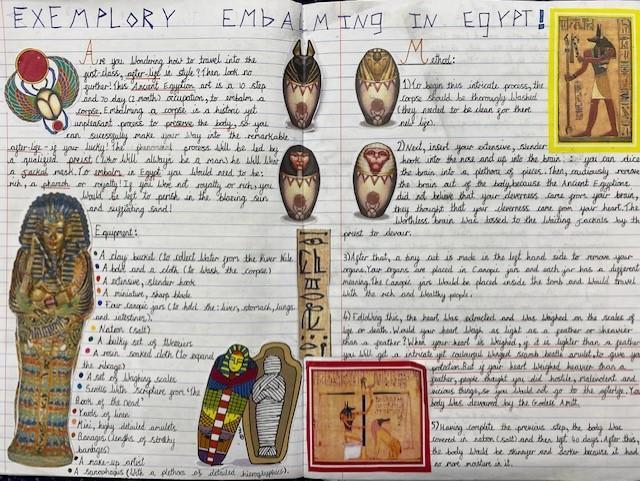
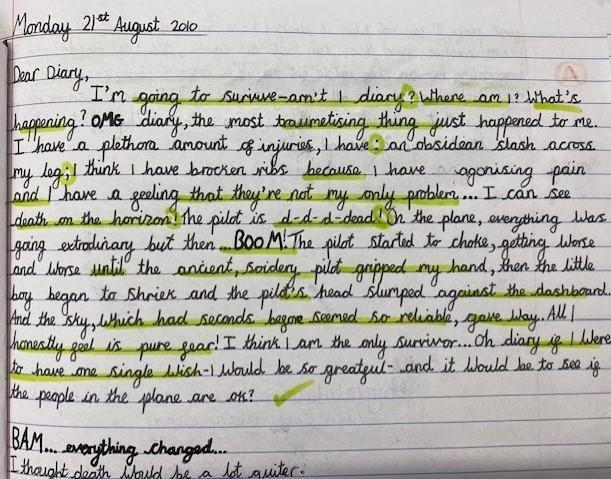
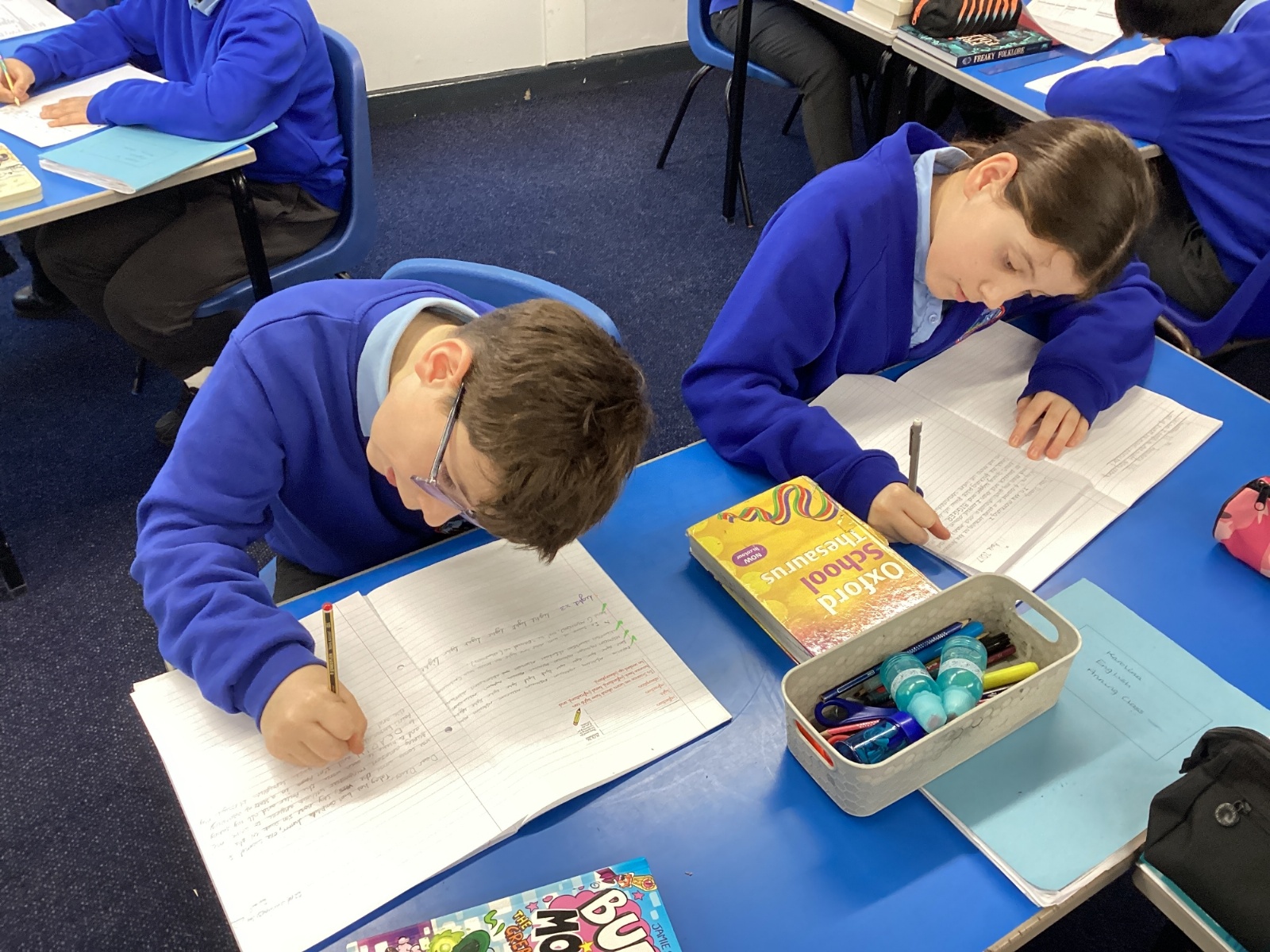
In order to achieve ‘Expected’ in Writing for SATS, Year 6 must achieve a particular level of continuous cursive handwriting in order to be awarded this standard. Children will be awarded a pen licence when they have shown that they can continuously meet this expectation. They are then permitted to write with a black 'frixion' pen in English and Theme work.